
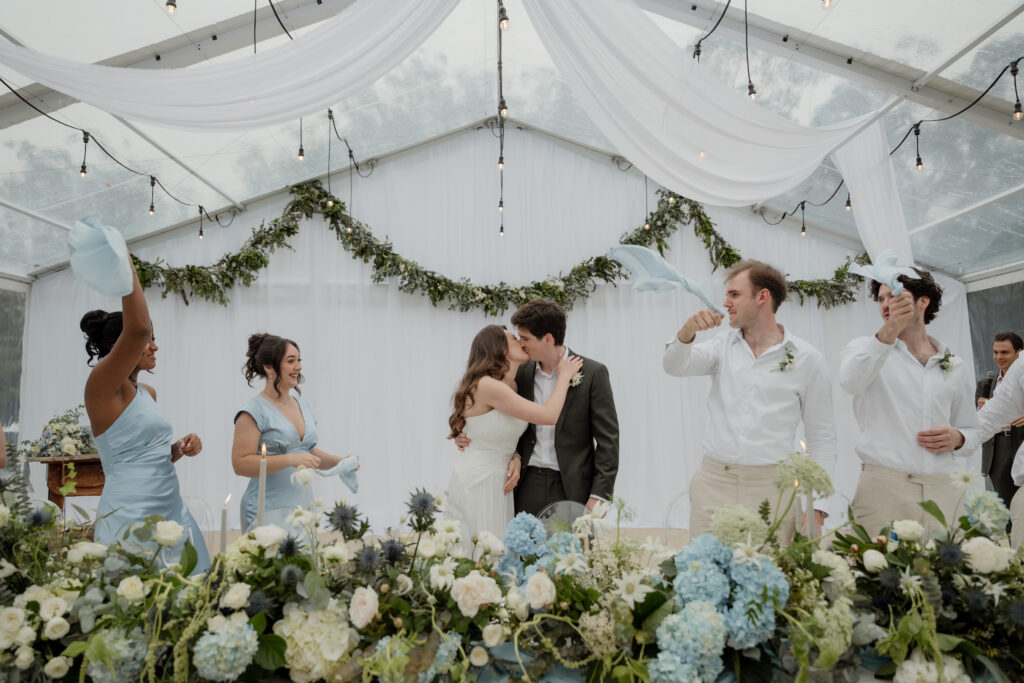
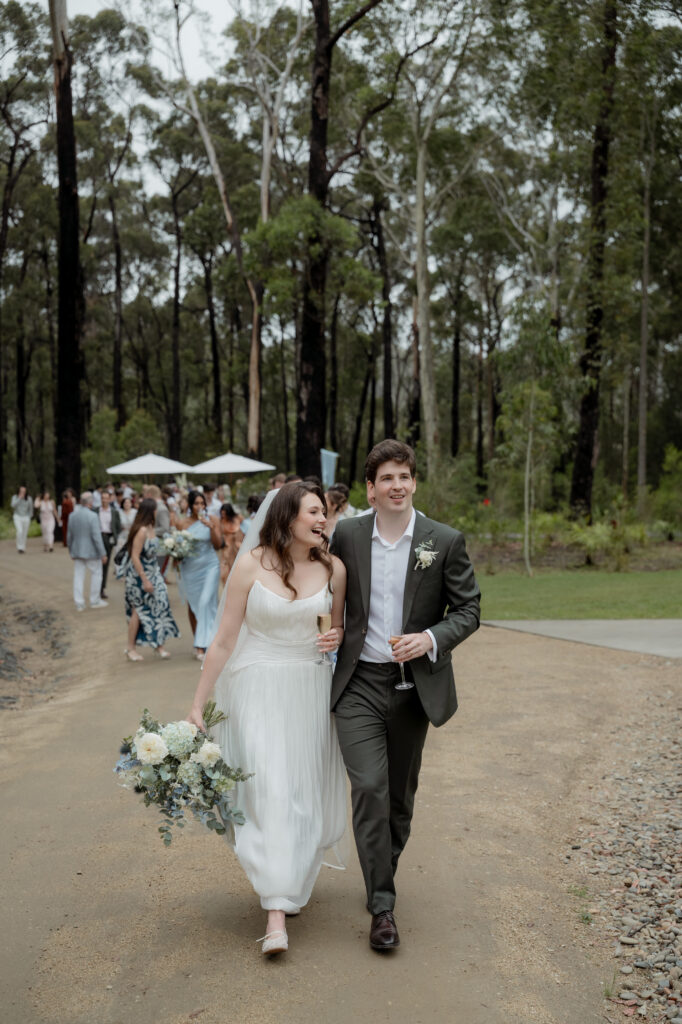
Juliet + Joe at The Jackson Ranch
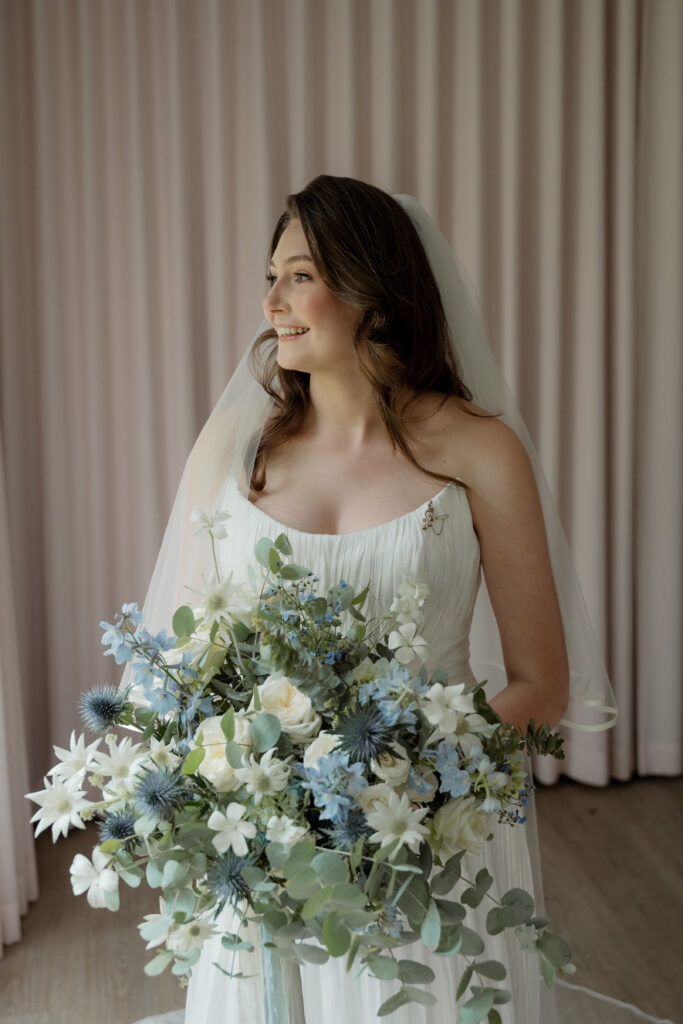
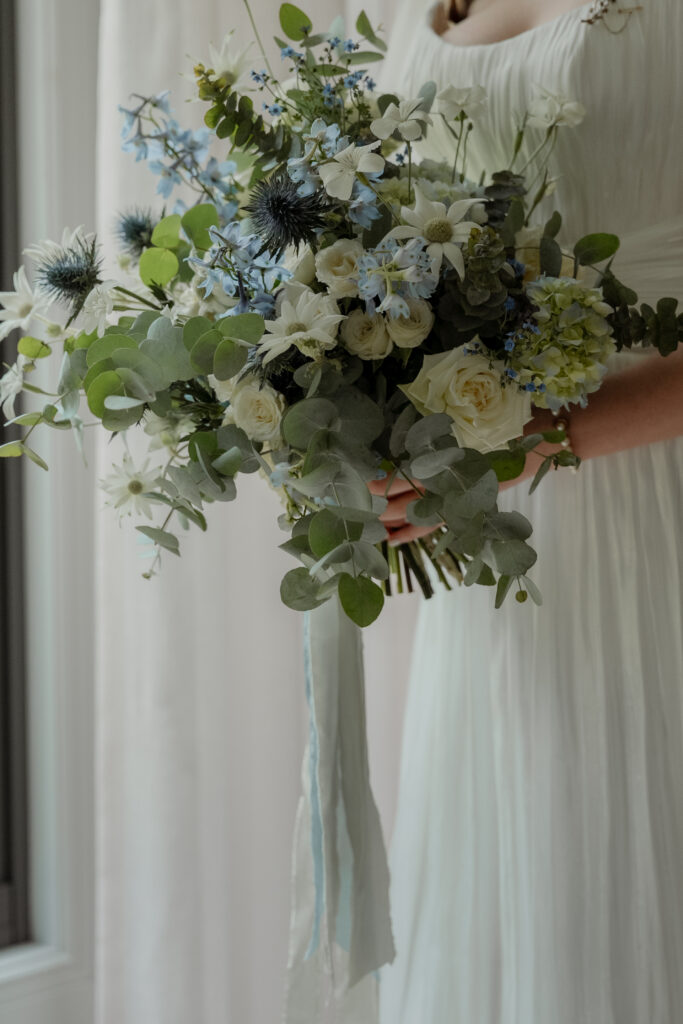
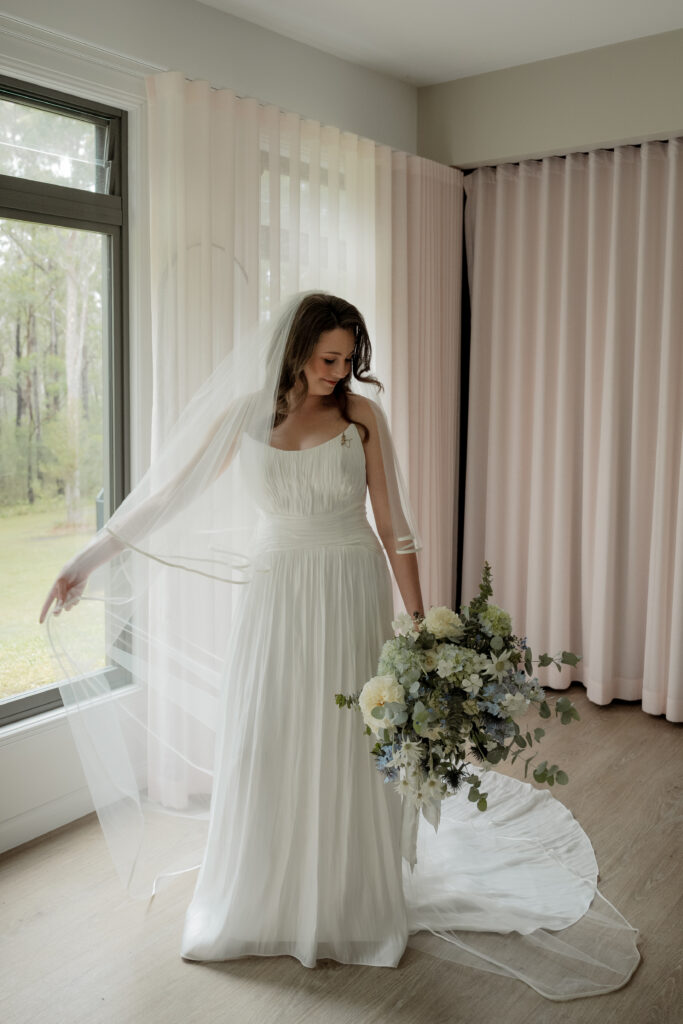
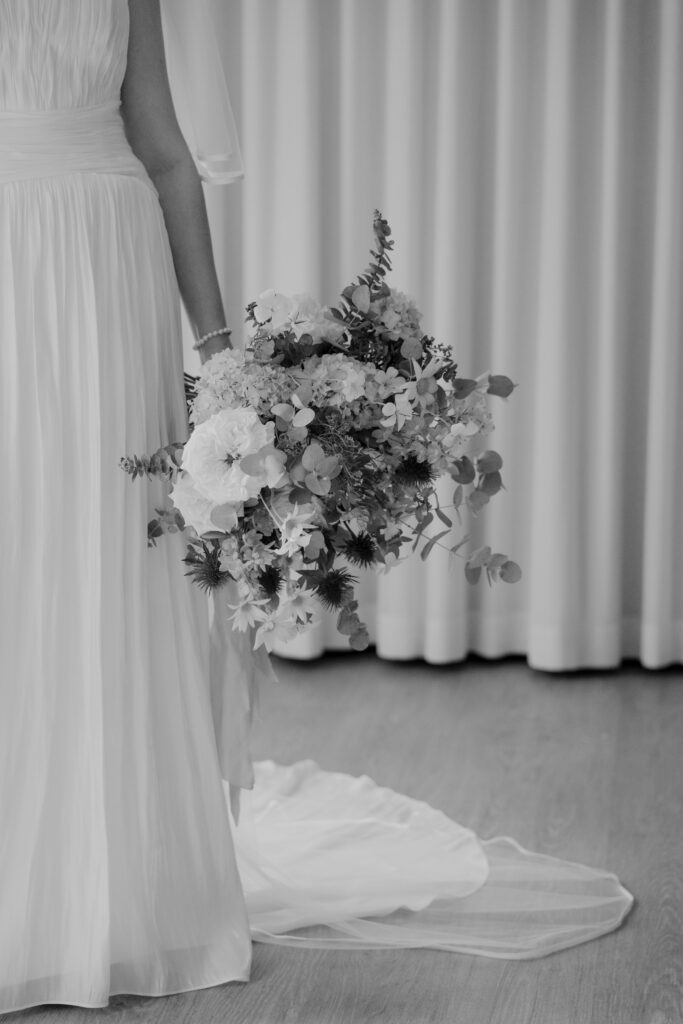
It started at One Fine Day. Juliet found me at my exhibition stand in 2024, and she was drawn to the Q Station florals I’d designed for them; soft, whimsical, native. Flannel flowers and gum foliage. She knew straight away that this was it. Powder blue and white was her brief, and honestly, it was one of those briefs where I just thought: yes. I know exactly what to do with this.
I was Juliet and Joe’s wedding planner as well as their florist, which meant the whole day, the ceremony styling, the suspended garlanding, the draping, the tablescapes, stationery, all of the vendor coordination – came from the same place.
One vision, built out from that original brief into every corner of the day.
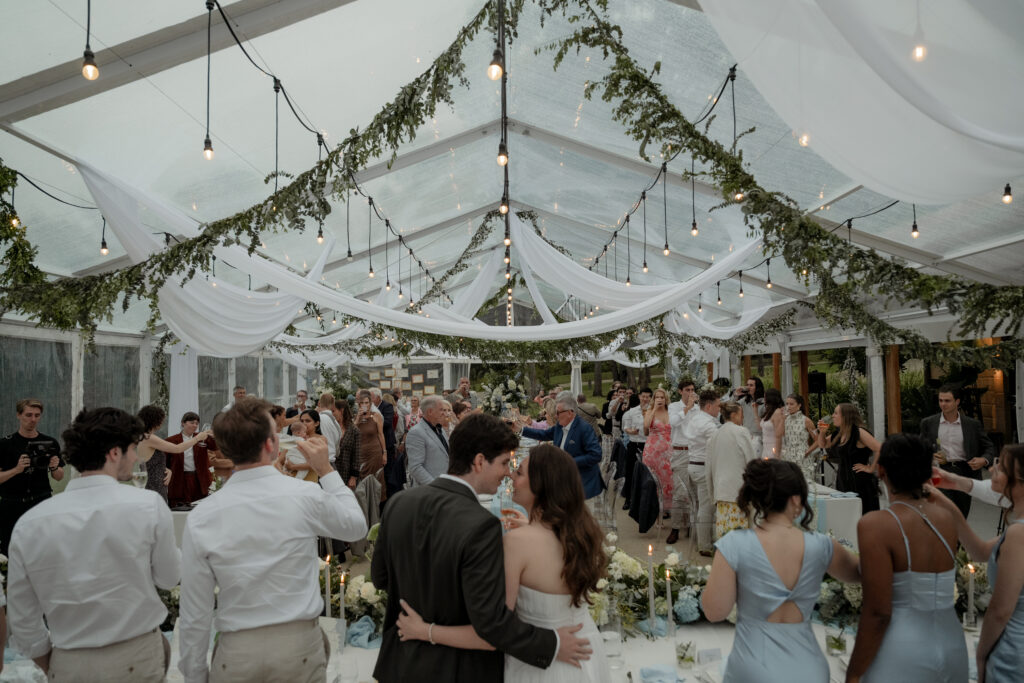
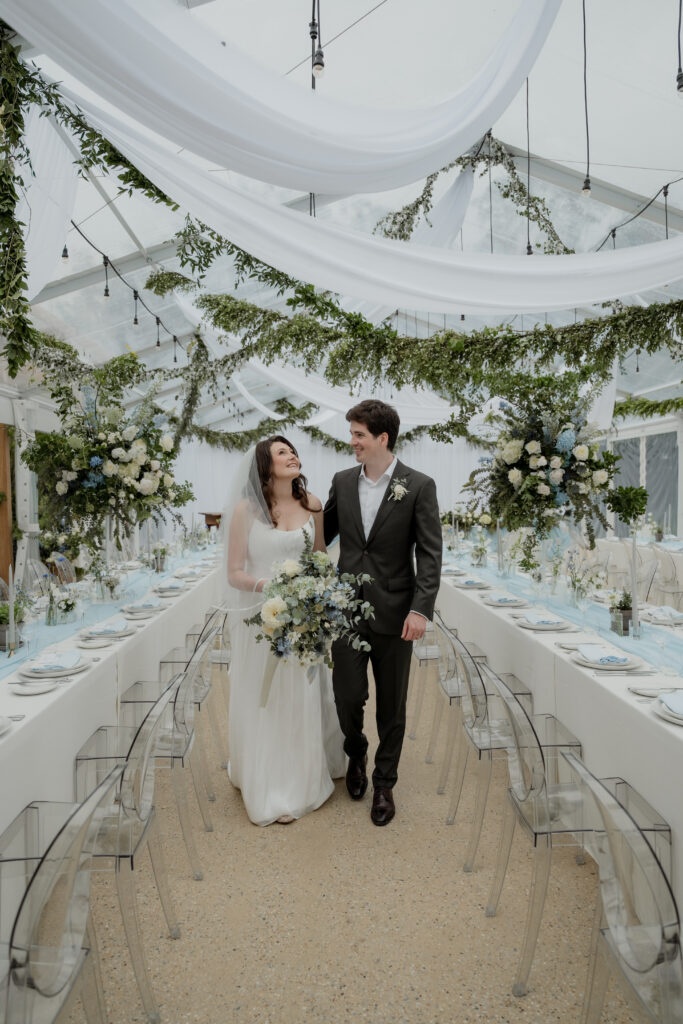
This post is about the piece I get asked about most when people see the photos: the suspended foliage garland in the reception marquee.
People see it in pictures and ask how it’s done. So here’s how it’s done.
Before a Single Stem Was Cut
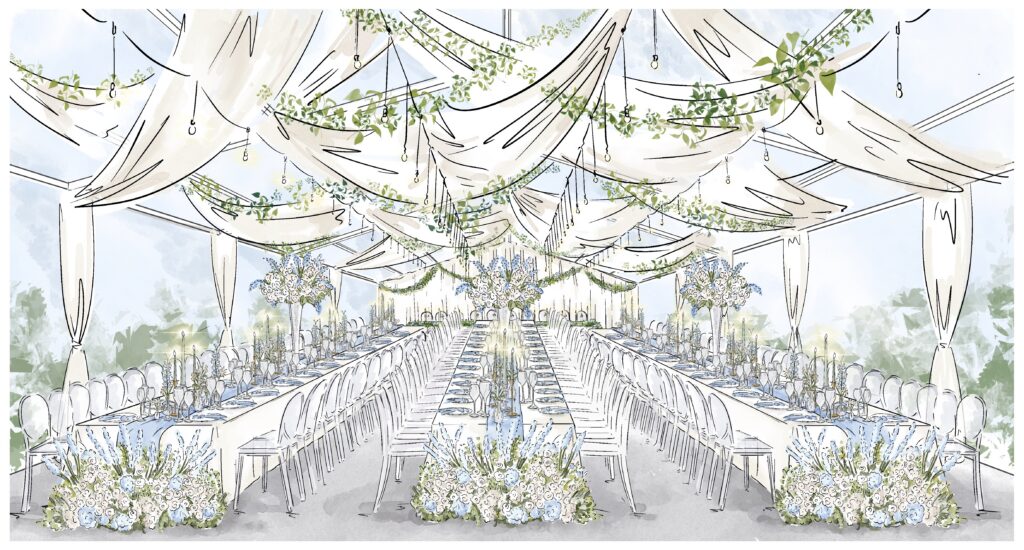
For installations this complex, and for all of our full-service designs of this scale, I commission a detailed illustration of the finished space before we start; so the couple can actually see what we’re building, rather than trying to hold it all in their heads from reference images.
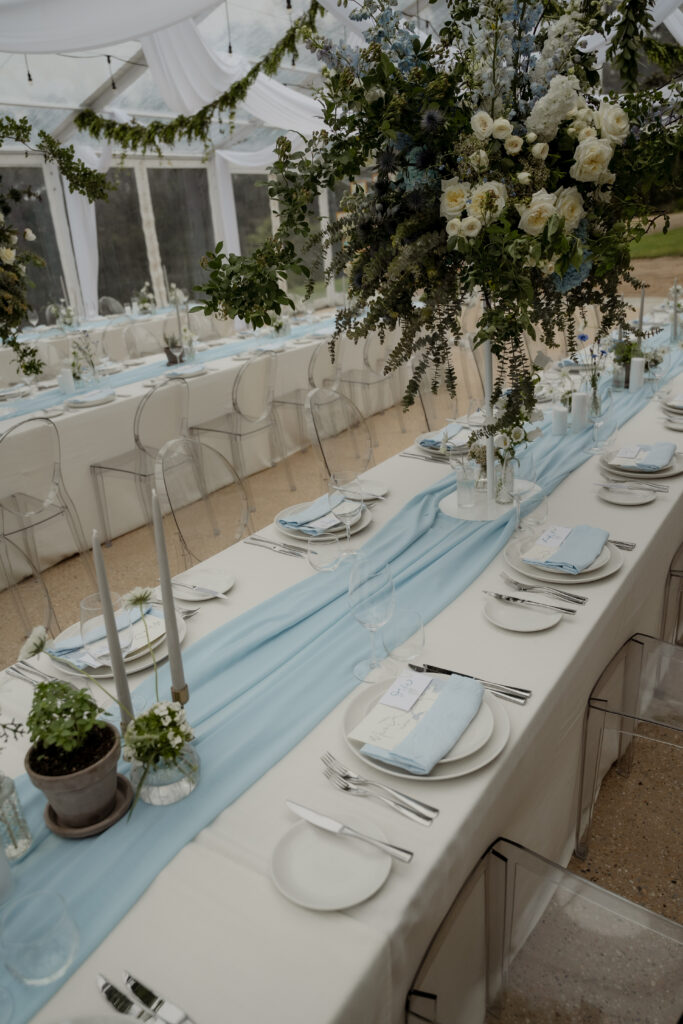
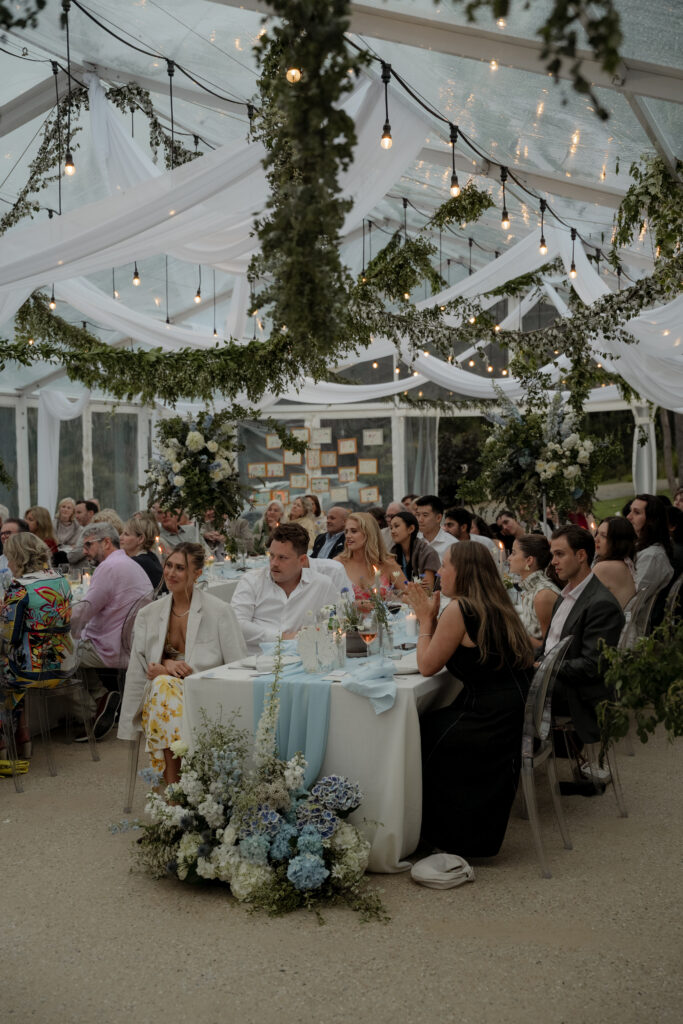
For Juliet and Joe, that illustration showed the whole marquee: off-white chiffon sweeping across the ceiling, trailing foliage weaving between the panels and around the festoon lights, long tables below in powder blue and white.
When I look at the photos from the day next to that illustration, they’re almost identical. I love that. It doesn’t happen by luck; it happens because every decision is made well before we load the vans.
The Mechanic: Galvanised Wire + Rope Clamps
Before it’s a design question, a suspended ceiling garland is an engineering question. How does it stay up? How does it hold its weight through hours of speeches and dinner and dancing and warmth? How do you install it cleanly within a venue’s bump-in window when you’re already stretched for time?
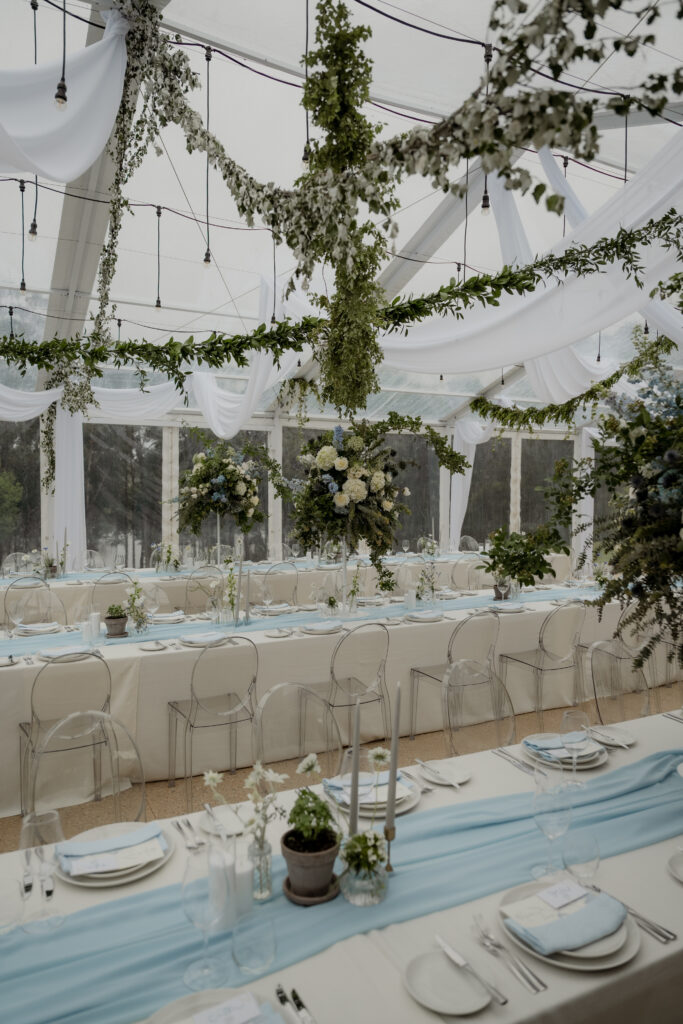
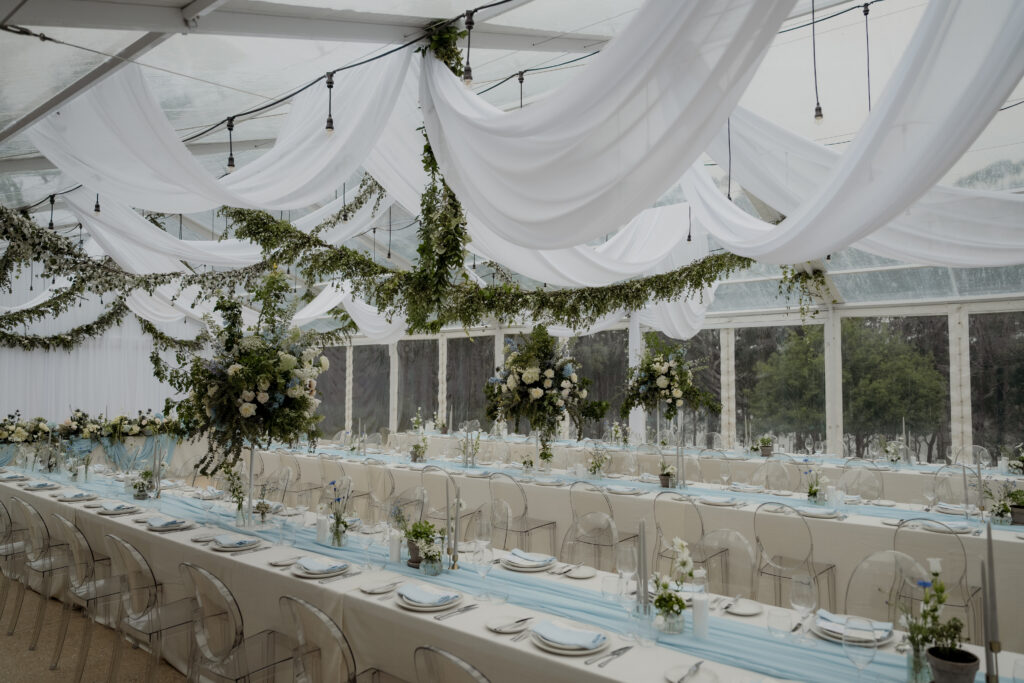
For this installation we used galvanised wire as the structural base, tensioned across the marquee rigging and secured with rope clamps and extra strong cable ties. I use galvanised wire for suspended work because it doesn’t stretch, it doesn’t corrode in the humidity a full room of people generates, and the rope clamps let you tension and adjust precisely during install. When you’re working at height with a finished garland that can’t easily come down and go back up again, that adjustability matters.
The garlands were built entirely in the studio before the wedding, not on site as no bump-in, howevere generous, allows for the four days and four florists it took to create. On installation day, the job becomes hanging and dressing rather than building under pressure.
Worth mentioning: our studio is over three hours from The Jackson Ranch. Three fully loaded vans made that drive; garlands, hydration tubs, ceremony arrangements, draping, tableware, props, tools, the lot. Regional weddings at this scale are a significant logistical undertaking on top of everything else, and being the planner as well as the florist meant I was across all of it.
The flowers don’t care how far they have to travel.
The planning has to.
The Hydration: Giant Tubs + a Lesson from Passion Flower Sue
The hardest part of a pre-built suspended garland isn’t the build — it’s keeping it alive long enough to hang it. Foliage that’s been cut, conditioned, woven into a garland, loaded into a van, driven four hours, and then suspended in a warm marquee full of people is working hard to stay looking beautiful. The only way to set it up for success is to hydrate it really, genuinely well before it goes anywhere near a ceiling.
My method here was inspired by Passion Flower Sue – if you know, you know – and it involves something that looks completely ridiculous in a floristry studio: XL storage tubs.
Move-house size!
Once the garlands were built, we layered them into the tubs with wet paper towels packed around and between the foliage, then sealed the lids and place them in the cool room. The whole thing becomes a humidity chamber; the moisture has nowhere to go, so it stays right in the foliage all night.
It’s not glamorous. The studio on build nights looks like a garden centre after hours. But foliage that’s been kept in a sealed humidity environment overnight holds beautifully once it’s up, long past the end of even the longest reception. The alternative is a garland that looks tired before the entrees are cleared, and I’d rather deal with the paper towels!
Why These Foliages Specifically
Not everything works in a suspended garland. Gravity is useful; trailing foliage looks incredible when it’s hanging freely, but it’s also unforgiving. Heavy foliage drags. Stems that need water to stay upright will droop. And anything that doesn’t have a natural trailing habit just hangs there looking stuck rather than growing.
These garland were built from ivy, trailing jasmine, eucalyptus (our bride’s favourite, so we had to make it work), eleagnus, grape vine, English Buxus and pittosporum. Ivy because it falls with real grace and its waxy leaves hold moisture well. Trailing jasmine for the finer texture – it has this slightly arching, reaching quality that looks like it found its own way there. Eleagnus and eucalyptus for the silver-green depth and because it moves; a room full of people creates gentle air movement and eleagnus responds to it beautifully. Grape vine for character and weight – the tendrils do something no other foliage does. And English Buxus and pittosporum, for the density that anchors everything else.
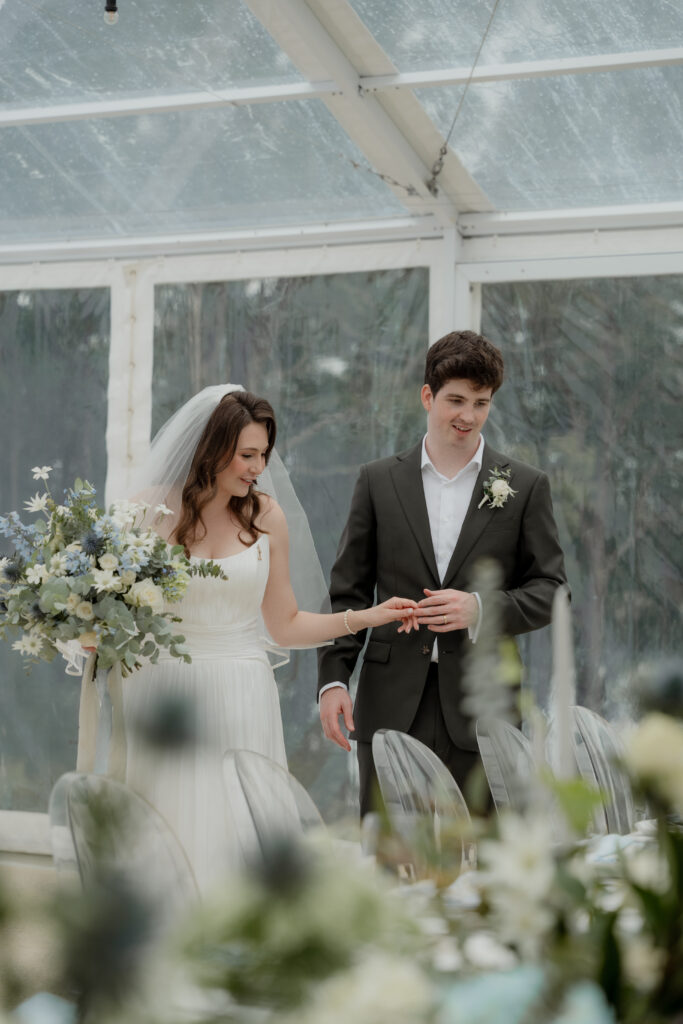
In the clear marquee with the bush visible beyond the glass, it read exactly like the canopy it was designed to mimic.
Which was the whole point.
The Colour Story: All In on Powder Blue
When Juliet said powder blue and white, we didn’t use it as an accent. We committed to it as the whole language of the day.
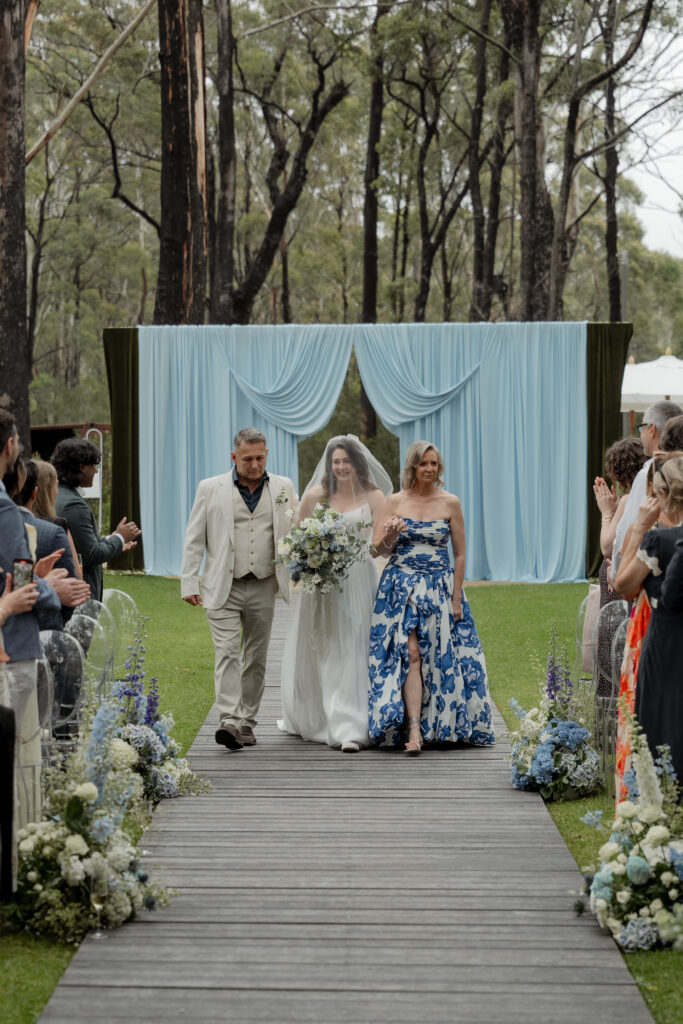
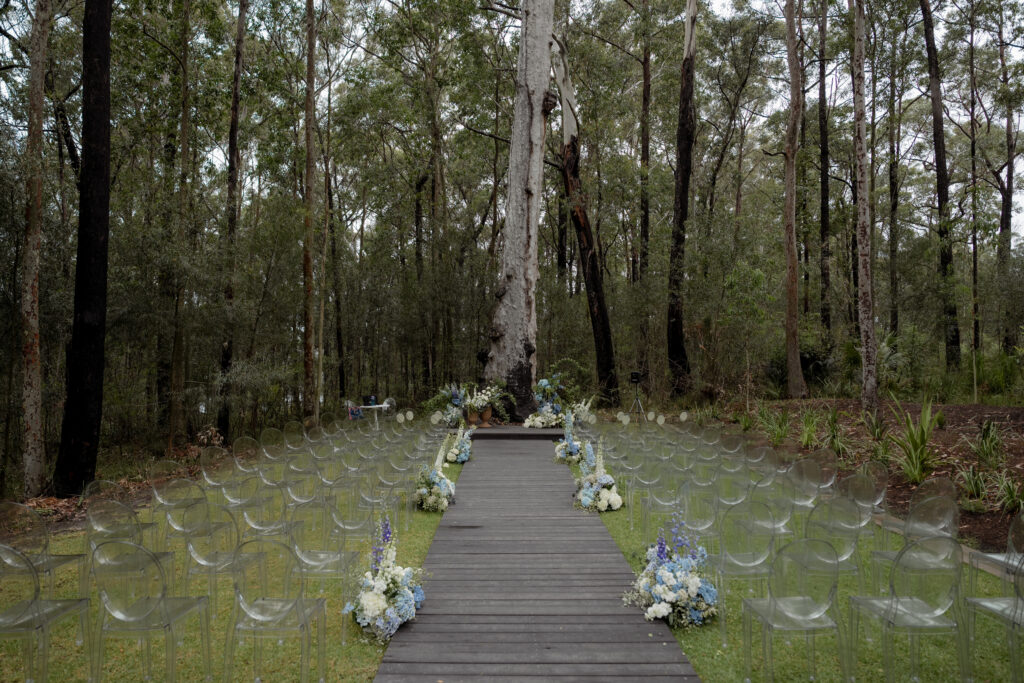
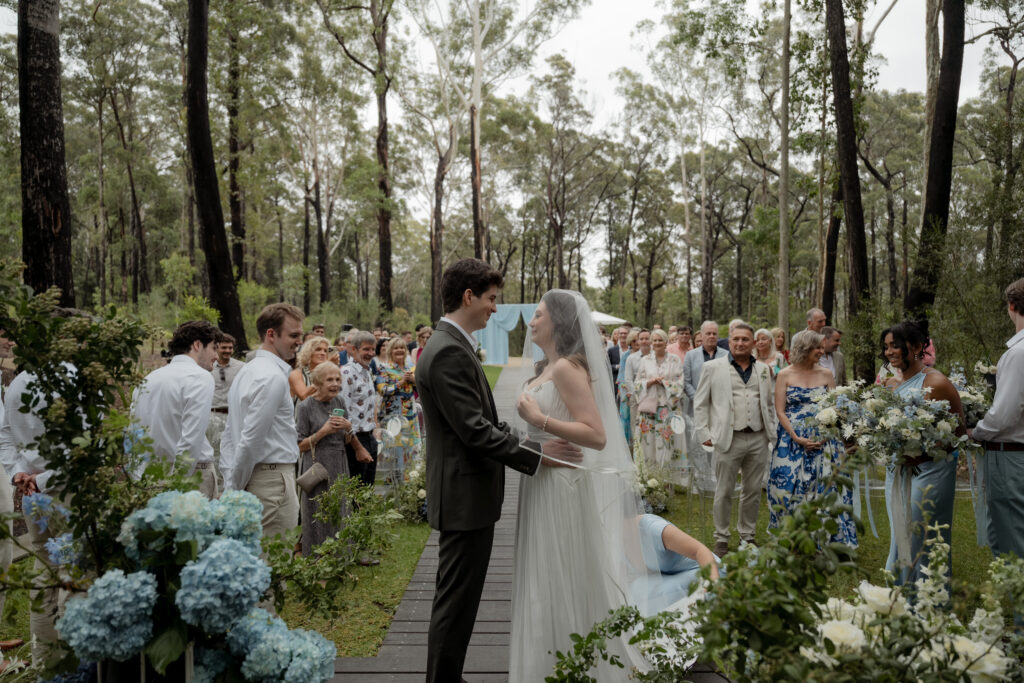
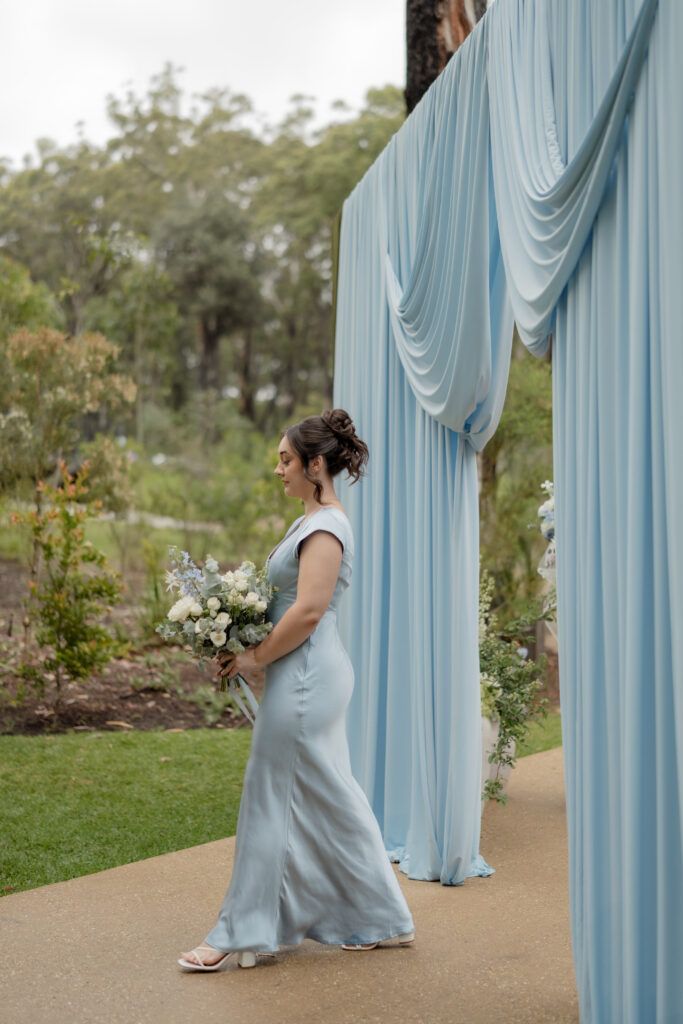
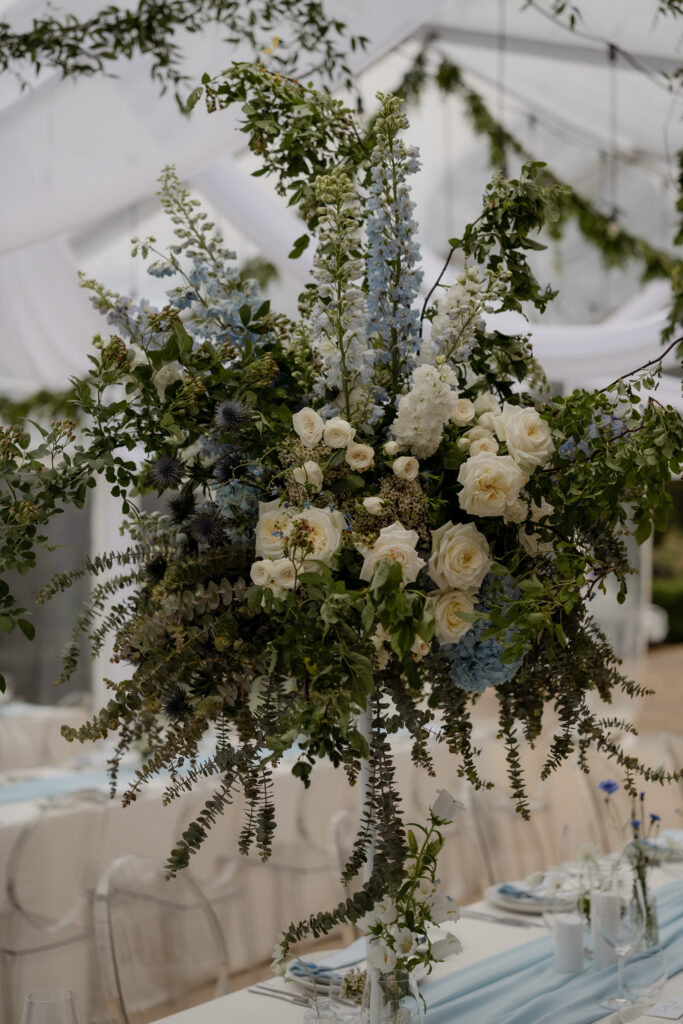
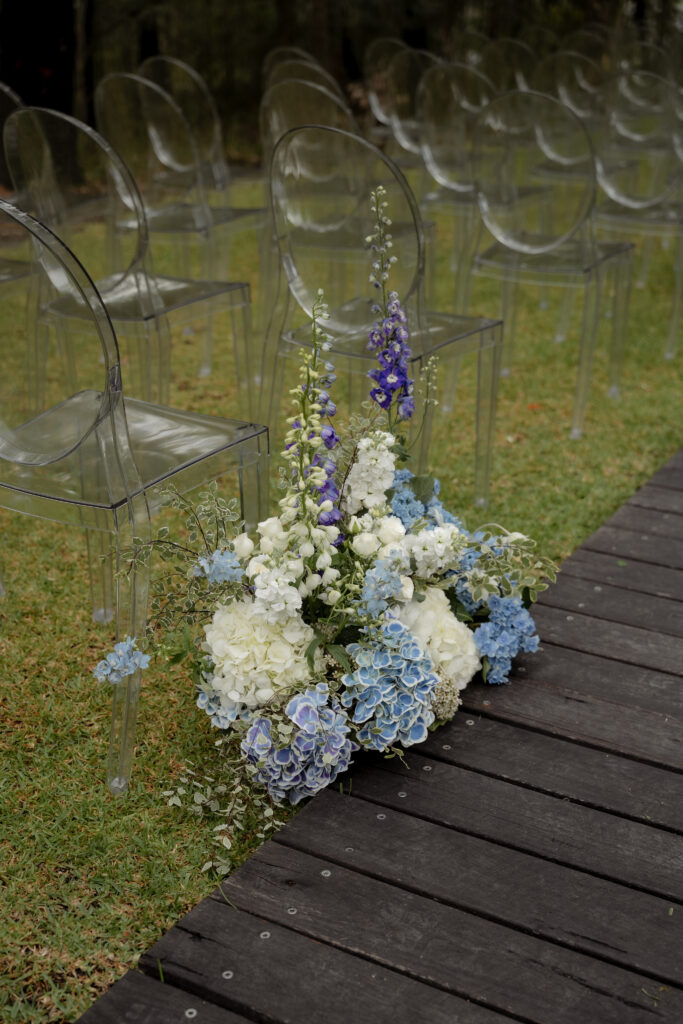
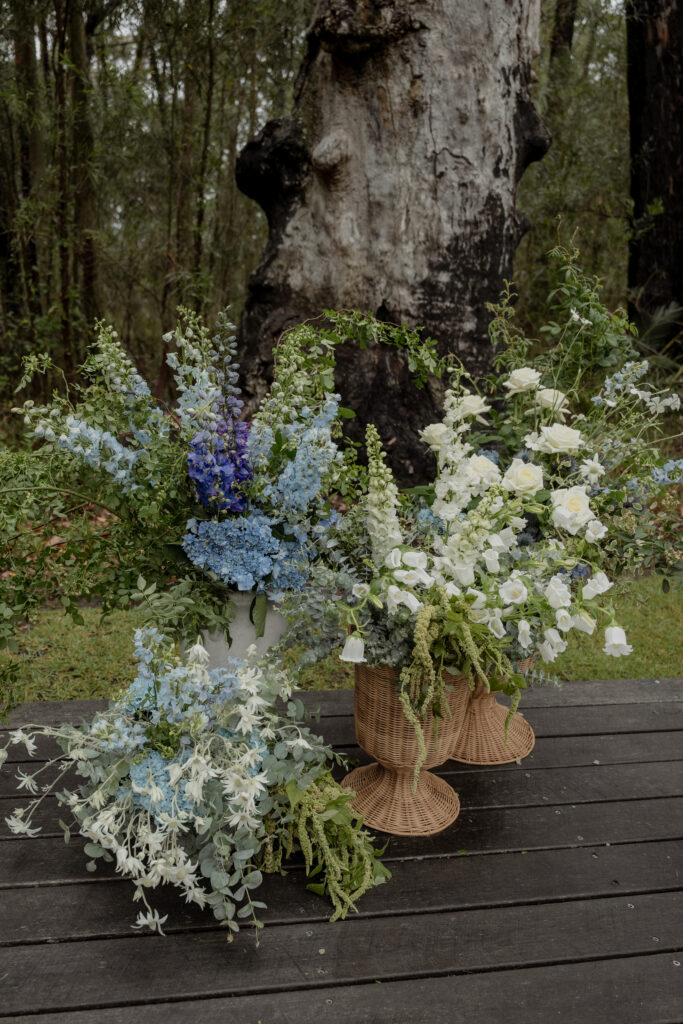
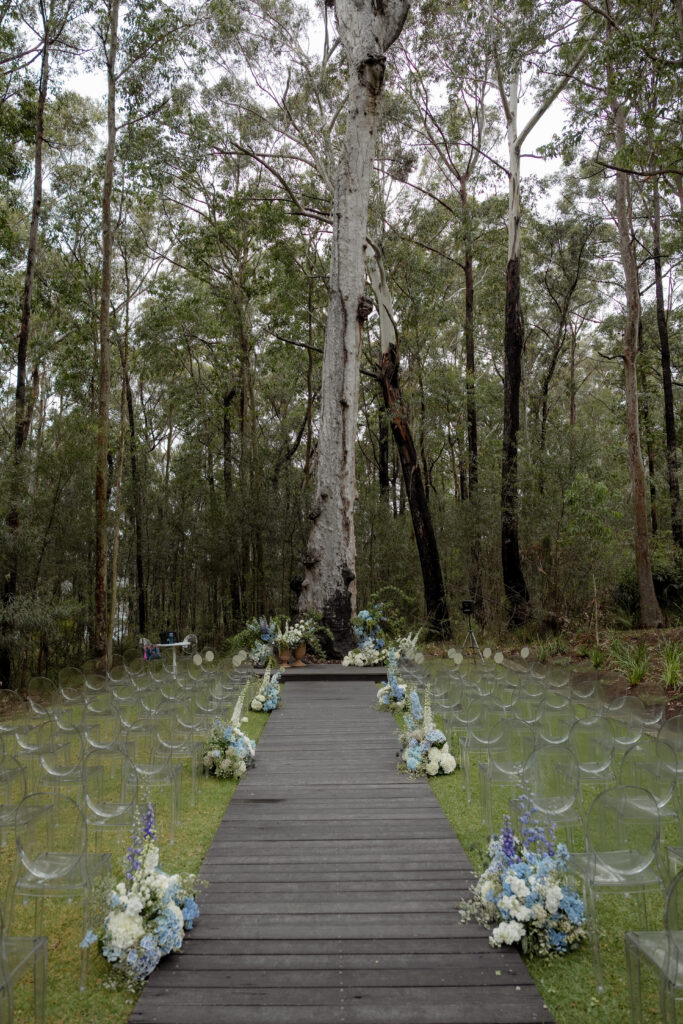
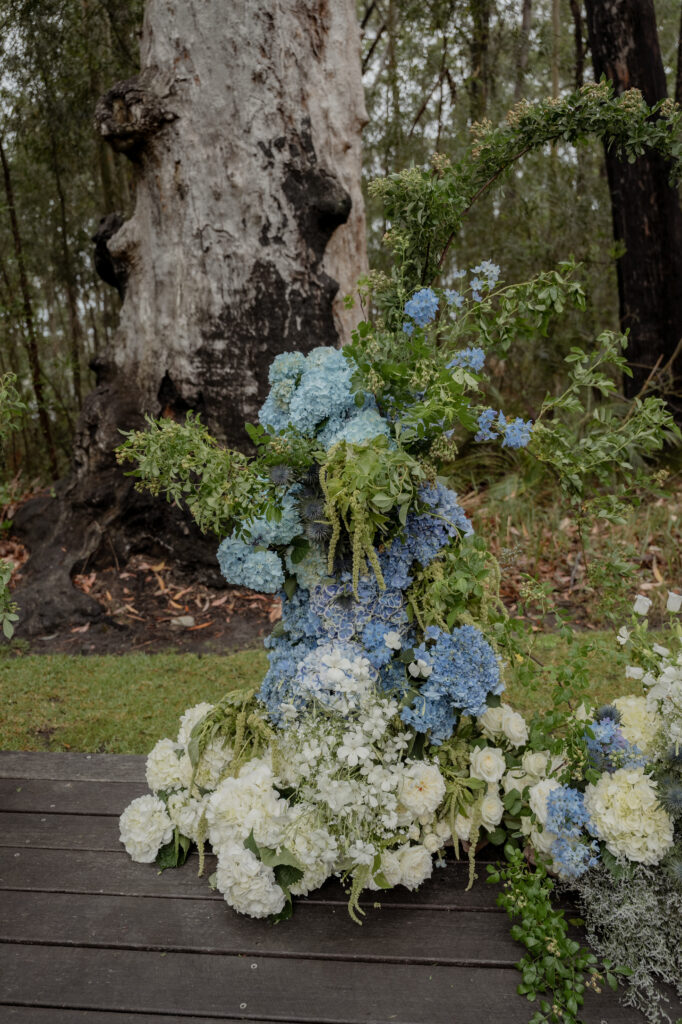
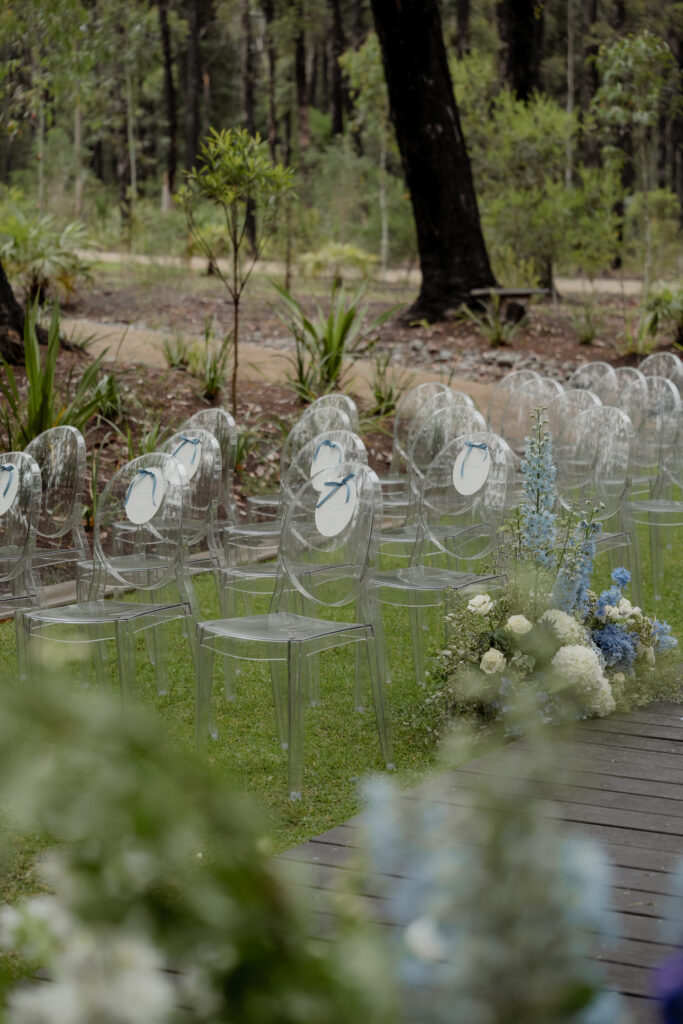
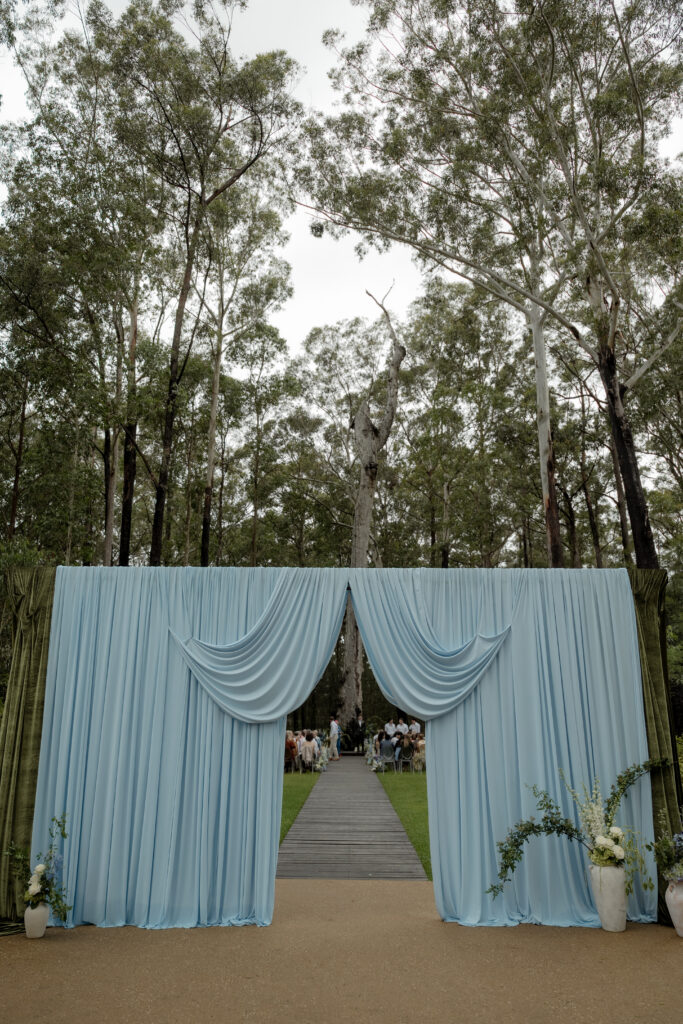
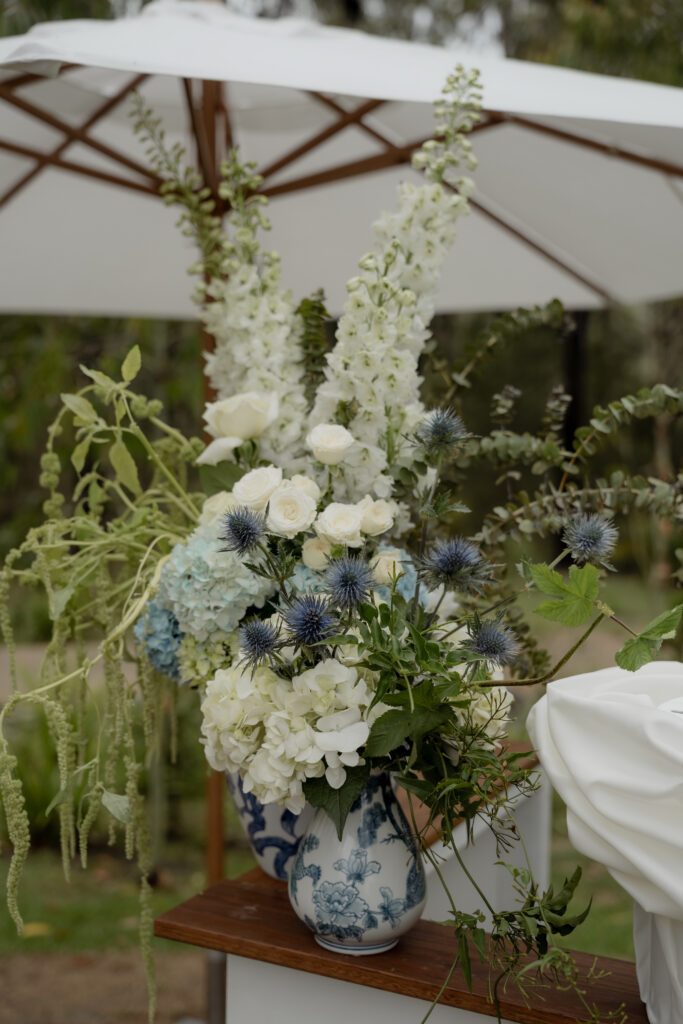
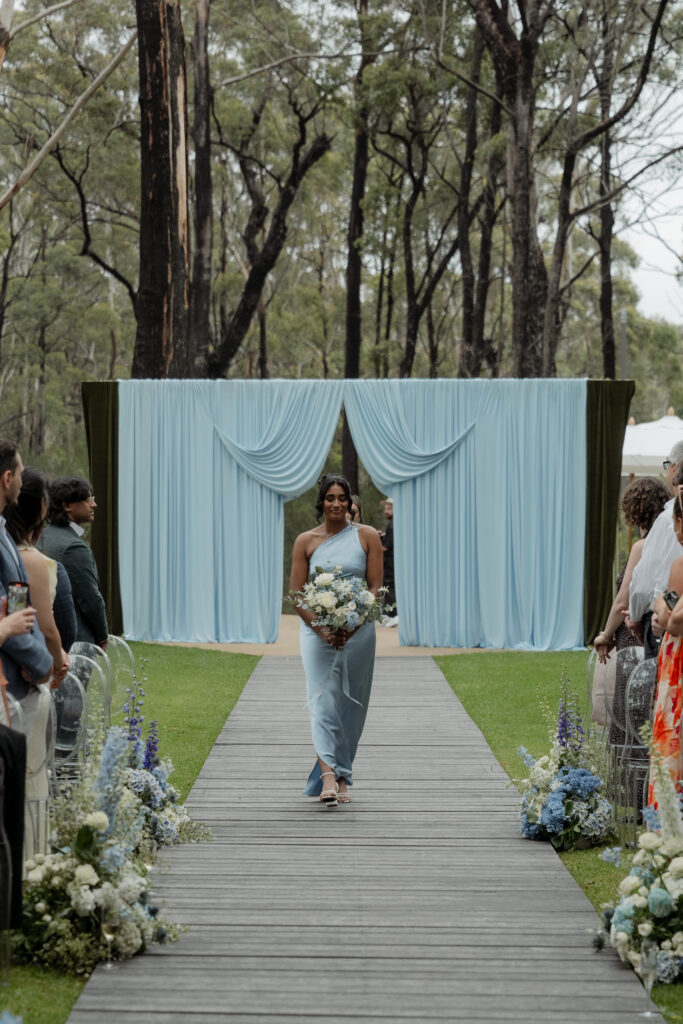
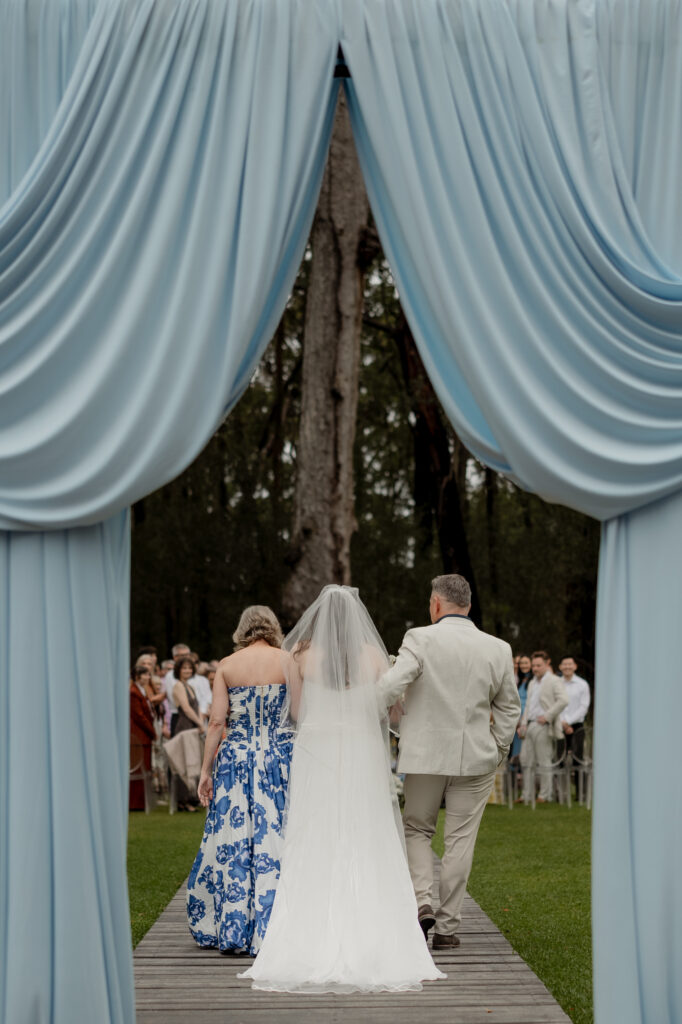
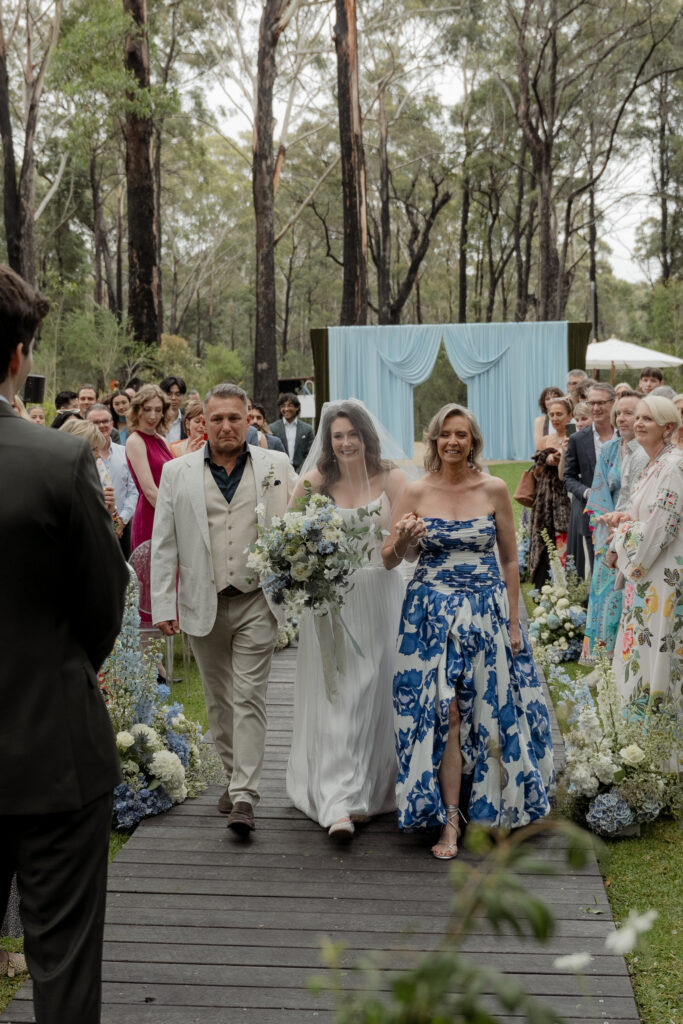
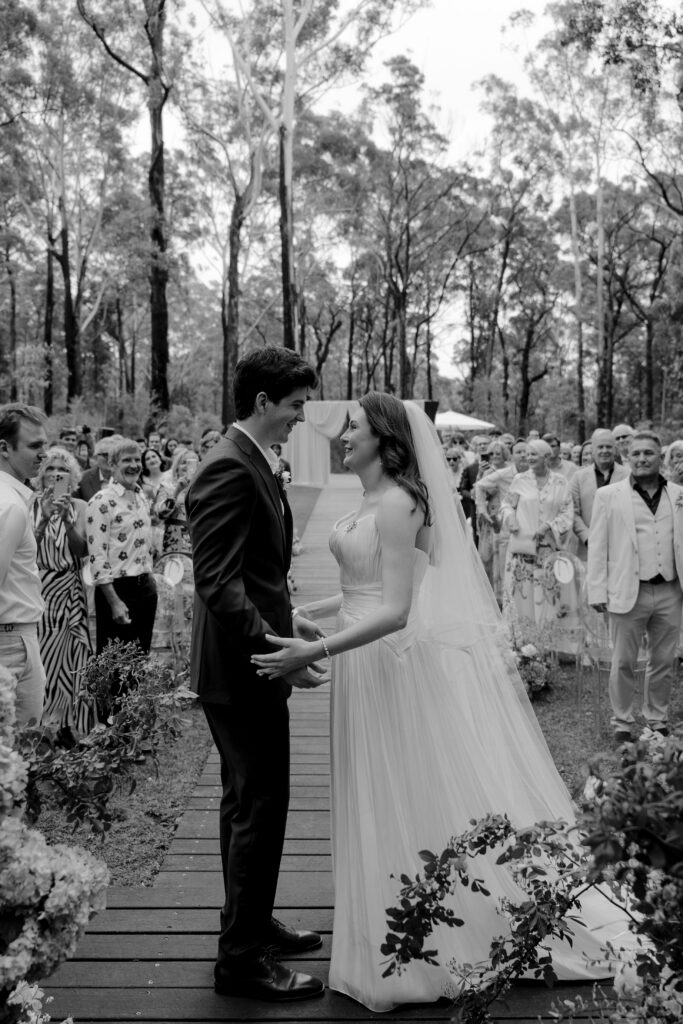
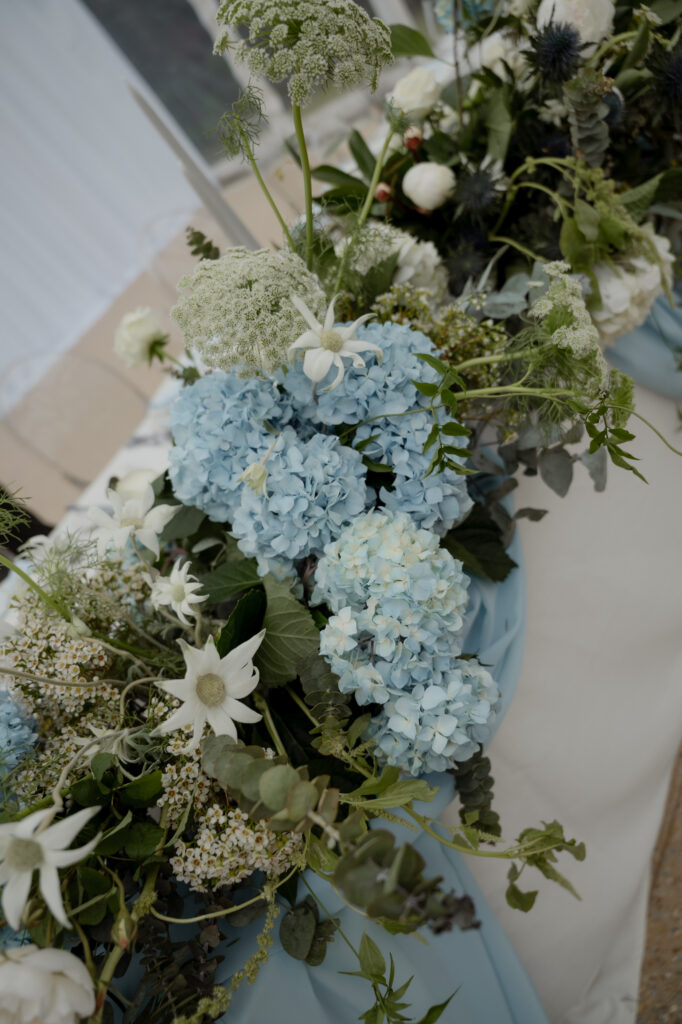
The ceremony had two urn arrangements flanking the ancient gum tree: one deeply blue, hydrangea graduating from sky to indigo, delphinium spiking up, eryngium catching the silver light, foliage spilling to the deck… and one softer, in ivory garden roses, flannel flower, corn cockle, and wax flower, to keep the blue from going cold. The aisle was lined with growing arrangements. And the powder blue chiffon draping at the ceremony entrance came first; it made the colour architectural, structural, before a single bloom was even in sight.
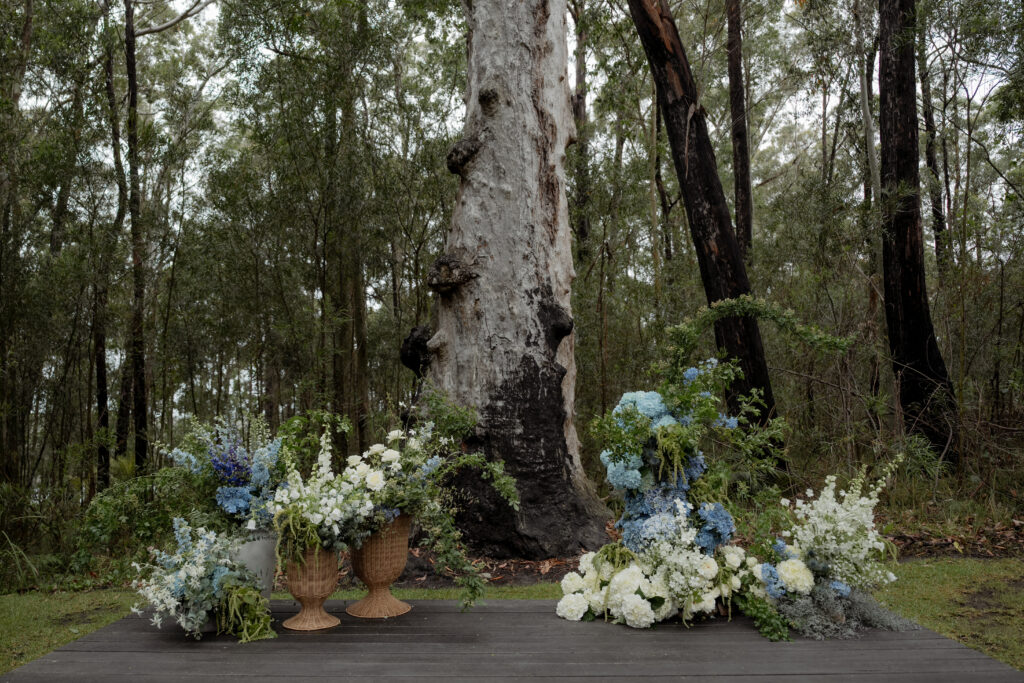
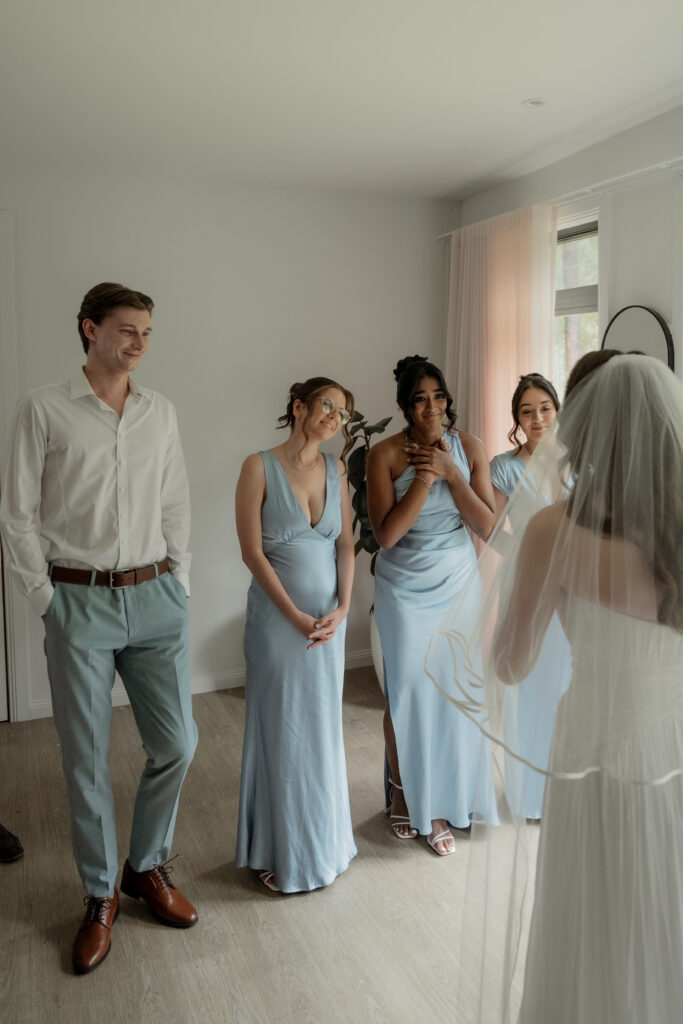
The bridesmaids were in powder blue satin.
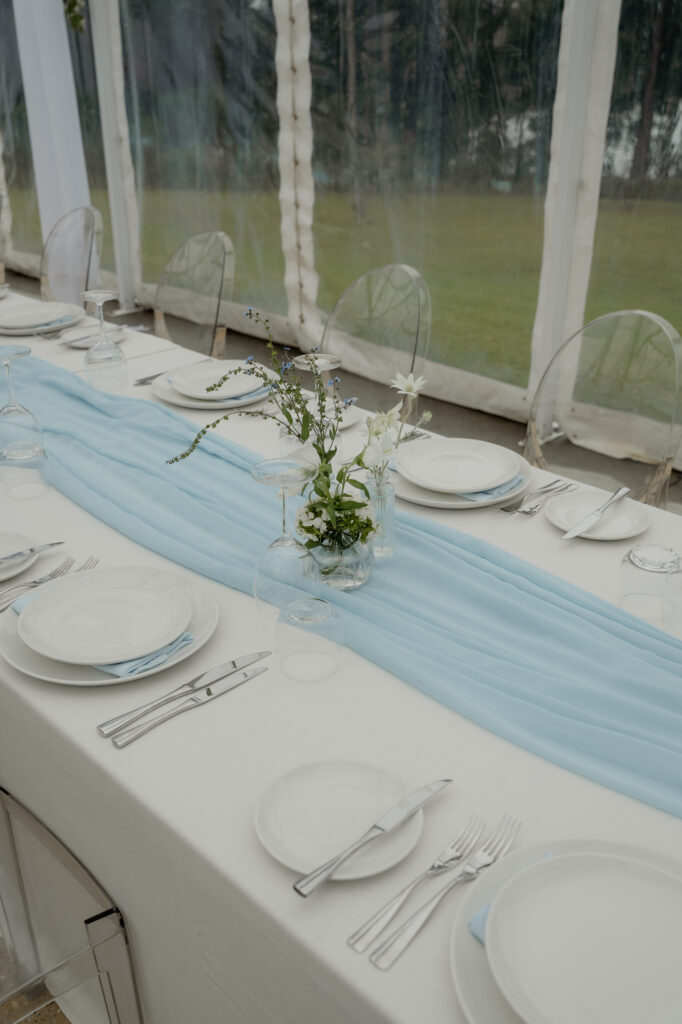
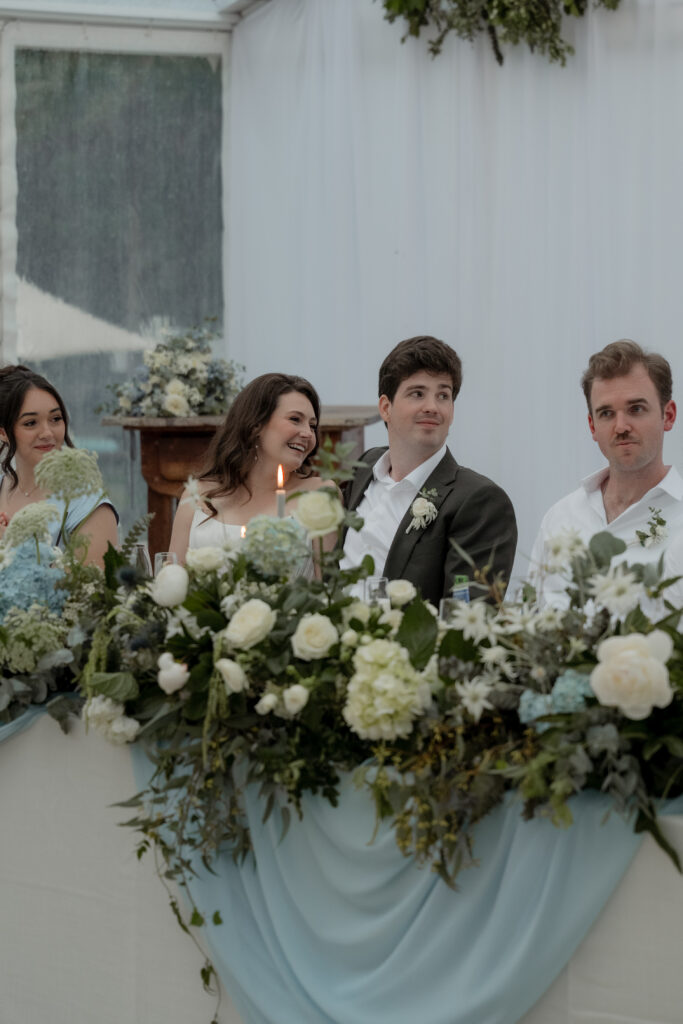
The table runners were powder blue.
Bud vases of delphinium, eryngium, sweet william, flannel, corn cockle and forget-me-nots dotted the tables.
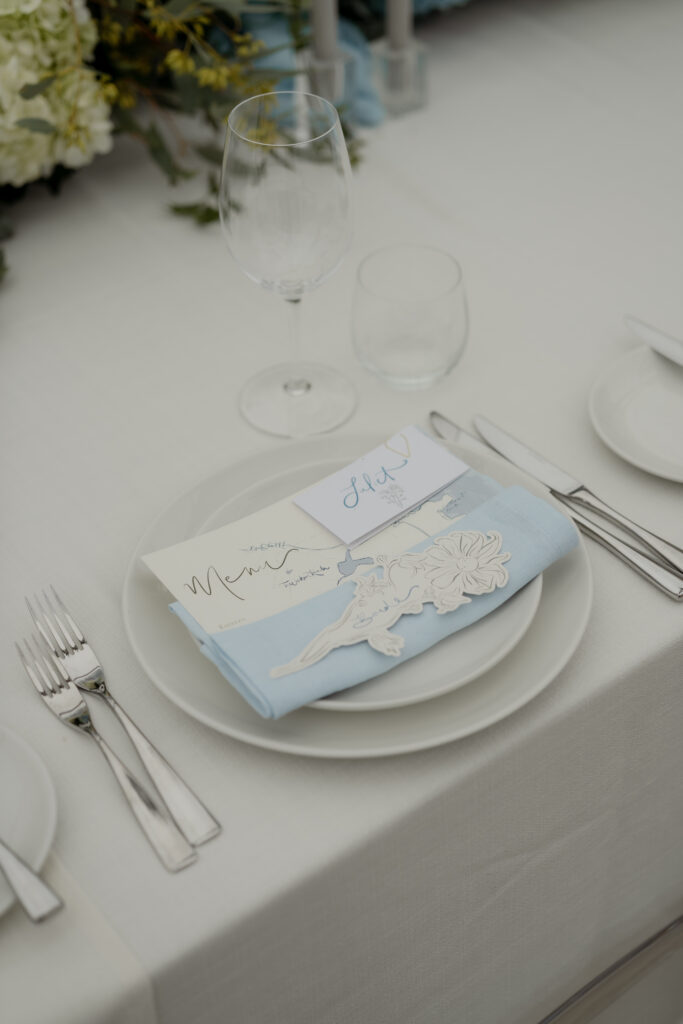
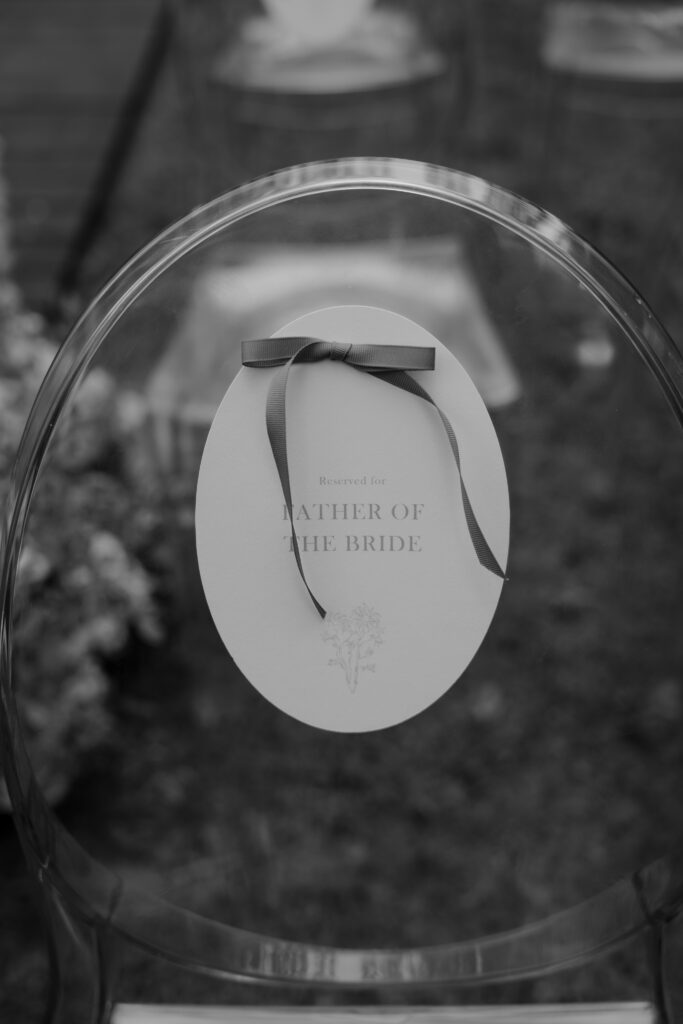
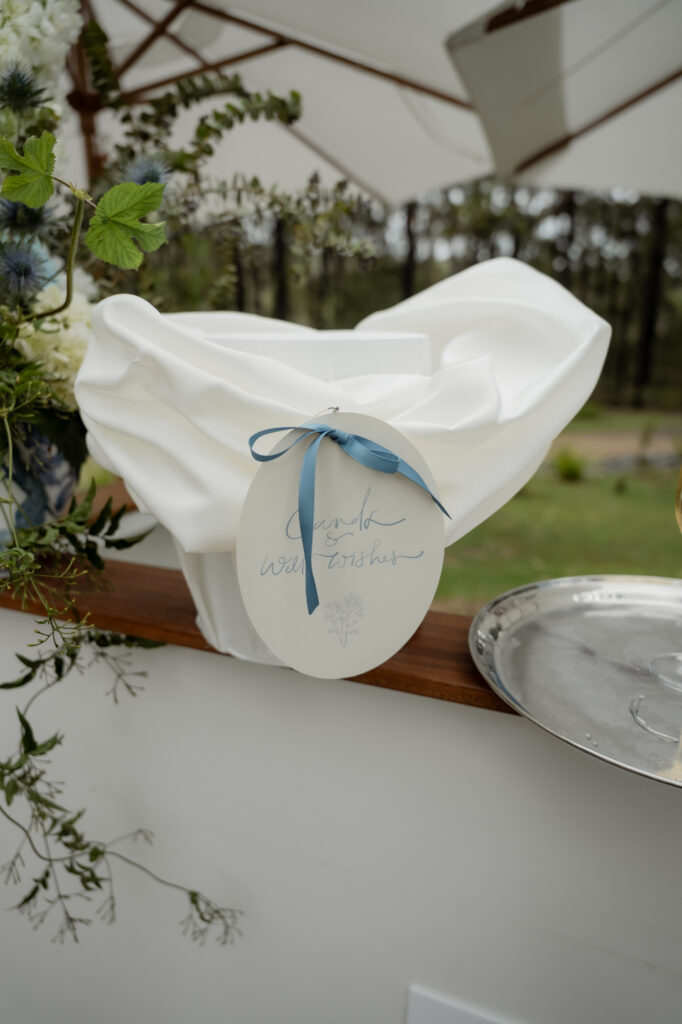
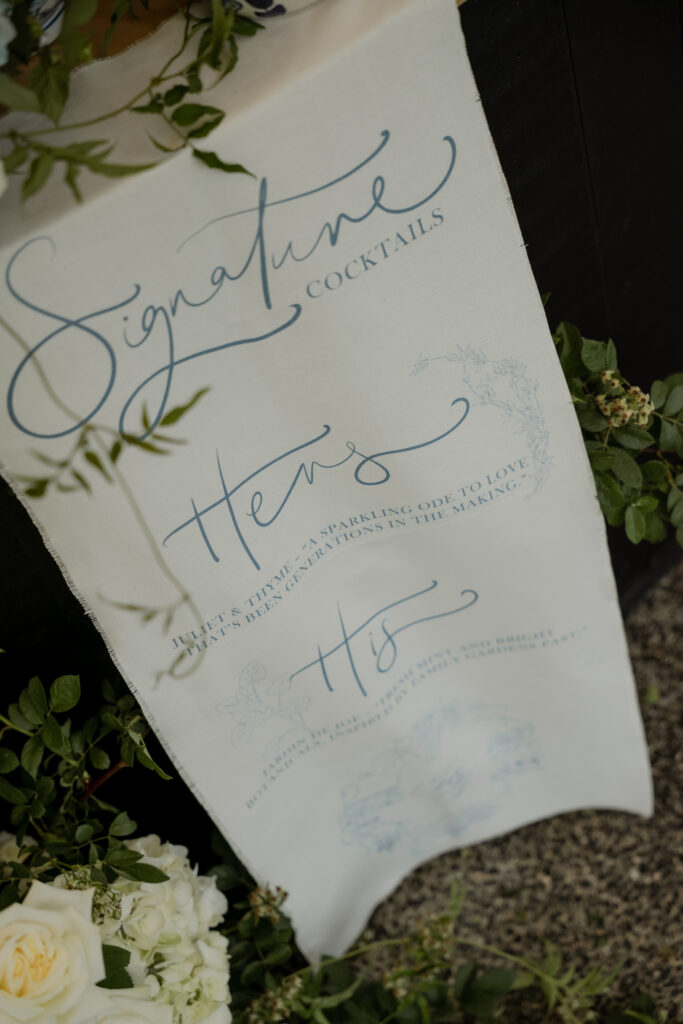
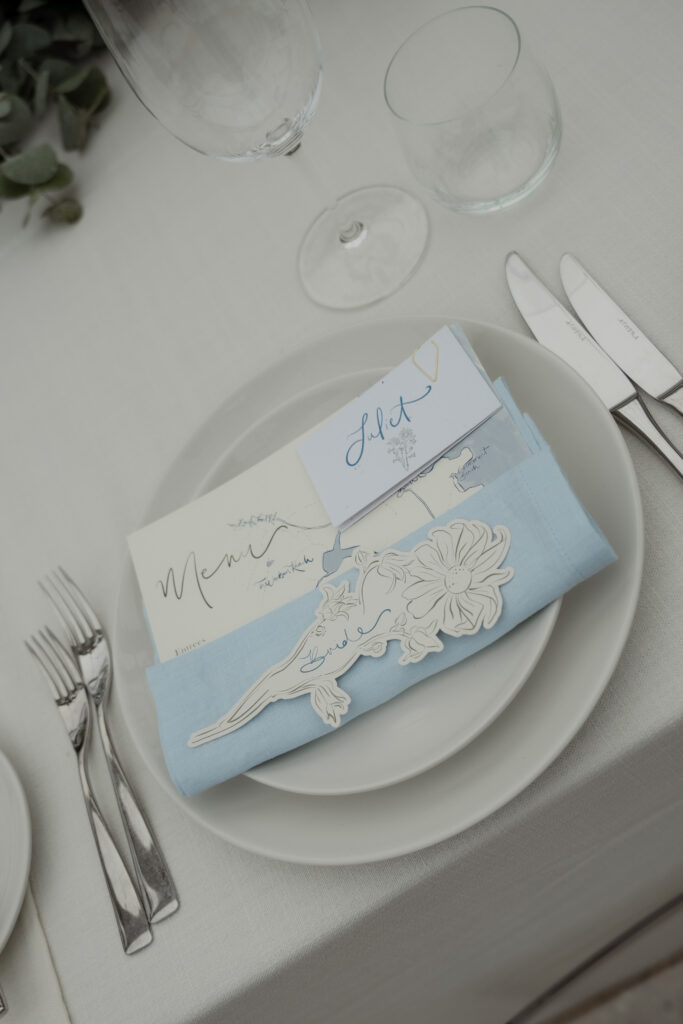
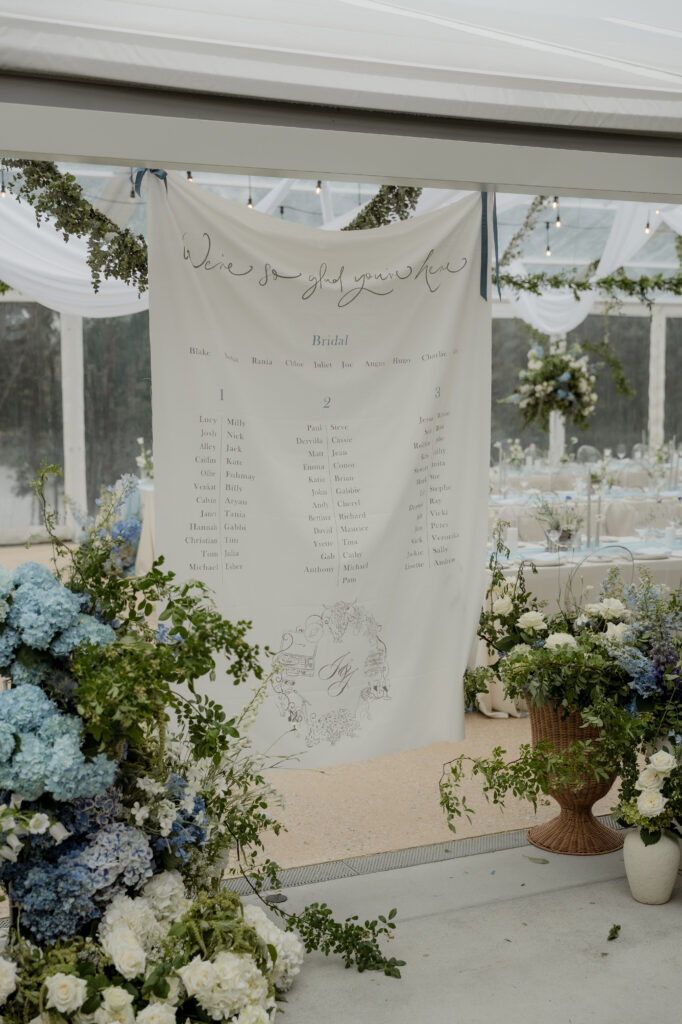
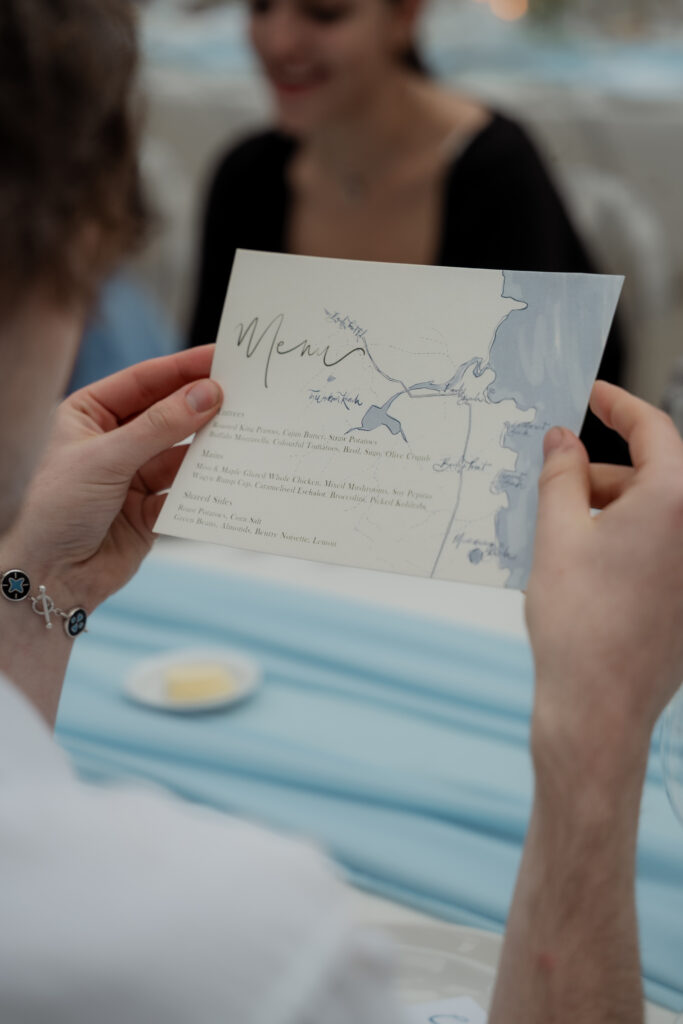
Stationery designed solely around the florals and surrounding landscape.
And above it all, the green garland wove through the ivory draping and the warm festoon glow. With the bushland sitting right there beyond the marquee panes, the whole room felt like it had grown that way.
Thinking About a Suspended Installation?
A ceiling garland transforms a space in a way that’s hard to describe until you’re standing inside it. It changes the scale of the room, the warmth of it, the sense of being held by the space rather than just inside it. It’s one of my favourite things to build.
But it does require someone who has thought through the full picture – the wire and clamps, the foliage selection, the hydration method, the logistics of getting it there in one piece. The aesthetic and the engineering have to work together, or neither works at all.
If you’re dreaming of a canopy – whether I’m planning the whole day or just the flowers – get in touch. I’d love to hear what you have in mind.
— Krysta
Krysta Smith Floral Artistry + Event Design
Credits:
Captured beautifully by @two.folk
Planned + designed, florals + drapery by @krystasmith.au
Venue @thejacksonranch_
Celebrant @lucysuzecelebrant
Entertainment @redsodaband
Furniture @socoeventhire
Stationery design @hurdusscriptco
Cake by our multi-talented Groom
HMUA @moniquekazokas


https://shorturl.fm/NtQww