
Babita + Krishna — A Tamil Hindu Kalyanam at Bendooley Estate
https://rollingcanvas.com.au/
I want to be upfront about something before I write a single word about this wedding.
This was my first Hindu ceremony. And not just my first; a Tamil Hindu Kalyanam specifically, with its own distinct rituals, its own sacred language, its own deeply held meaning for every family member present.
I was an outsider to this tradition, and I knew it.
What I also knew was that being invited into it was a privilege.
Not a brief, not a job.
A privilege.
And I approached every decision I made for Babita and Krishna from that place.
I read everything I could find. I asked questions. I listened far more than I spoke. I wanted to understand not just what things looked like in a Hindu ceremony, but what they meant — because you cannot design respectfully for something you don’t understand. What followed was one of the most meaningful weddings I have ever been part of. And there was a moment at the end of the day that I will carry with me for a very long time. I’ll come to that.
A Family Already Known to Me
Babita’s brother had married the year before, and I had flowered that wedding. The palette I developed for it, what I called Winter Brights, was a full-spectrum celebration of colour: saffron, coral, crimson, blush, cobalt, and everything in between. It was joyful and abundant and completely unlike anything in my portfolio at the time.
When Babita came to me for her own wedding, that palette was the starting point. The same spirit of colour and abundance, reinterpreted for a different venue, a different season, a different ceremony.
There is something I find deeply moving about being trusted by a family across two of the most important days in their life. And Babita and Krishna’s day was built on that foundation.
Two Days, Two Worlds
This was a two-day, two-venue celebration, which meant designing for two completely different environments with two completely different moods.
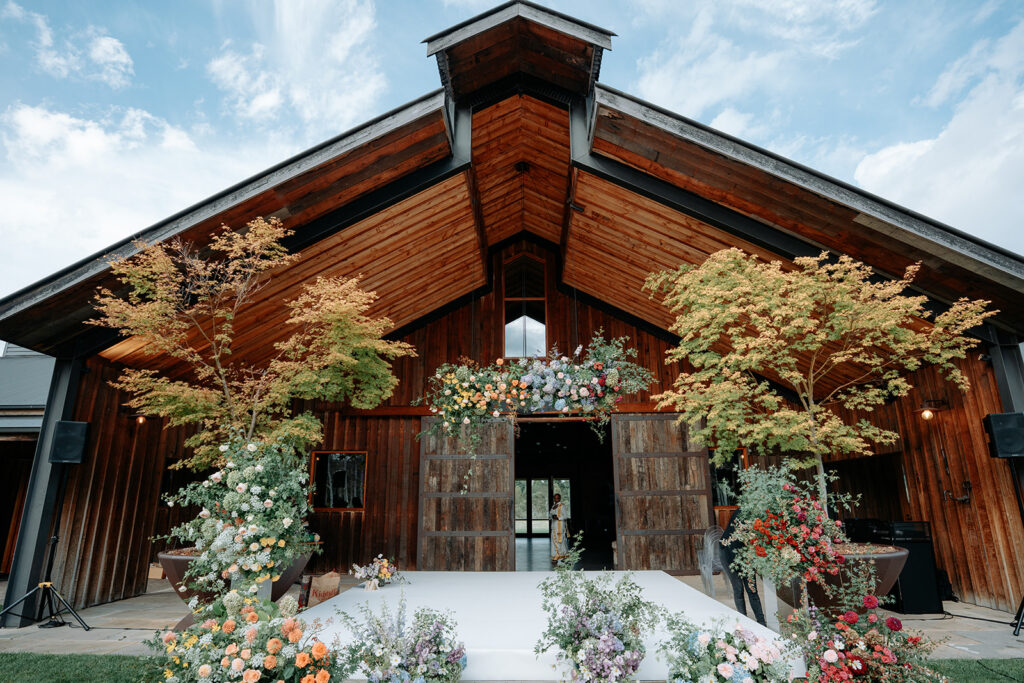
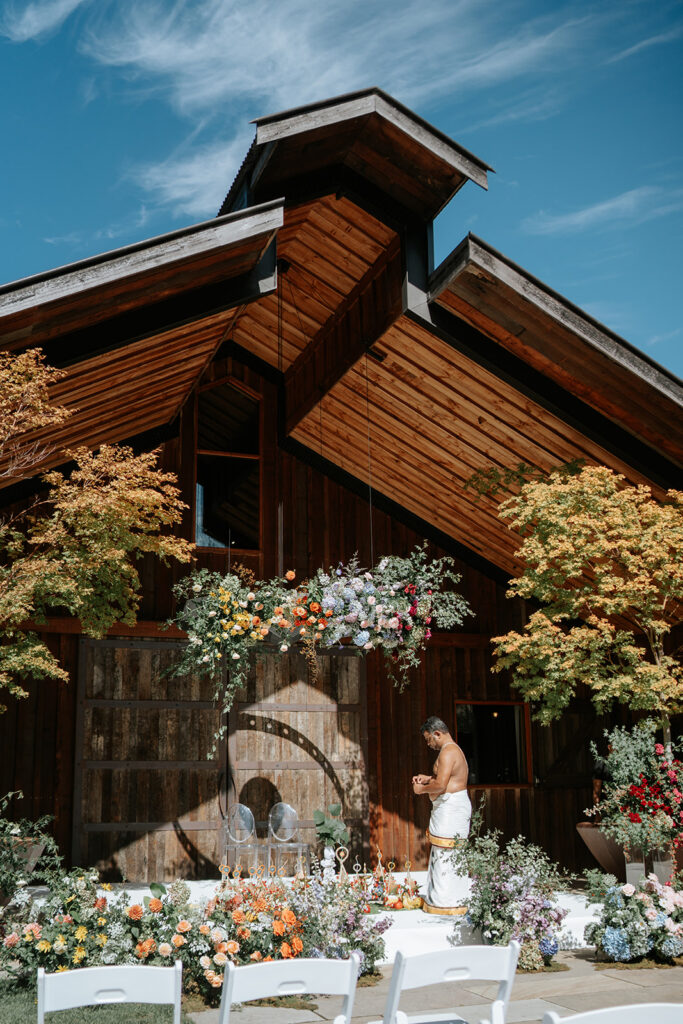
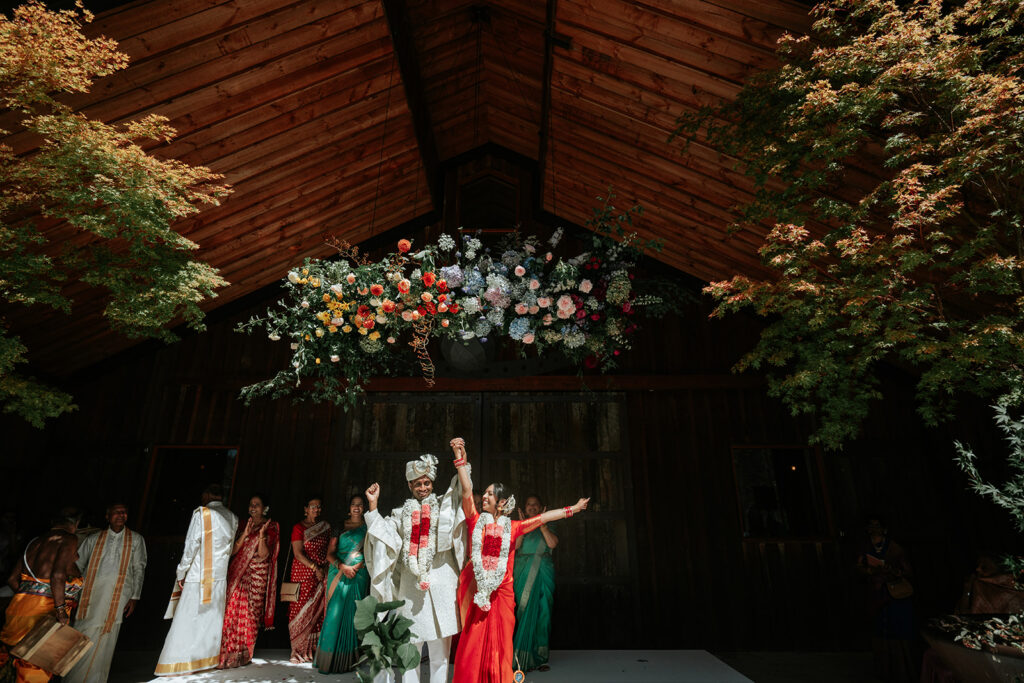
Day one was the Kalyanam: the traditional Tamil Hindu ceremony at Bendooley Estate in the Southern Highlands. Ancient ritual, sacred fire, a priest conducting rites that have been observed for thousands of years. A ceremony conducted outdoors on the stage directly in front of Bendooley’s magnificent heritage barn, in full summer sun, surrounded by Japanese maple trees and 140 guests. Day two was the civil reception: The Eveleigh in Sydney. Industrial heritage space, DJ, indoor fireworks, speeches, a Delhi O Delhi feast, dancing until midnight. Vibrant, celebratory, joyful in an entirely different register.
The florals had to honour both. The ceremony needed to feel sacred and site-specific. The reception needed to feel like a party. Same palette, different energy.
Learning the Kalyanam
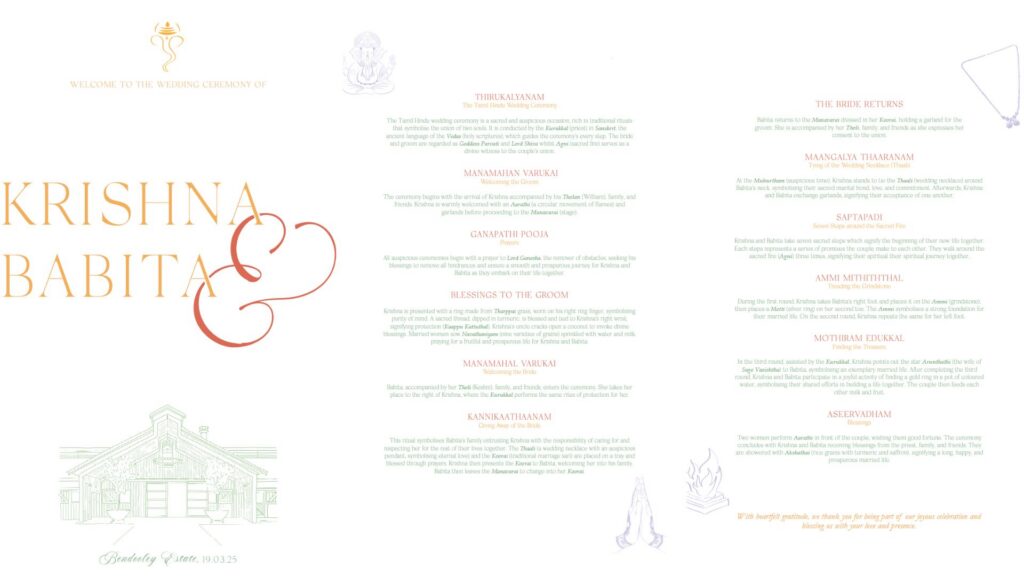
A Tamil Hindu Kalyanam is not a ceremony you can approach with a generic ‘Indian wedding’ reference folder. It has specific elements, specific symbolism, specific ritual objects that carry meaning I needed to understand before I could design around them.
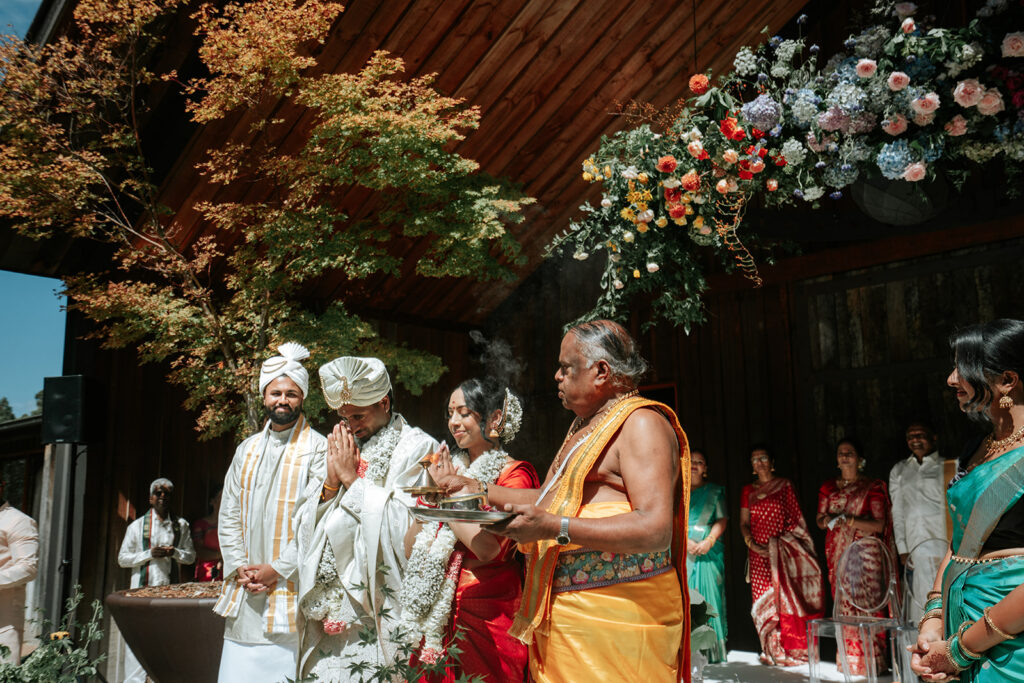
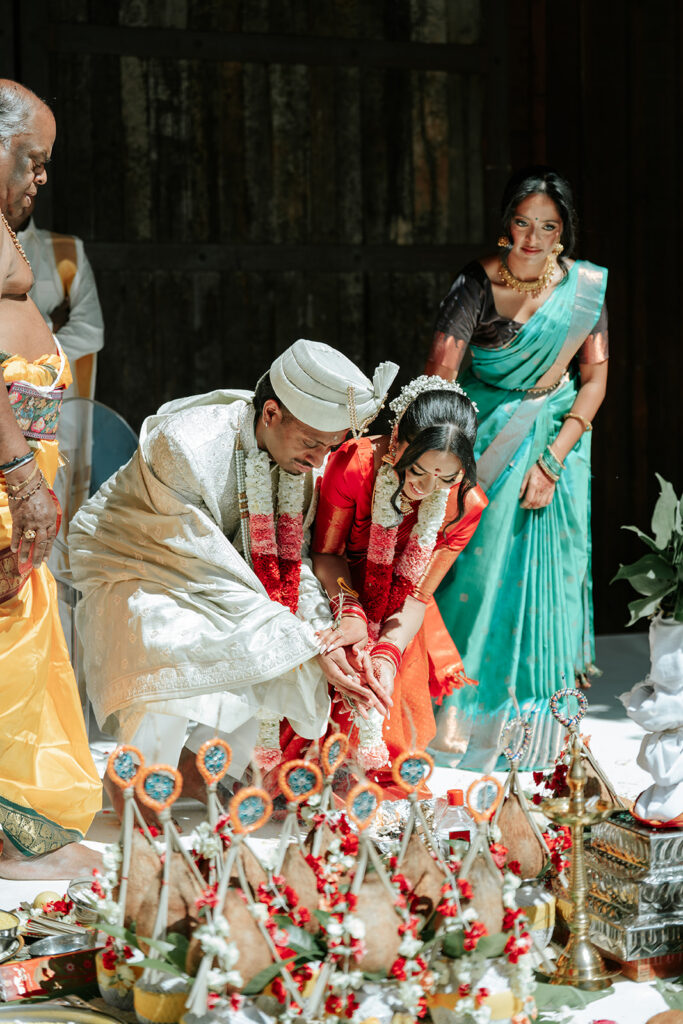
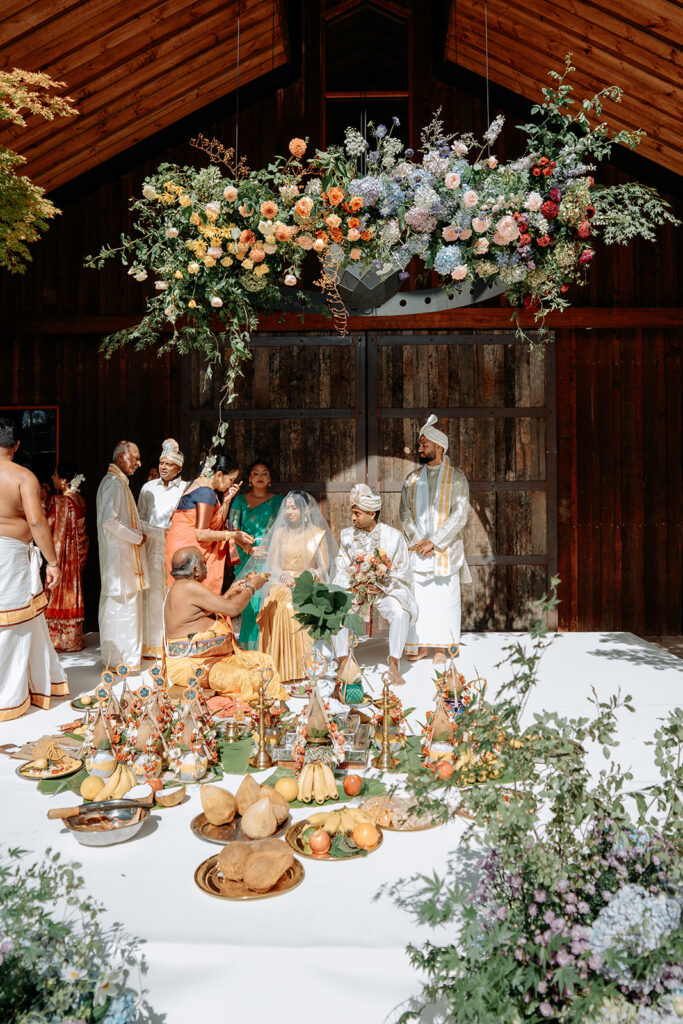
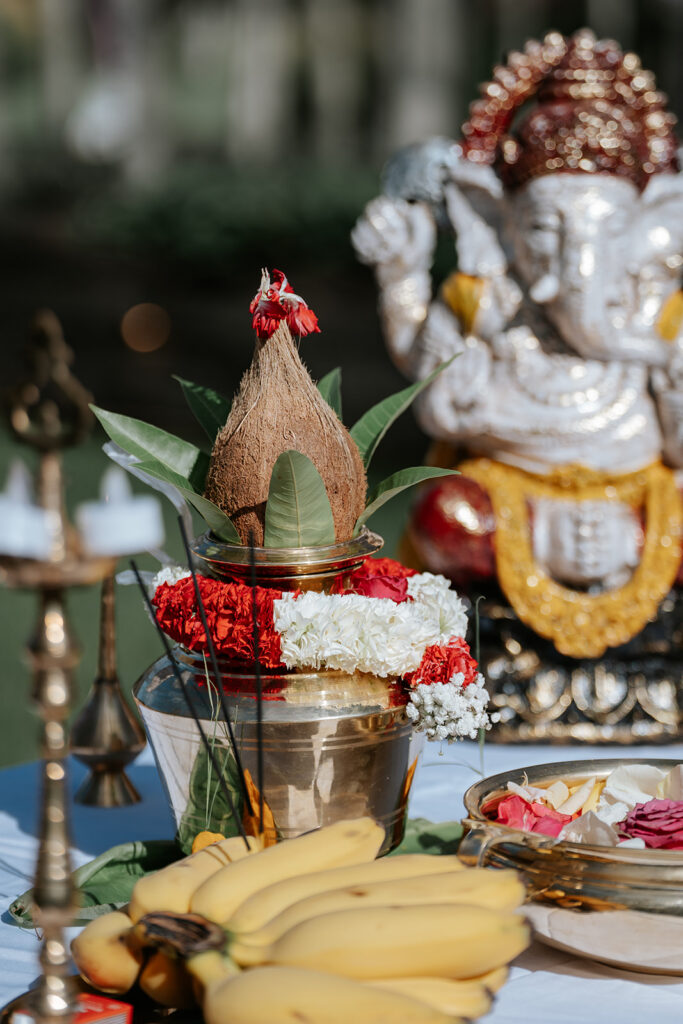
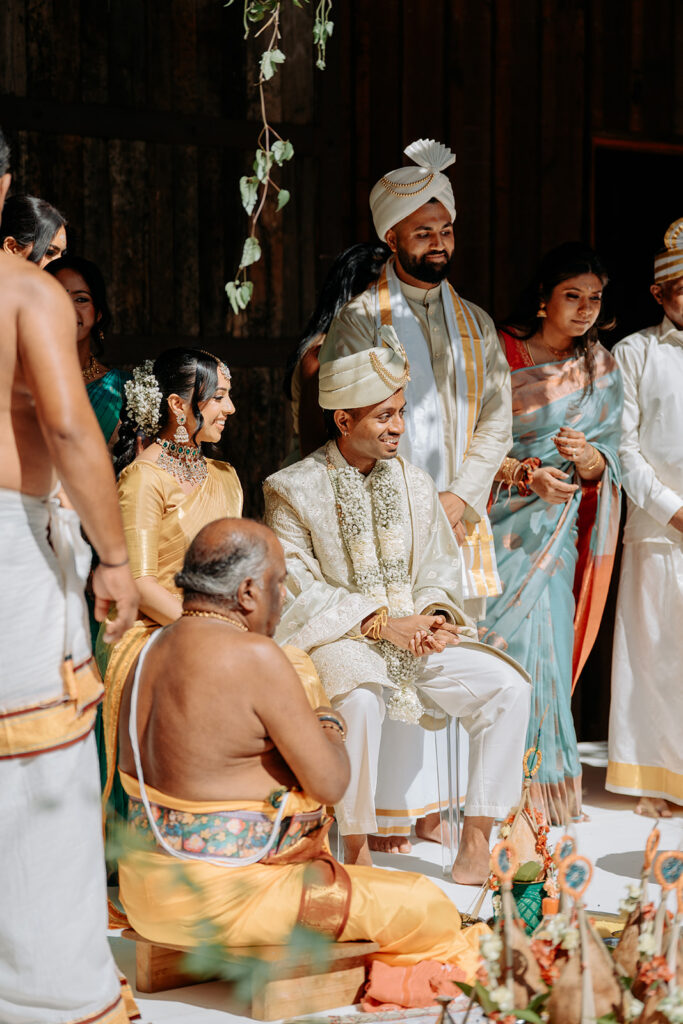
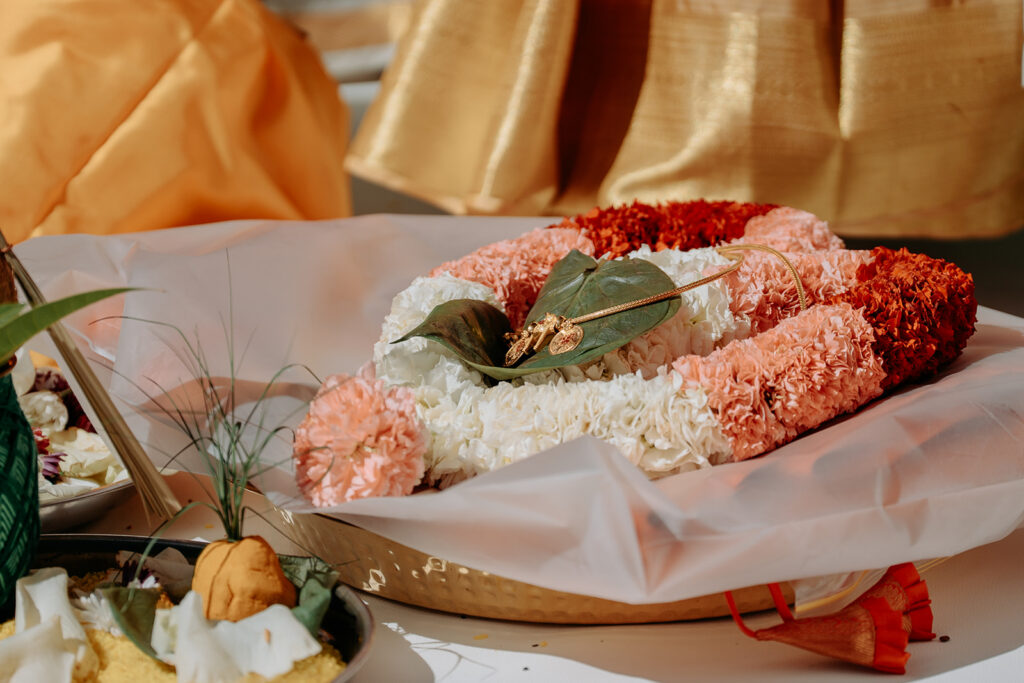
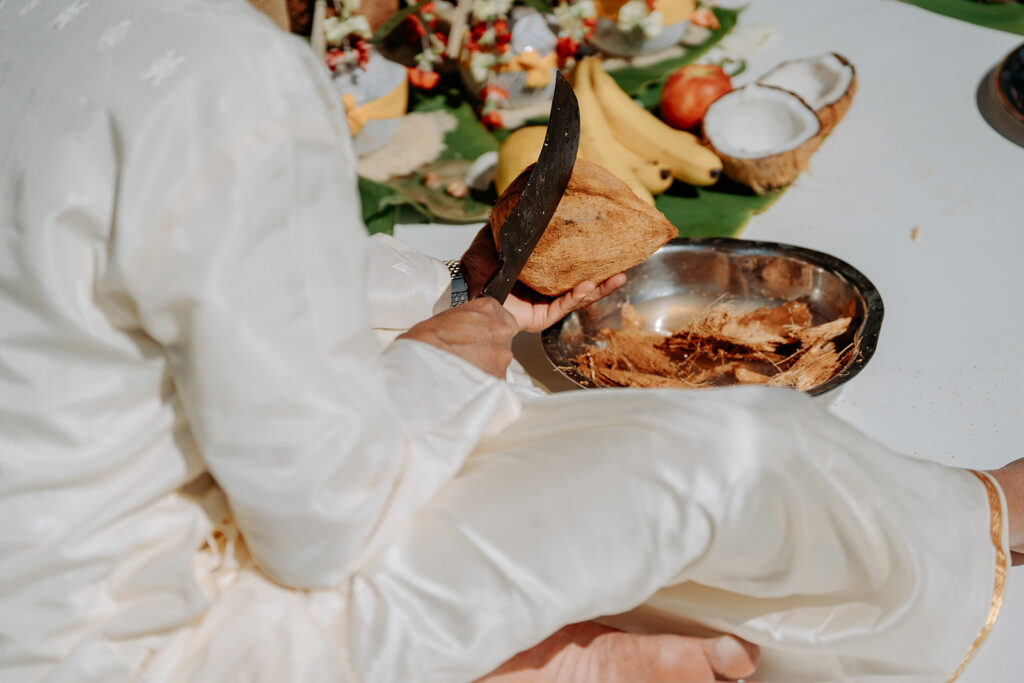
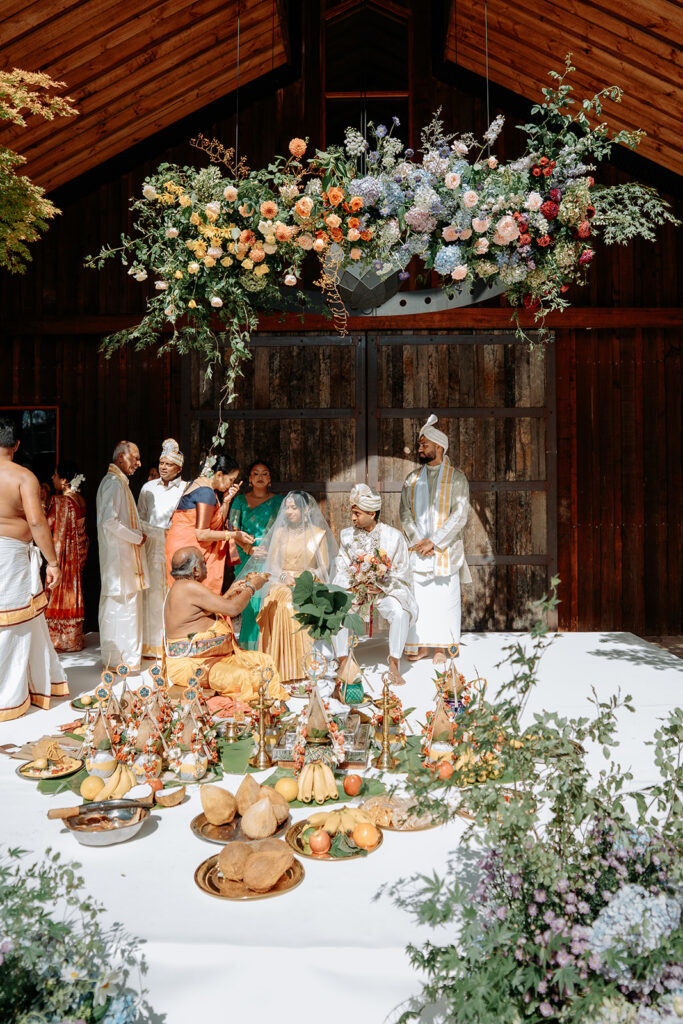
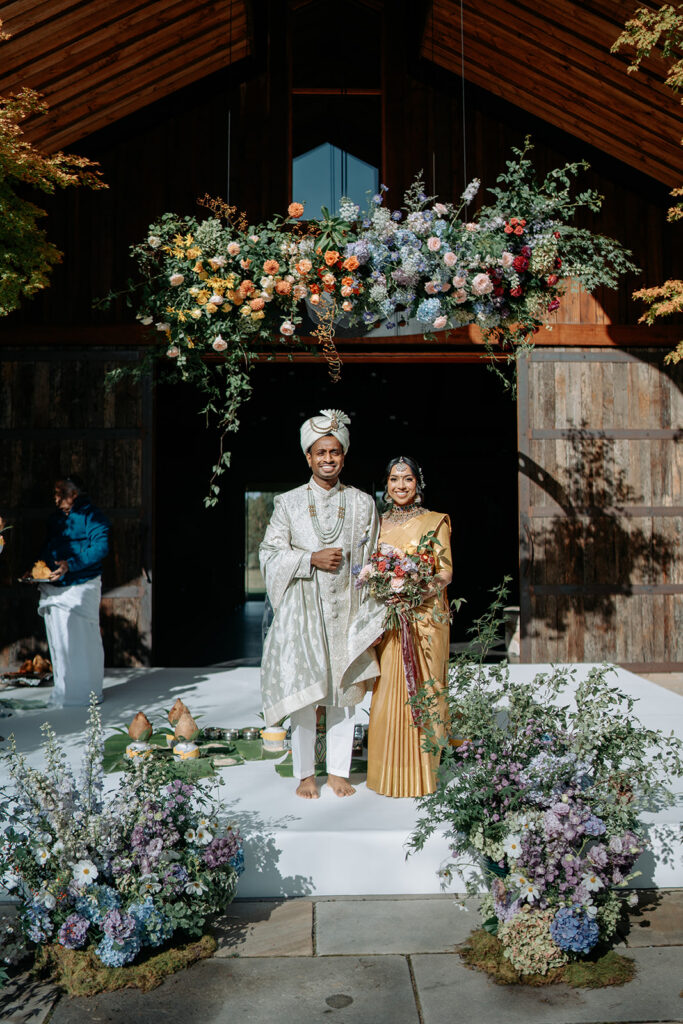
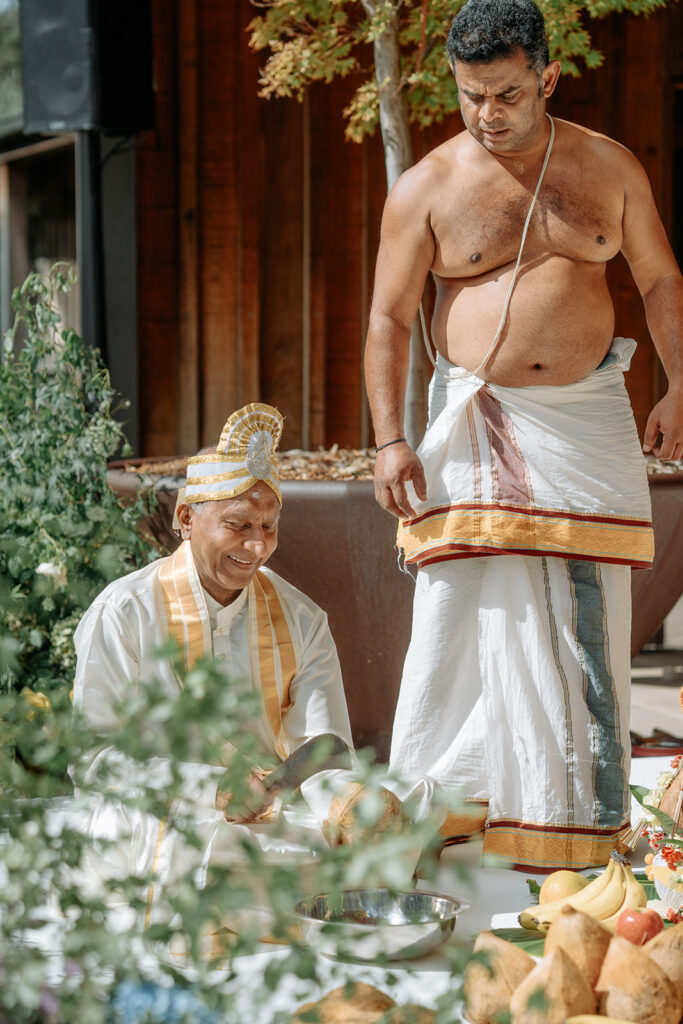
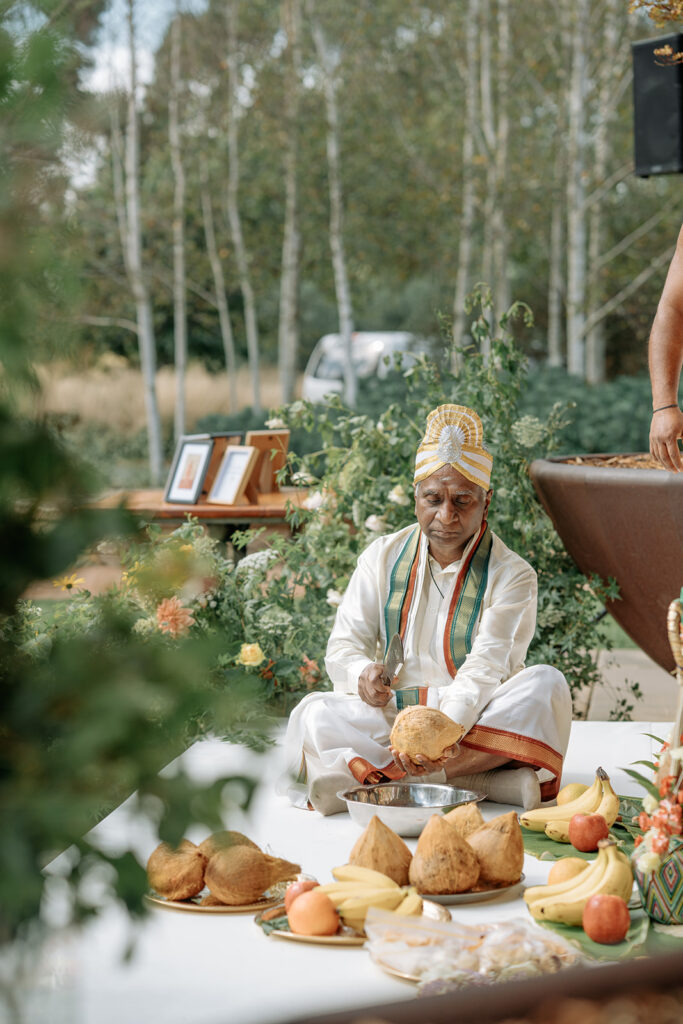
The Manavarai is the sacred stage; the elevated platform where the priest conducts the rites, where the couple sit, where the ceremonial objects are laid out. Banana leaves, brass lamps, coconuts crowned with mango leaves, plates of fruit and flowers, the sacred fire.
These items are not decorative.
They are the ceremony.
My job was to create an environment that honoured them rather than competed with them.
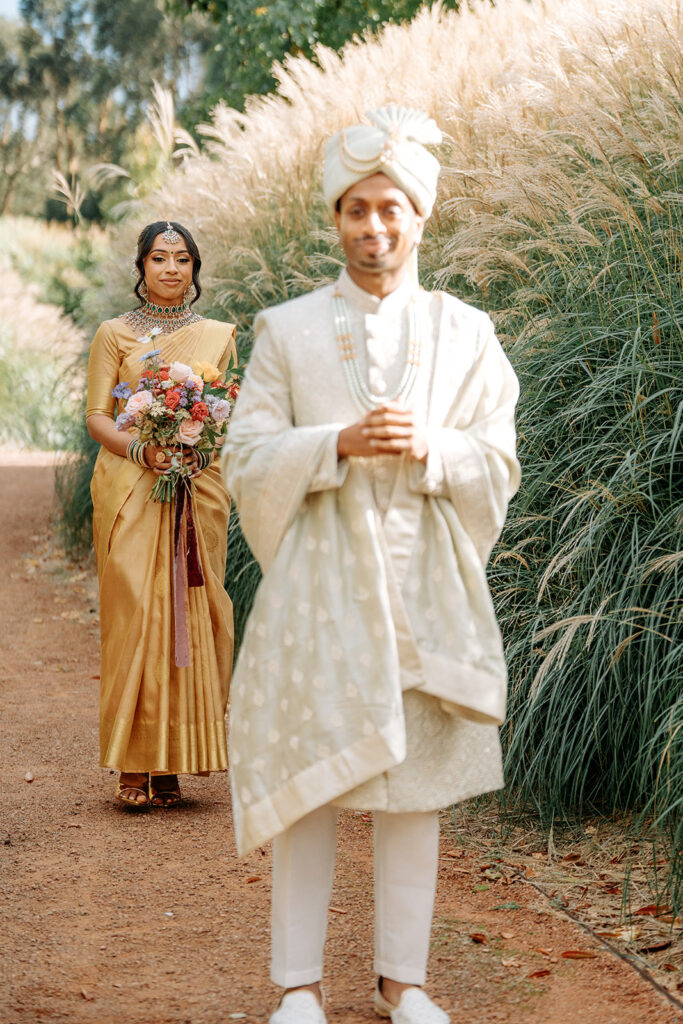
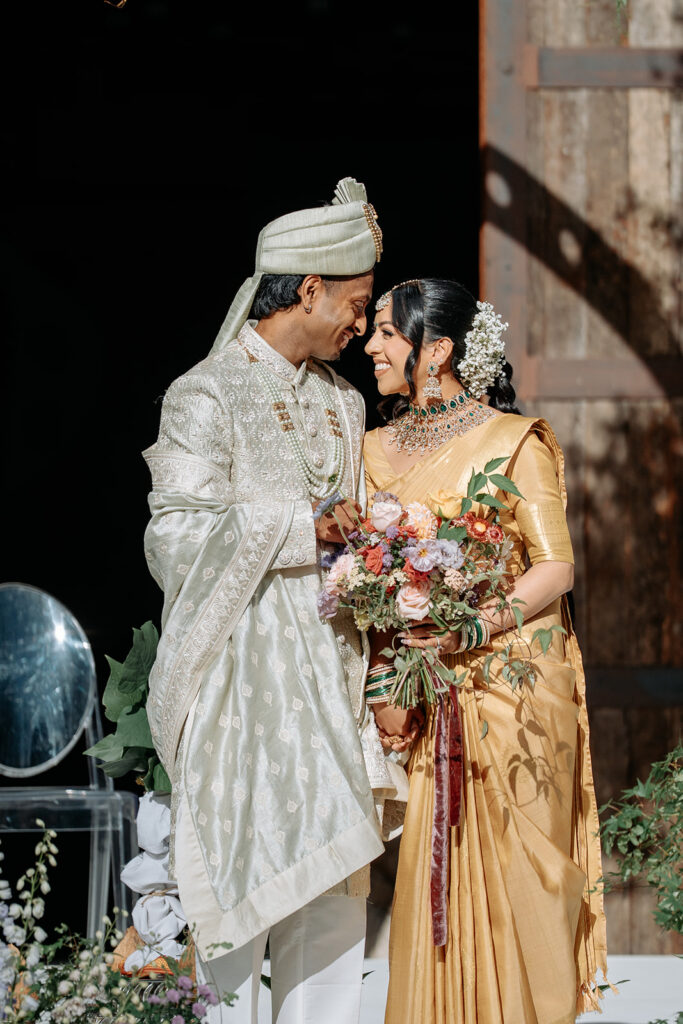
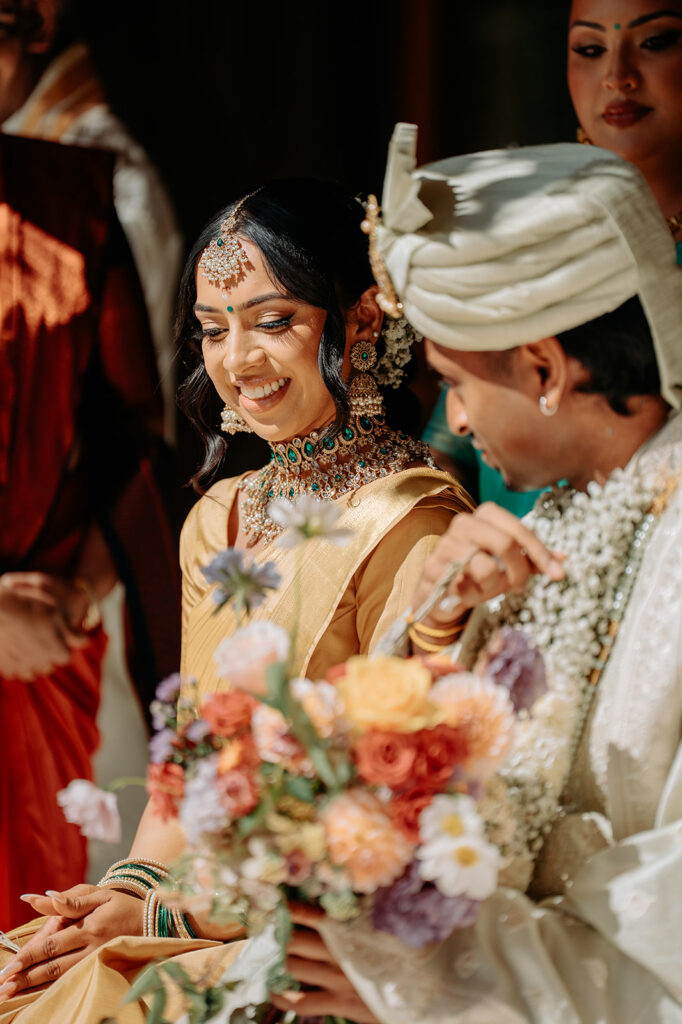
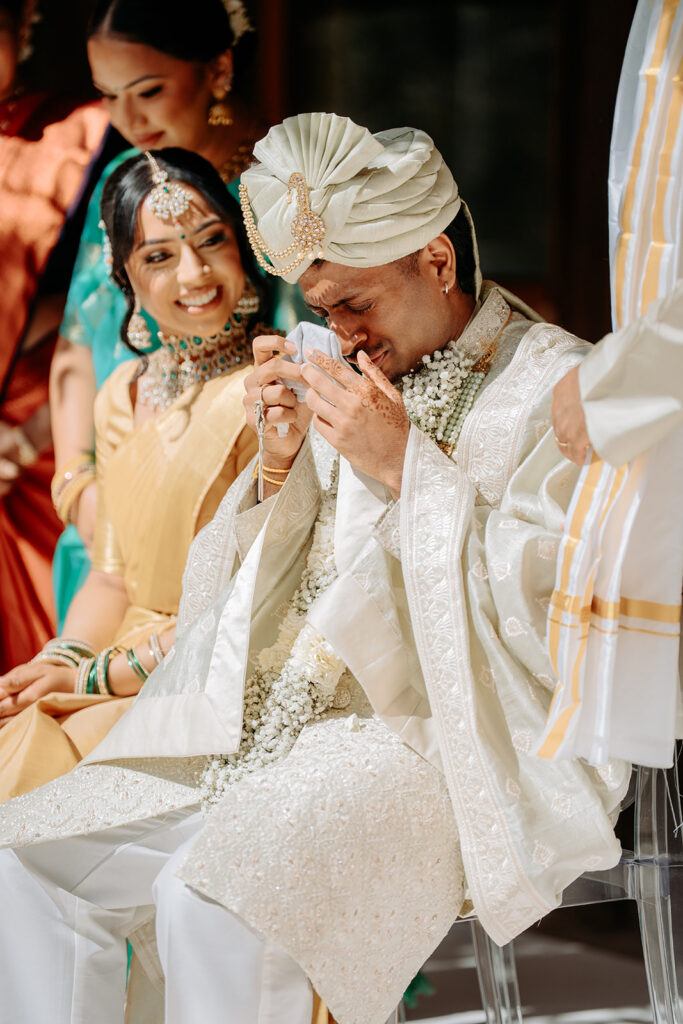
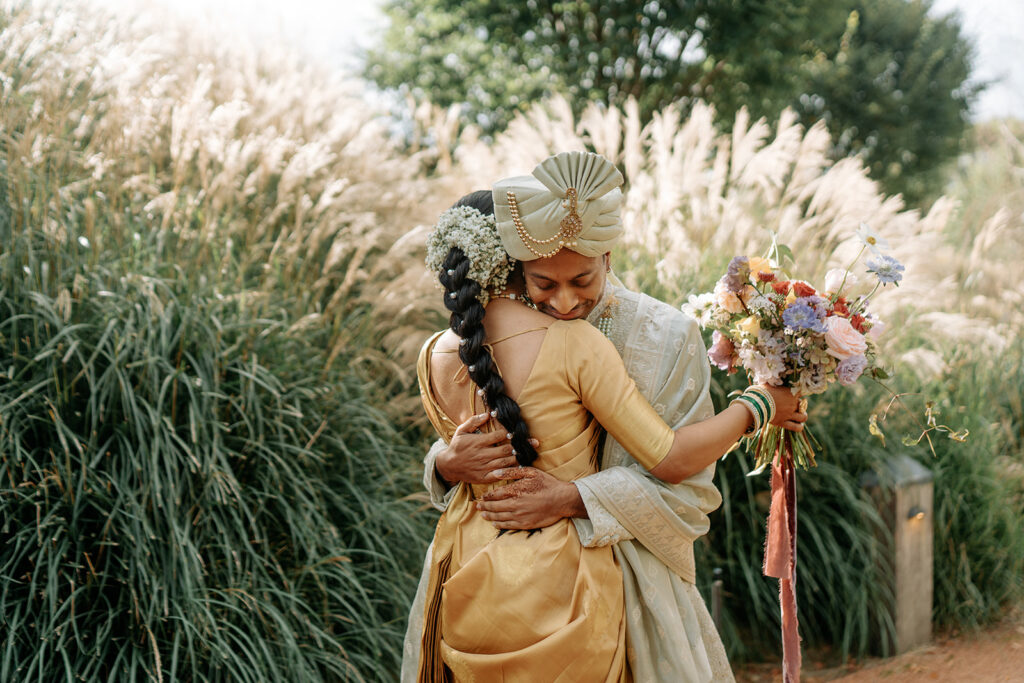
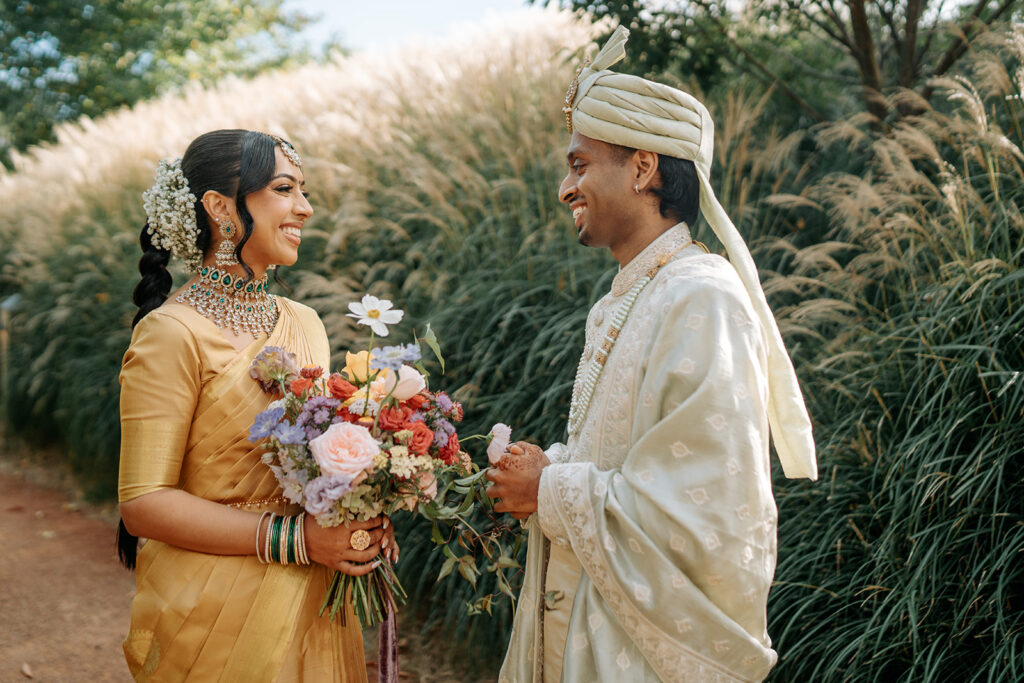
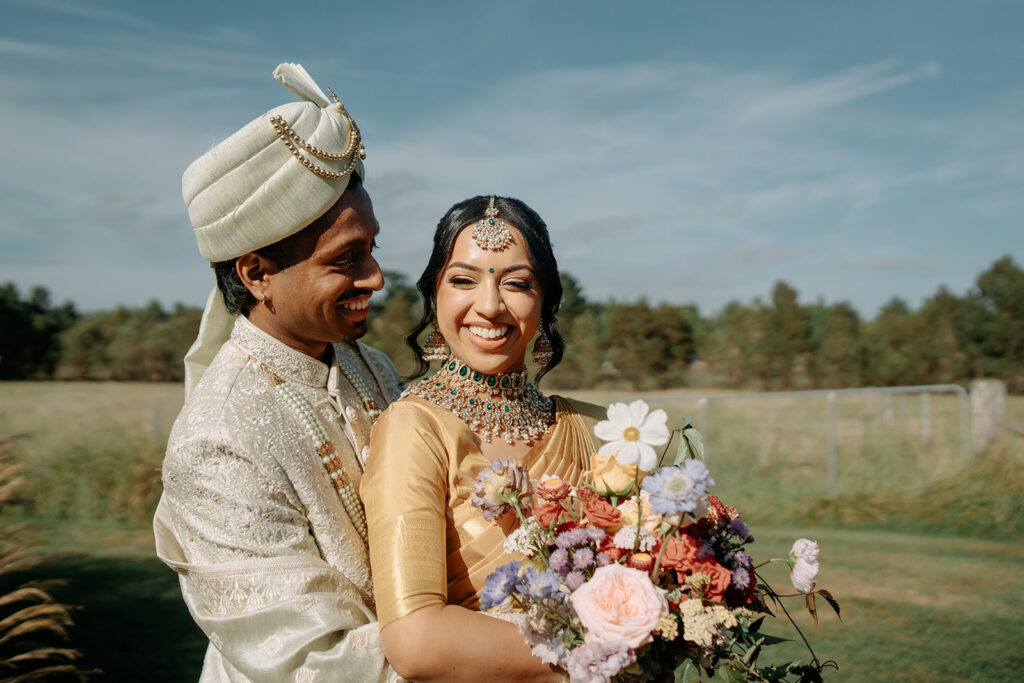
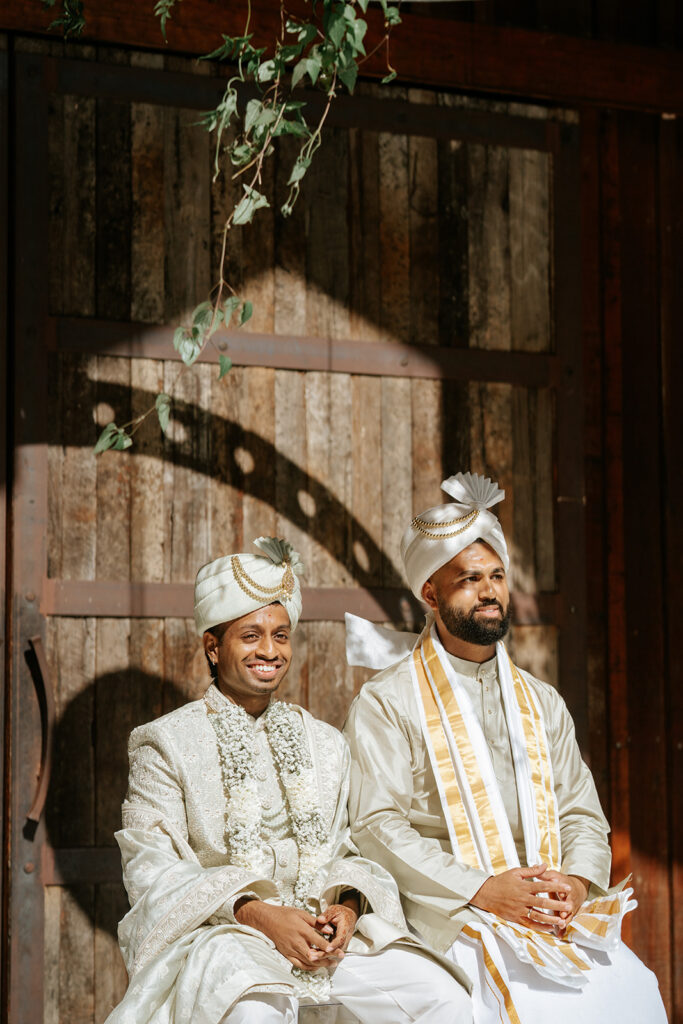
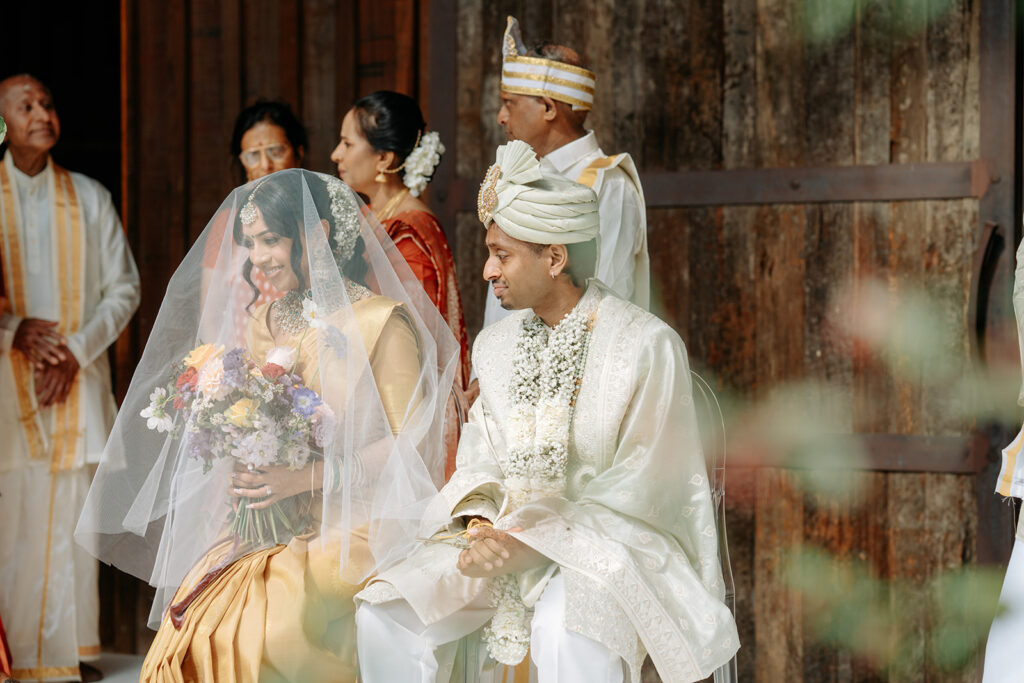
The wedding garlands, the maalai, exchanged between bride and groom, are one of the most significant floral elements in a Tamil ceremony. Krishna wore a long garland of gypsophila that was deliberately understated: soft, white, fragrant. It sat beautifully against his ivory and silver sherwani without distracting from the ritual.
I also supplied flower petals for the ceremonial water bowls and the decorative elements around the sacred objects, working alongside what the family brought themselves, fitting my florals into their ritual framework rather than the other way around.
Why We Didn’t Hire a Mandap
This is the decision I’m most proud of for this wedding, and it started with a question: did we actually need a hired mandap structure?
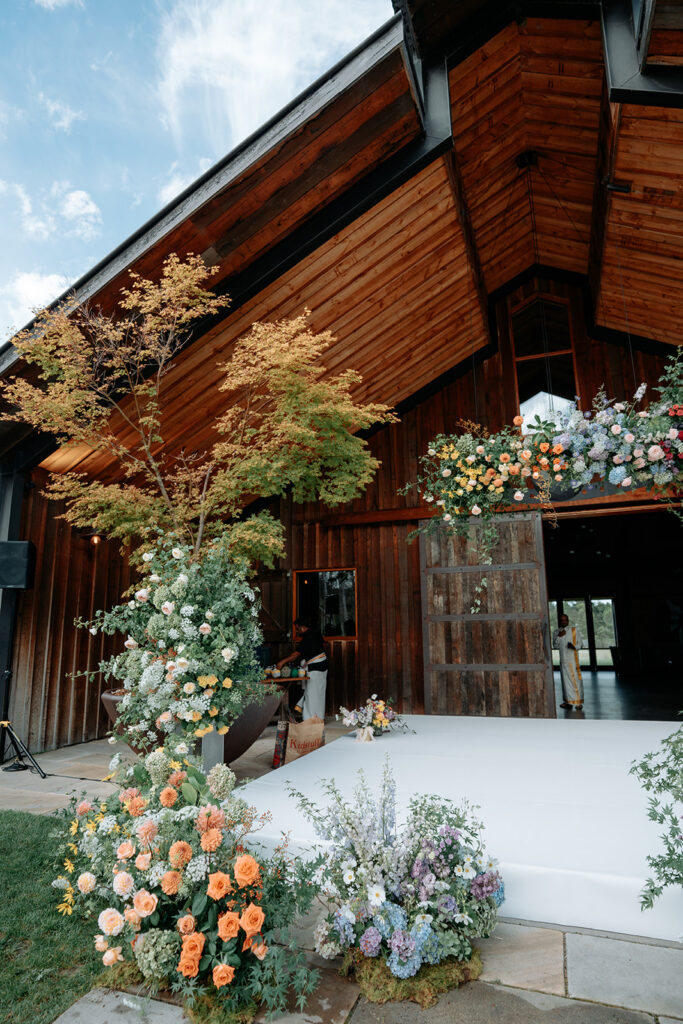
A mandap, the traditional canopied structure under which a Hindu ceremony takes place, is often brought in as a separate hire piece. It arrives as a frame, gets dressed in fabric and flowers, and sits as an imported object within whatever space it’s placed in. At Bendooley, with its extraordinary heritage barn, its Japanese maples, and the fixed iron hoop suspended in the gable above the stage at 2.9 metres, that felt like the wrong call.
Bendooley already had the bones of a Manavarai. We just needed to build the ceremony around what was already there.
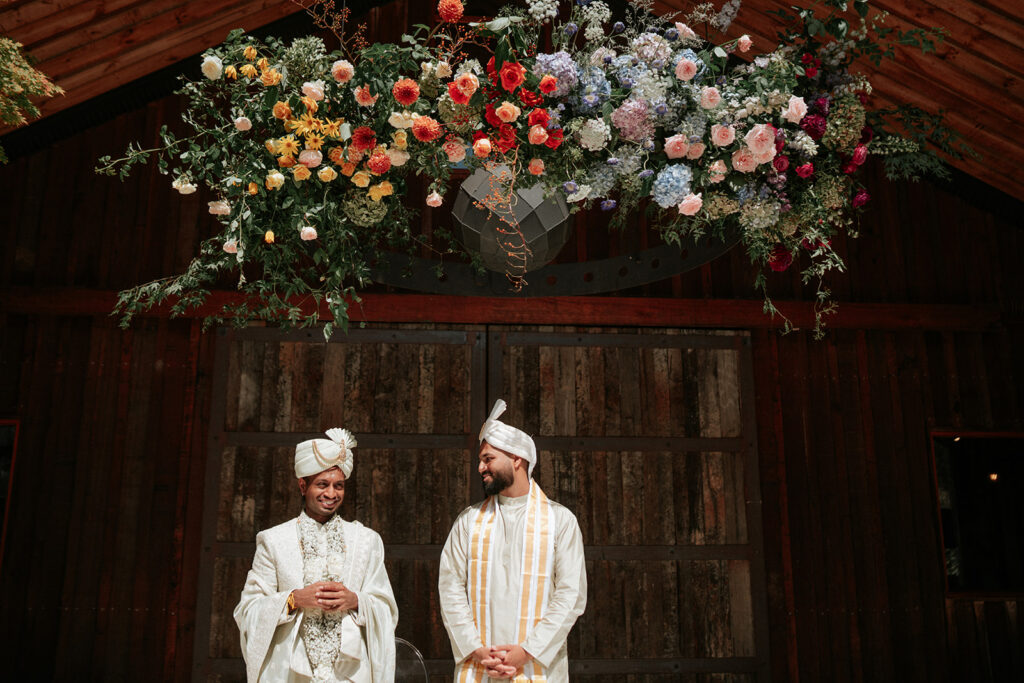
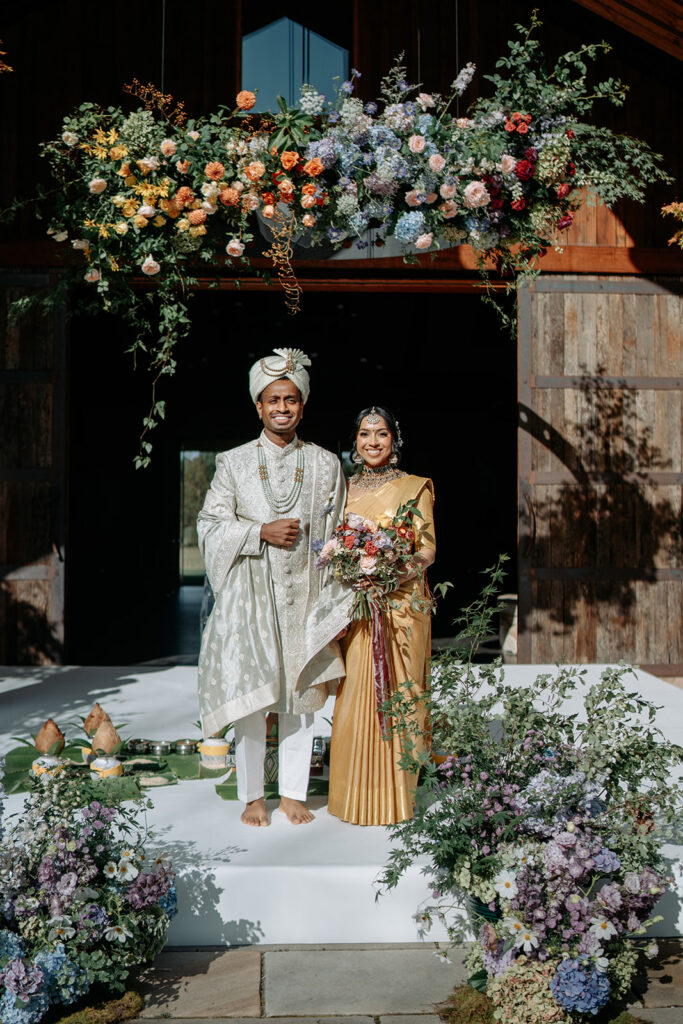
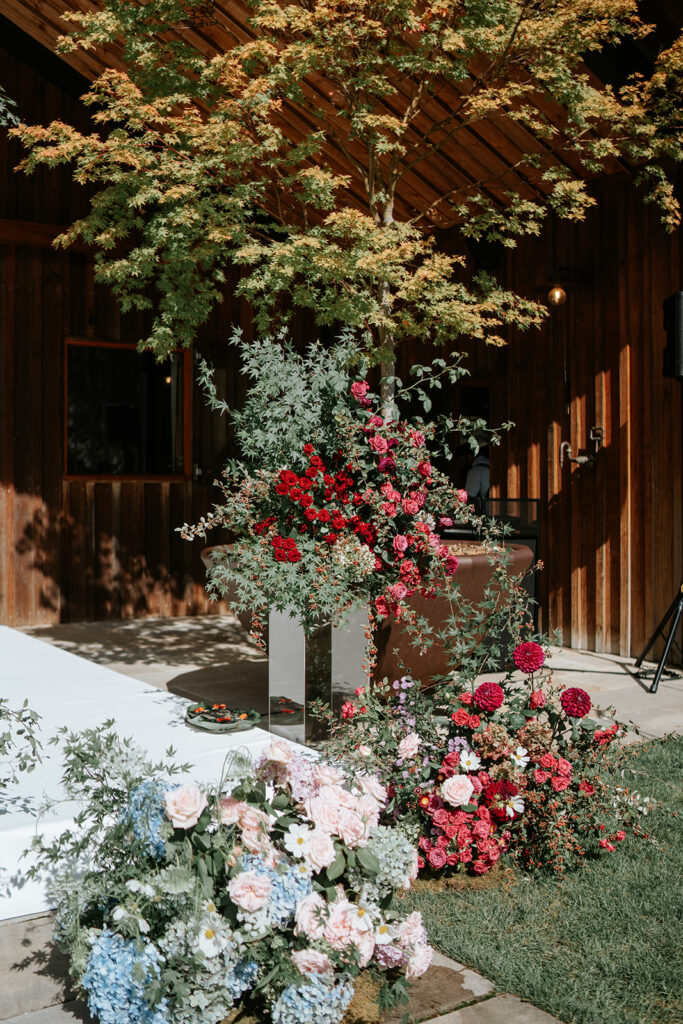
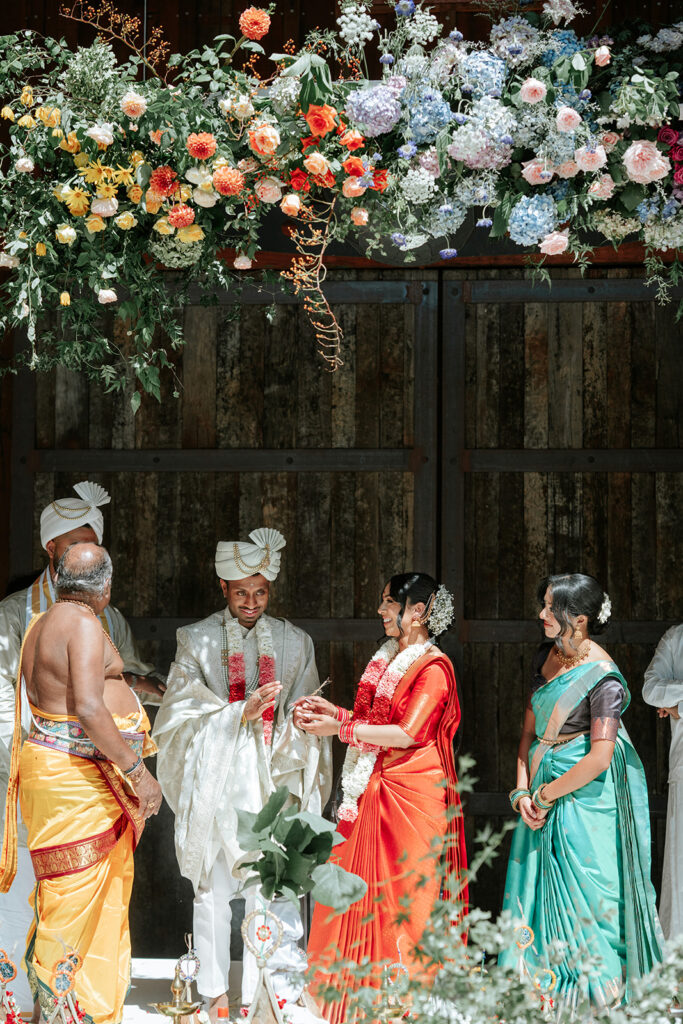
The iron hoop became the centrepiece of the whole installation. We flowered it densely, the same full-spectrum palette of saffron, peach, coral, crimson, blue hydrangea, blush and garden rose that ran through the whole day, so it read as a magnificent suspended canopy directly above the sacred stage. On either side, tall tower arrangements grew upward and outward into the Japanese maple trees, their branches and the florals becoming genuinely inseparable. The maples were in full autumn colour. Their leaves became part of the composition.
The result was a Manavarai that felt like it had grown from this specific place, at this specific moment in the season. Not a structure that had been hired and installed.
A ceremony space that belonged exactly where it was.
The Colour Story: Full Spectrum, Full Commitment
Colour in a Hindu wedding is not incidental.
It is part of the ceremony, part of the cultural language, present in every saree, every garland, every offering on the Manavarai. Designing florals for a Kalyanam in a muted, restrained palette would have been completely wrong; a Western aesthetic imposed on a tradition that has always understood the power of colour.
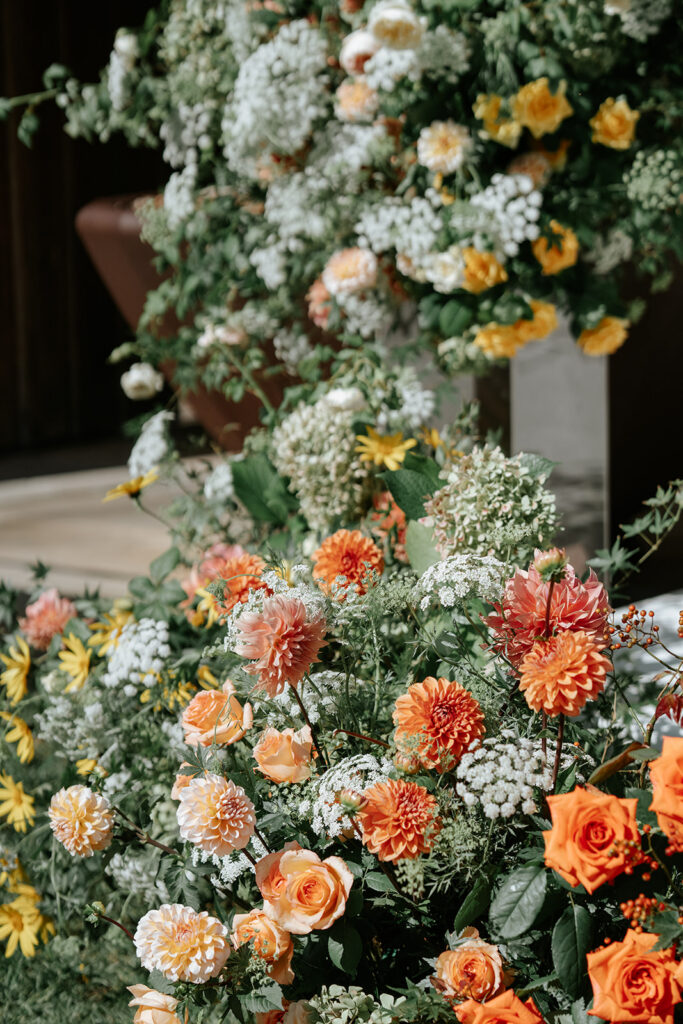
The palette I worked with was deliberately generous: deep orange and saffron dahlias and roses, soft peach garden roses, coral spray roses, crimson ranunculus and spray roses, yellow blooms that echoed the brass lamps on the Manavarai, blue hydrangea and delphinium and scabiosa, and blush and white to prevent the whole thing from becoming overwhelming. Queen Anne’s lace and gypsophila throughout for airiness.
It was ombré by design.
The hanging installation above the stage shifted from warm golden and orange tones on one side to cool blues and blush on the other, so from any angle it read differently. Saffron and fire on one side. Sky and water on the other. Together: a complete world.
The growing garden arrangements flanking the stage platform were deliberately asymmetric — one leaning warm and red and generous, one cooler and softer. The stage itself, white and raised, became a frame for all of it.
The Bouquet: Against Gold Silk
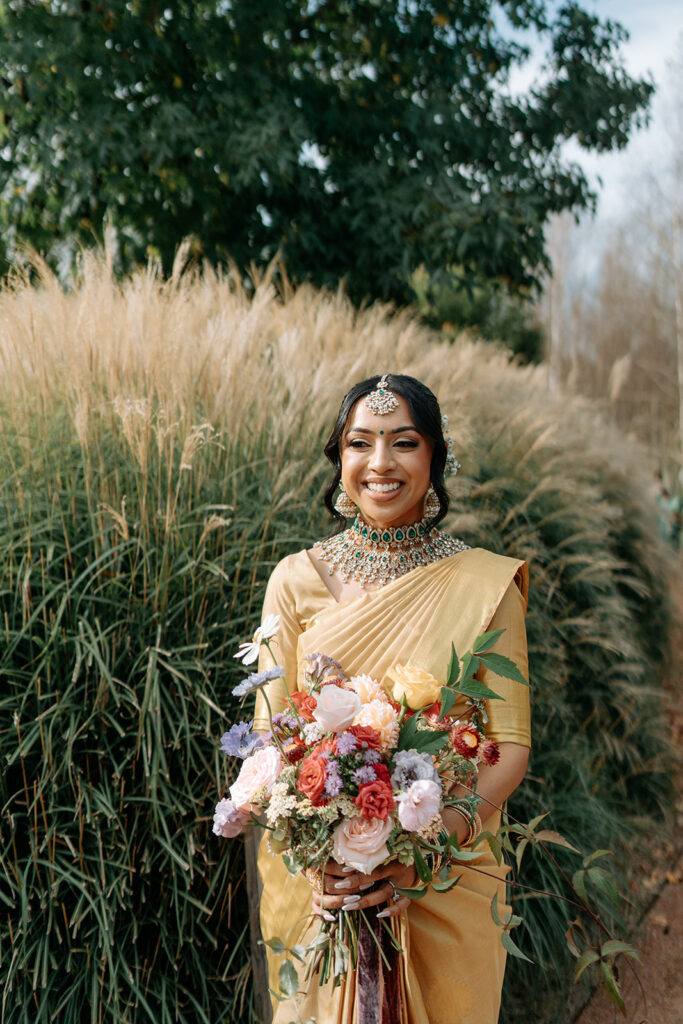
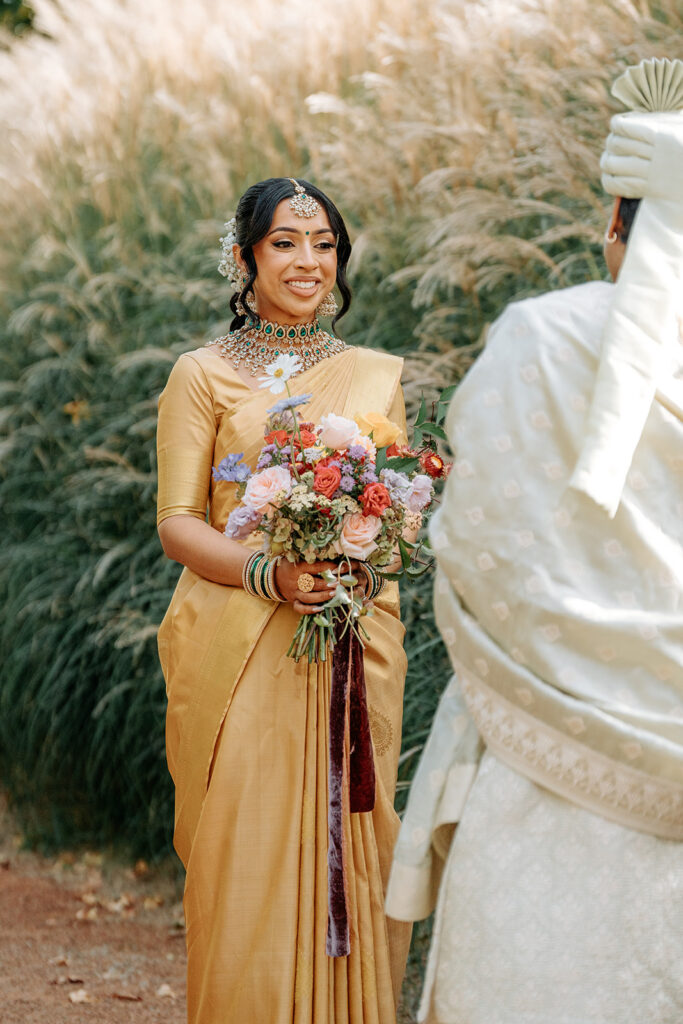
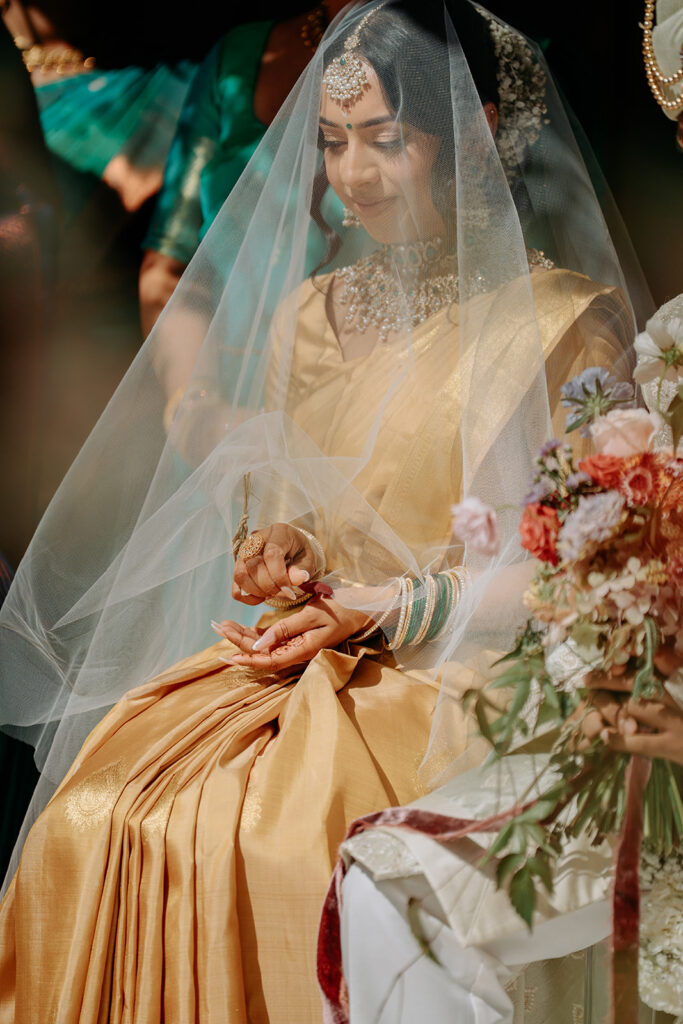
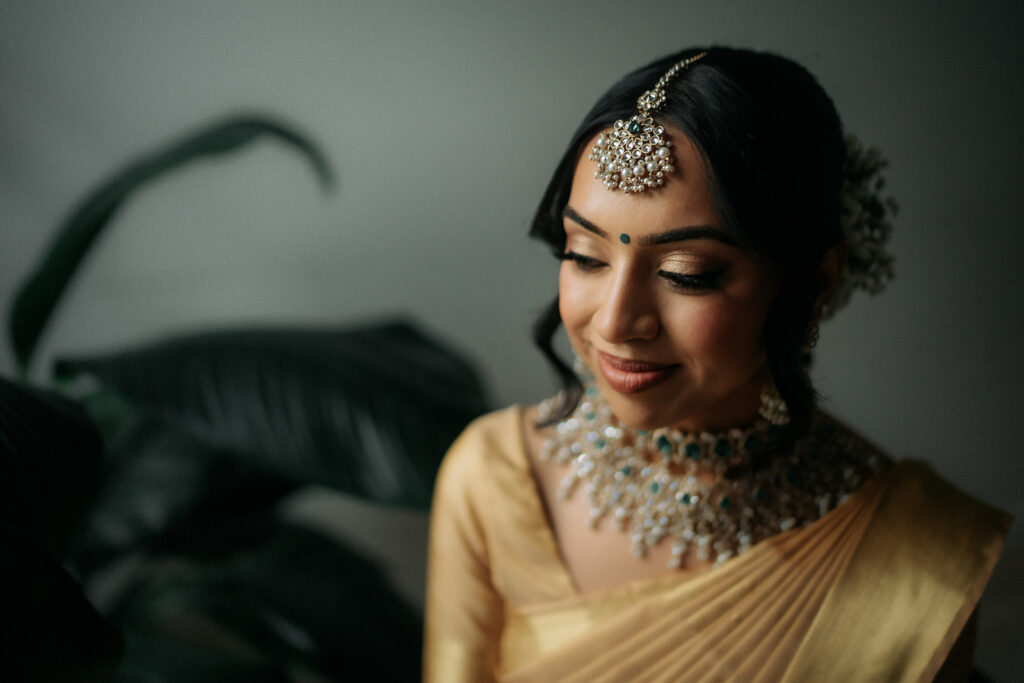
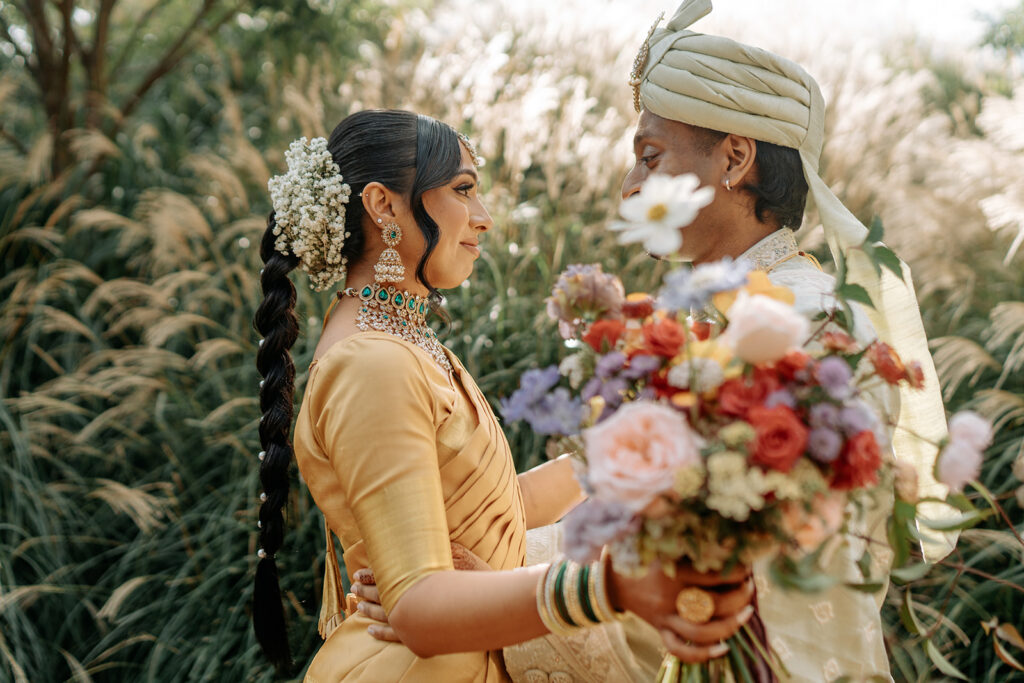
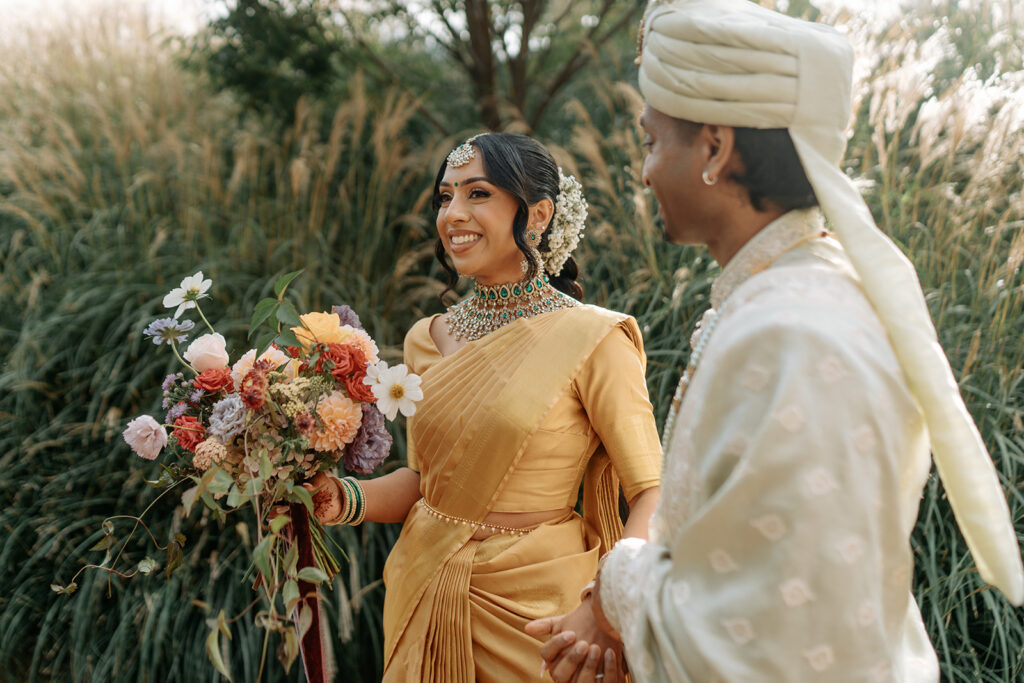
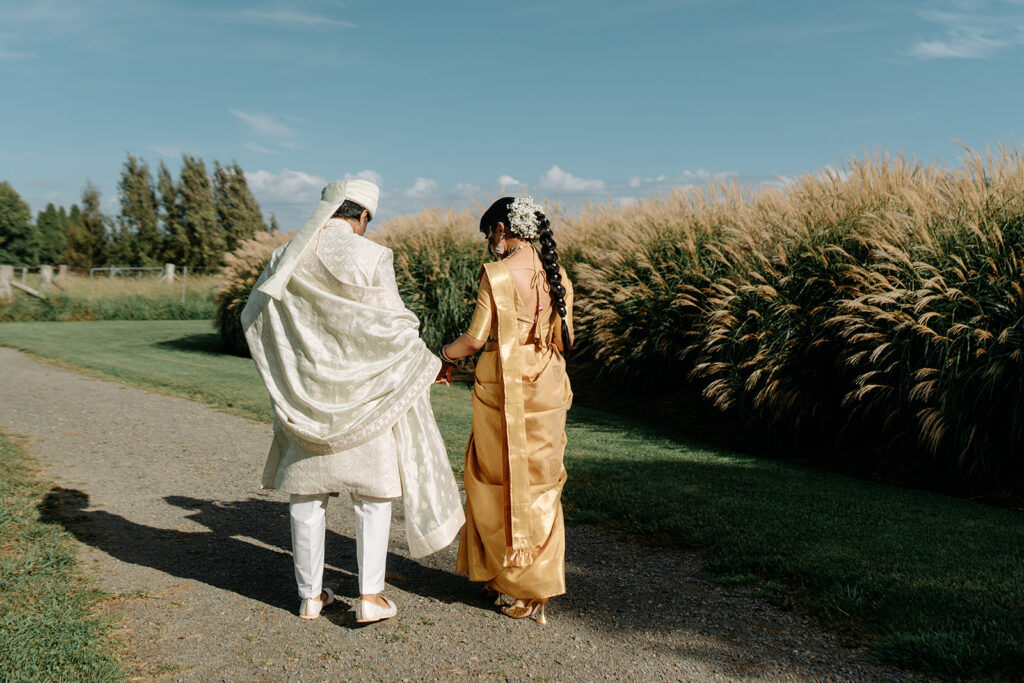
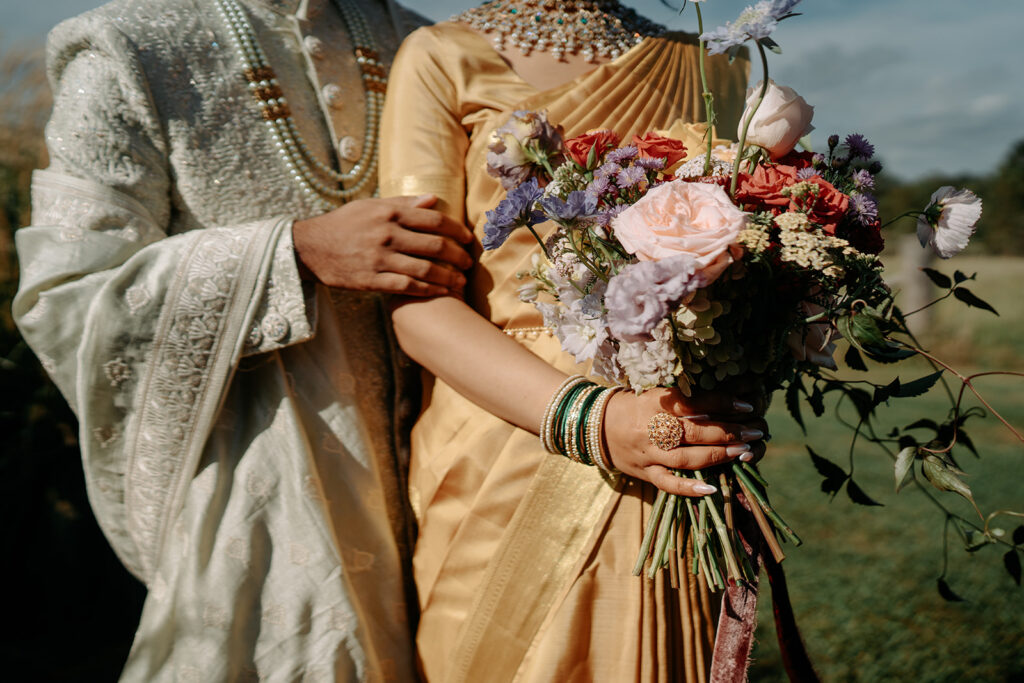
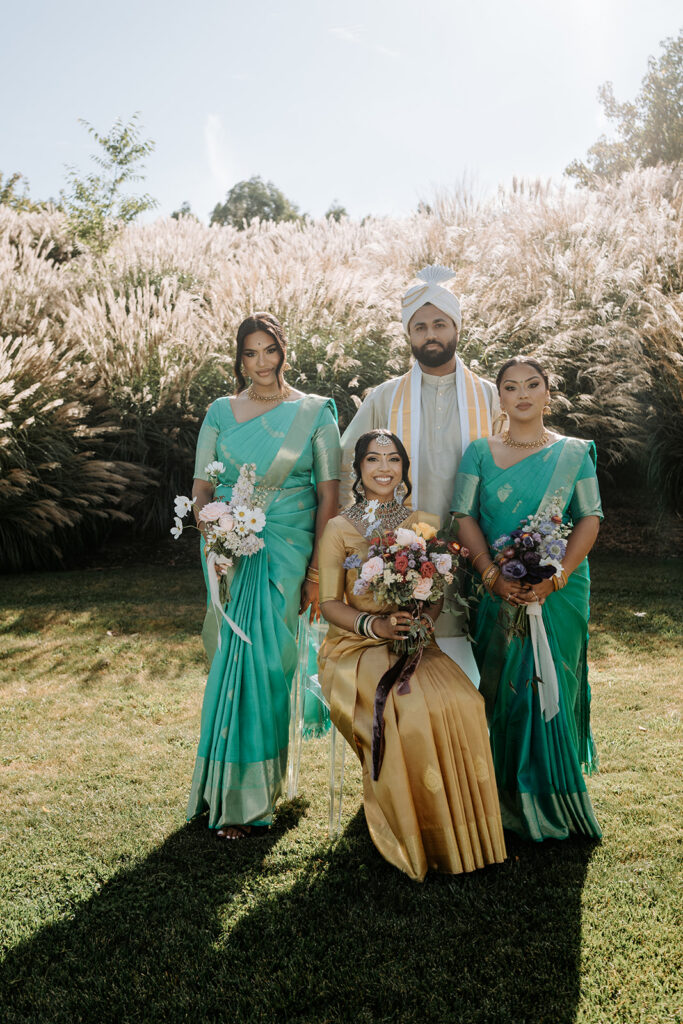
Babita wore a gold silk Kanjivaram saree for the ceremony, a traditional South Indian bridal silk, woven with gold thread, luminous in the morning light. Against that fabric, the bouquet needed to be something genuinely special.
We chose a relaxed, gathered arrangement in coral, peach, blush and lavender — roses, strawflowers, scabiosa, cosmos — with a long velvet burgundy ribbon trail. The deliberate mix of warm and cool tones meant it worked against the gold without being swallowed by it. The velvet ribbon was the one moment of deep richness that tied back to the ceremony palette.
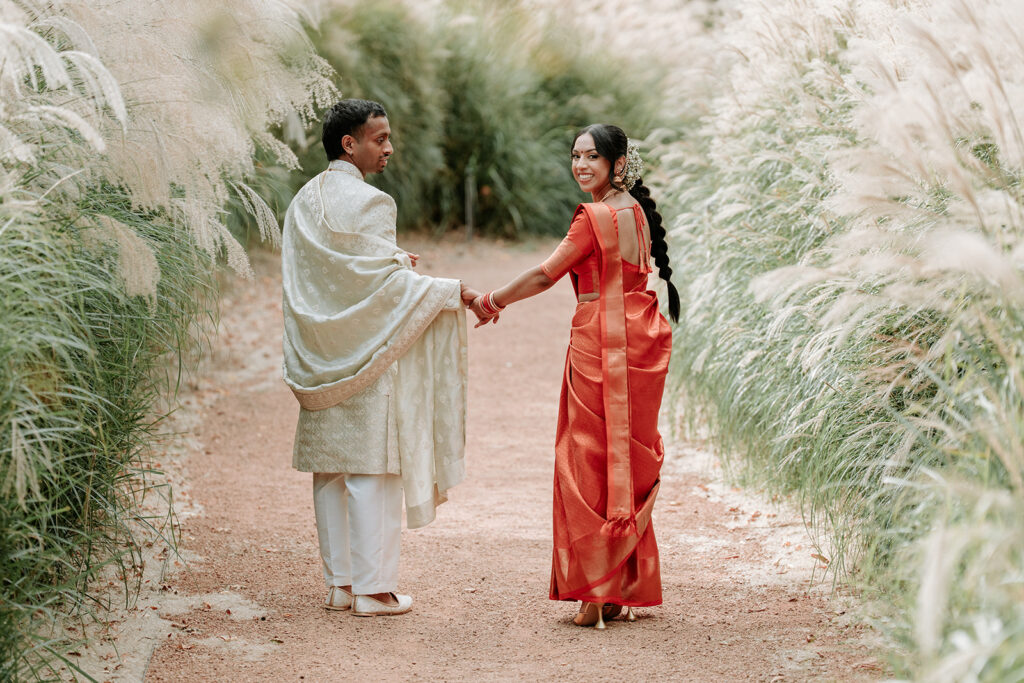
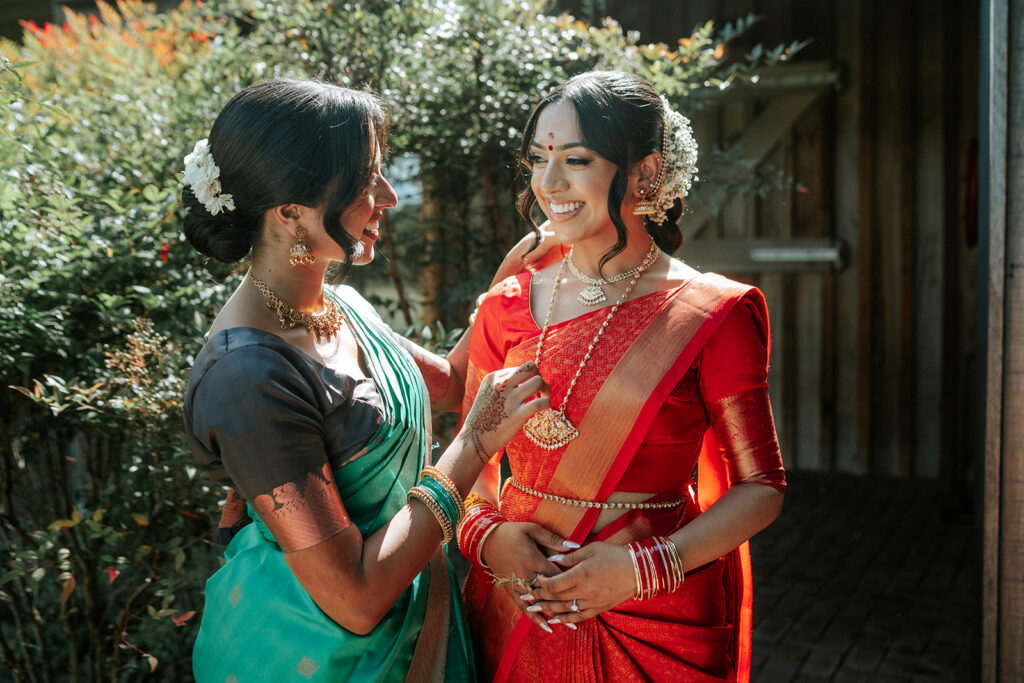
Her hair was adorned with gypsophila, a mass of white cloud at the crown of a long braided plait threaded with pearls. Simple and extraordinary. The gypsophila connected her hair to Krishna’s maalai, so the two of them were florally in conversation before they were even standing together.
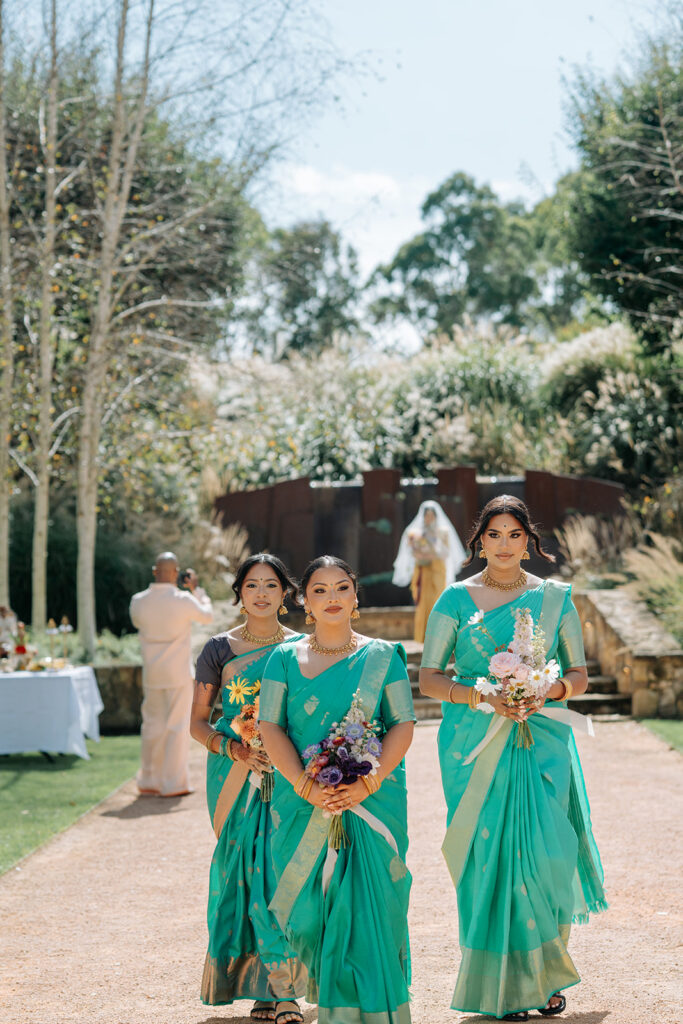
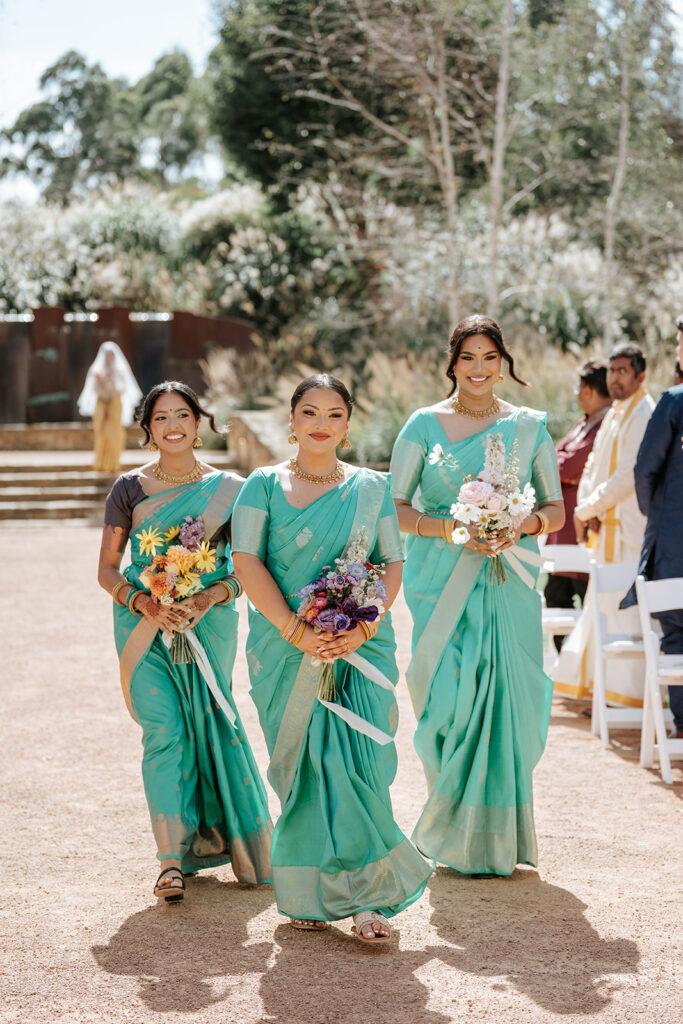
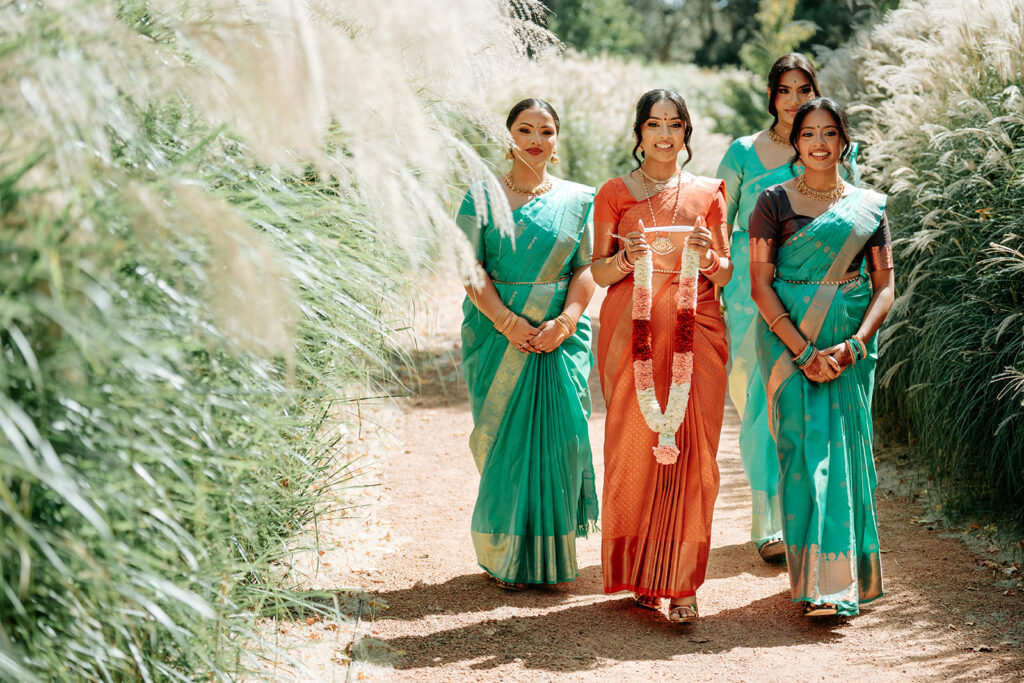
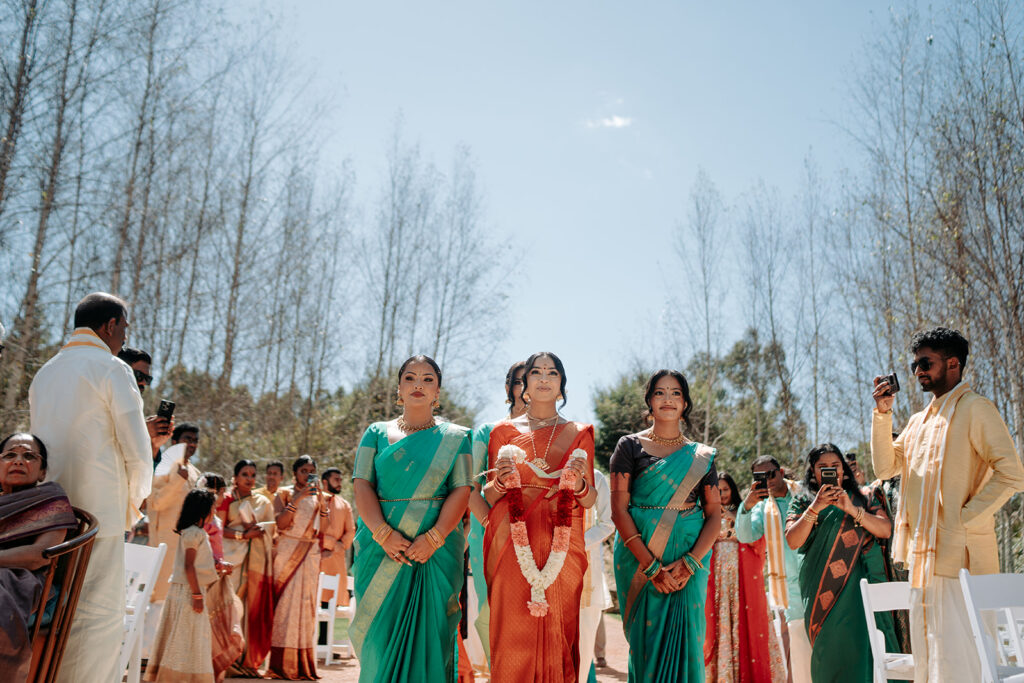
The bridesmaids carried single-variety posies, each different: one in saffron yellows and oranges, one in purples and pinks, one in white and pale blush. Individually distinct, together they formed the same palette as the ceremony behind them. Walking down the aisle, they were the palette made human.
What the End of the Day Meant
In the lead-up to this wedding, there was a lot of reassurance required. That’s the honest version. I was an outsider to this tradition, and not everyone was immediately certain that an outsider could honour it properly. I understood that. I didn’t take it personally. I just kept showing up, kept listening, kept doing the work.
On the day itself, I don’t think the family could have been happier.
At the reception, the groom’s father pulled me onto the stage in front of everyone. In front of all the guests. To be acknowledged and thanked.
I don’t have the words for what that felt like. It is the kind of moment that reminds you why this work matters.
The trust.
The relationship.
The fact that by the end of the day, I wasn’t a vendor anymore. I was someone who had been inside one of the most sacred days of their family’s life and had taken care of it.
That’s everything.
For Couples Planning a Cultural or Religious Ceremony
If you are planning a wedding that draws on a cultural or religious tradition that sits outside the Western wedding aesthetic I most commonly work in, I want you to know this: I don’t treat that as a constraint. I treat it as the brief.
I will do the research. I will ask the questions. I will understand what is sacred before I decide what is beautiful. And I will design something that honours both.
Babita and Krishna’s wedding showed me what’s possible when a planner and a florist and the family really trust each other.
I’m deeply grateful to have been in that room.
with Massive thanks to:
Photography (Ceremony): Rolling Canvas | Photography (Reception): Siempre
Venue (Ceremony): Bendooley Estate | Venue (Reception): The Eveleigh, Locomotive Workshop
Priest: Nimaleswara Kurukkal | Catering: The Idli Project (ceremony) + Delhi O Delhi (reception)
Saree Draping: Mangalyam | Hair + Makeup: Nikki Arora
Florist + Wedding Planner: Krysta Smith Floral Artistry + Event Design
With love,


https://shorturl.fm/ek8eX