A realistic, practical guide to budgeting your wedding, and making every dollar count.
There is a particular kind of quiet panic that settles in when you start getting quotes for your wedding.
You’ve spent months on Instagram watching beautiful editorials. You’ve saved the venue, the dress, the tablescapes. You have a mood board that basically constitutes a work of art. And then the numbers start arriving and suddenly the gap between what you imagined and what things actually cost feels very, very wide.
You are not doing anything wrong. You are not being naive or unrealistic.
You are simply living in the gap between what the wedding industry shows you and what it actually costs to bring those things to life. That gap is real, it is rarely talked about honestly, and it causes couples a lot of unnecessary stress.
I want to change that, at least a little. So this post is my attempt to give you the clearest possible picture of what weddings in Sydney actually cost, why certain choices cost more than others, and how to make decisions that protect the things that matter most to you.
It is loooooooong. Make a cup of tea.
The Disconnect Nobody Talks About
A fellow wedding professional, my business buddy and beautiful friend, Gemma of Sub Subtle, recently posted something that I haven’t been able to stop thinking about. She pointed to a pattern that everyone in the industry knows but rarely says out loud: the weddings that dominate publications, social media feeds, and trend reports are overwhelmingly $150k+ affairs.
The florals arrive in the lorry loads.
The venues are booked years in advance.
The styling is handled by teams of twenty plus.
Meanwhile, annual wedding industry trend reports suggest the average Australian couple spends closer to $35,000–$40,000 on their wedding.
That number is not wrong, but it is worth understanding what “average” actually includes. Those reports capture the full spectrum: elopements in rural NSW with two witnesses and a celebrant, micro-weddings of fifteen people in a restaurant private dining room, and 120-person receptions at Sydney’s most prestigious venues. They are all in the same dataset. When two people elope to a private Airbnb in the Blue Mountains, that pulls the average down considerably (and so it should, because that is a legitimate and beautiful choice). But it is not a useful number if you are planning a wedding of 80+ guests in Sydney with a reception venue, a florist, and a four-piece band.
And nobody is lying. $150k+ weddings ARE real. They are also aspirational editorial content that get clicks and shares, which is exactly why publications run them. But when the content you consume daily features a reality that less than five percent of couples will ever experience, it quietly reshapes your expectations of what a wedding is supposed to look like.
The consequence?
Small businesses across the industry {florists, photographers, caterers, planners, stylists} end up spending an enormous amount of every single enquiry they receive simply justifying what things cost, before they have even had the chance to talk about the work itself. A quote that reflects years of skill, proper insurance, fair wages for a crew, and the actual time something takes gets measured against a misaligned number from a $150k feature, and suddenly we are the ones who feel too expensive.
So, we write the FAQ pages.
We have the same conversation, almost word for word, dozens of times a month.
We explain, again, why minimum spends exist, or why a venue with a difficult bump-in costs more to work at.
None of that is a complaint about couples; you are simply responding rationally to the information you have been given.
What it is, is a structural problem with what the industry chooses to show… and, small businesses are the ones absorbing the cost of that gap; in time, energy, and the emotional labour of constantly defending fair pricing as though it were unreasonable. It is exhausting for everyone, and it is not your fault.
Might I add, there is nothing wrong with a beautiful $35k wedding. There is nothing wrong with spending $150k+ either. The problem is the silence around the middle; the honest, practical, unglamorous truth of what goes into a wedding and what each of those things costs.
Hopefully, that is what this post is for.
So, what Does a Sydney Wedding Actually Cost?
I want to be careful here, because the answer genuinely is: it depends.
But let me give you some honest scaffolding.
For a wedding of 80–100 guests in Sydney, you are broadly looking at the following categories and approximate ranges. These are not minimums. They are not maximums. They are honest averages for quality vendors who know what they are doing, hold appropriate insurance, and will still be in business on your wedding day.
Venue: $10,000 – $25,000+
This covers hire fee and, at many venues, a per-head food and beverage package. Sydney’s most iconic venues — Bennelong, the Royal Botanic Gardens, Foundation Hall by MCA, to name but a few — sit at the higher end of this range, and often beyond.
Some venues include catering in the package.
Some require you to bring in an external caterer.
A note on ‘difficult’ venues: some of Sydney’s most beautiful locations are also some of the most logistically complex for the vendors who work in them. The Royal Botanic Gardens, for example, has (understandably!) strict environmental requirements, limited bump-in windows, and regulations that affect what florals and structures can be installed. QVB Tea Rooms involves CBD logistics; tight load-in windows, no direct vehicle access, complex coordination. Vendors who work at these venues charge accordingly, because the work genuinely requires more time, more planning, and more people.
This is not a venue problem or a vendor problem.
It is just logistics.
Questions worth asking before you sign anything:
What should normally be covered in the contract:
- Is catering included, or do I need to outsource separately?
- What is the bump-in and bump-out window, and does that window suit the vendors I want to hire?
- Is there parking or loading access for vendor vehicles, and is it free?
- Are there restrictions on what can be installed, where, or for how long?
- Is there a curfew, and does it affect my reception timeline?
- Are there any permits required additionally, such as noise or photography?
- What is the cancellation and postponement policy, and is the quoted price locked in or subject to change closer to the date?
- Is there a wet weather plan included, or does moving the ceremony indoors incur an additional fee?
The add-ons that tend to catch couples by surprise:
- Security guards, required by many venues once guest numbers or alcohol service pass a certain threshold, and typically charged at an hourly rate the couple pays directly.
- Cleaning fees, on top of the venue hire, particularly at outdoor or public locations.
- Furniture hire, if tables, chairs, or lounge settings are not included in the base package and need to be brought in separately.
- Late-night extension fees, often charged in 30 or 60 minute increments once the standard finish time is reached.
- AV and sound equipment, which some venues supply as standard and others require you to hire in entirely, including a technician.
- Power access for vendors, including florists, lighting, and entertainment, which can require a generator hire at venues without sufficient on-site power.
- Ceremony fees charged as a separate line item from reception hire, even when the ceremony is held at the same venue.
Some of these are easy to miss when you are reading a venue pack for the first time and focused on the headline number. Ask for an itemised quote before you sign, not just a package price, so that you know exactly what you are agreeing to and what still needs to be budgeted separately.
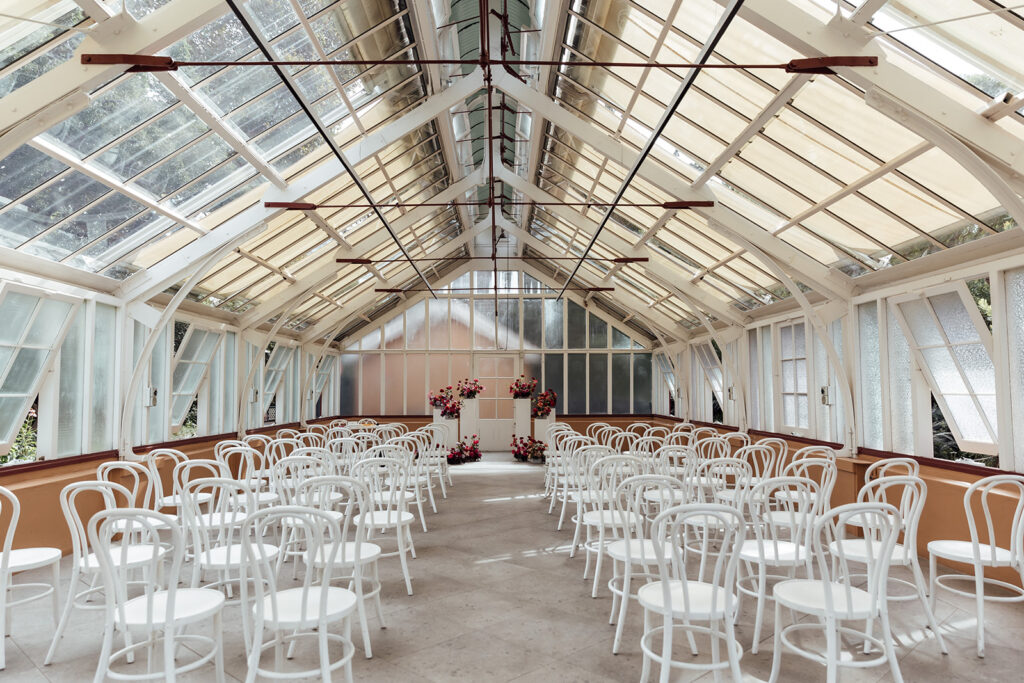
Catering and Beverage: $12,000 – $30,000+
Per head catering in Sydney typically starts around $120–$150 for a basic package and climbs from there depending on menu complexity, service style, and staffing requirements. Add a beverage package and you are looking at another $70–$120 per head. For 85 guests, that alone can sit anywhere between $16,000 and $23,000 before you add a cocktail hour, late-night snacks, or a cake.
Questions worth asking:
- Does the beverage package run for the full event, or only a set number of hours before it switches to a cash bar or an hourly top-up fee?
- Are staffing, equipment hire, and cake-cutting fees included in the quoted per-head price?
- Does the quote change for a Friday or Sunday versus a Saturday?
- What happens to the price if my final guest count moves up or down in the last few weeks?
A per-head figure on its own does not tell you the final number; what is and is not bundled into it does.
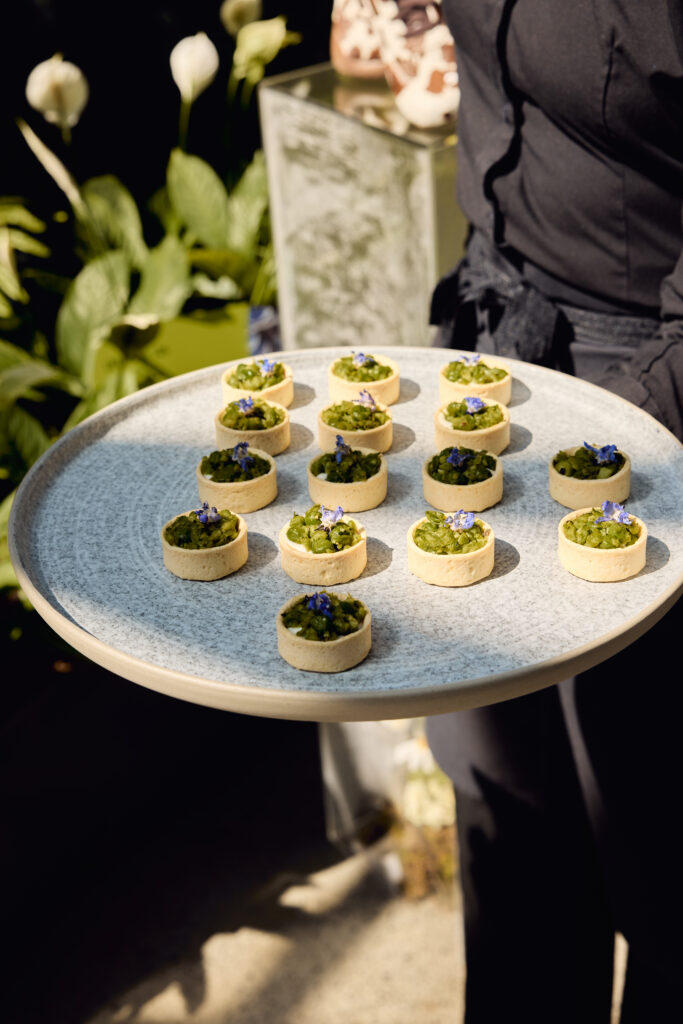
Photography: $5,000 – $10,000+
A full-day wedding photographer (someone who arrives with the getting-ready preparations and stays through the first hour of the reception) typically starts at $5k in Sydney and climbs significantly based on experience, demand, and whether you are adding a second shooter, videography, content creations and/or an engagement session.
Photography is one of the most consistently underbudgeted categories. It is also one of the most permanent. Your photos will outlast every other vendor relationship you have.
Questions worth asking:
- How many hours of coverage are actually included, and what happens if the day runs over?
- Is a second shooter included or an add-on, and do I need one for a wedding this size?
- How many edited images will I receive, and what is the turnaround time?
- Is an engagement shoot, or album, included or priced separately?
Two quotes that look similar on the surface can represent very different scopes of work once you know what is actually inside them.
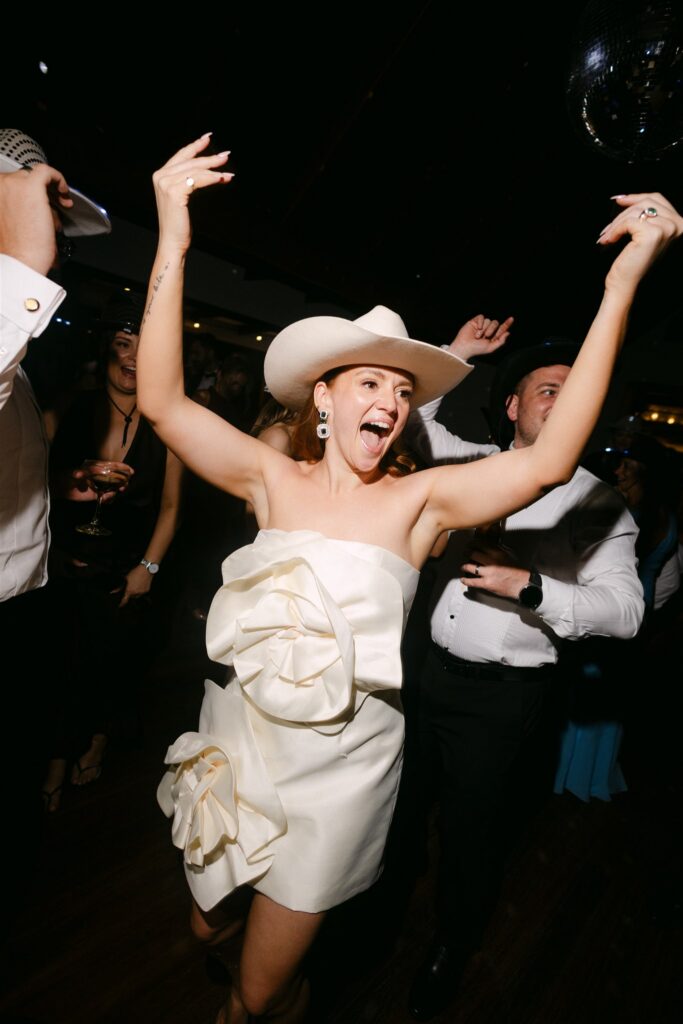
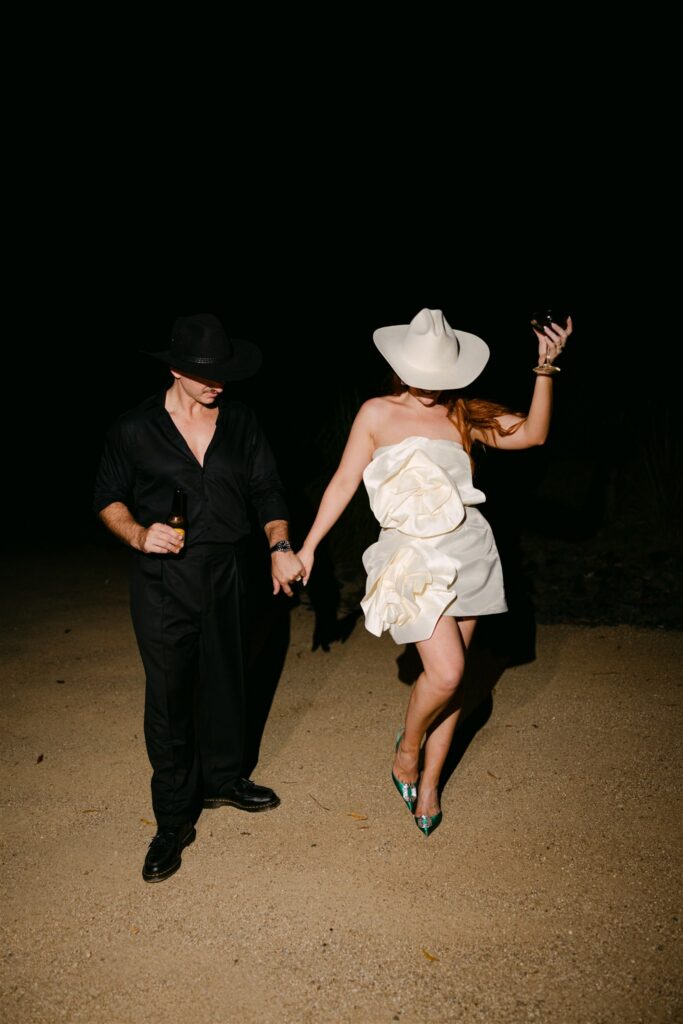
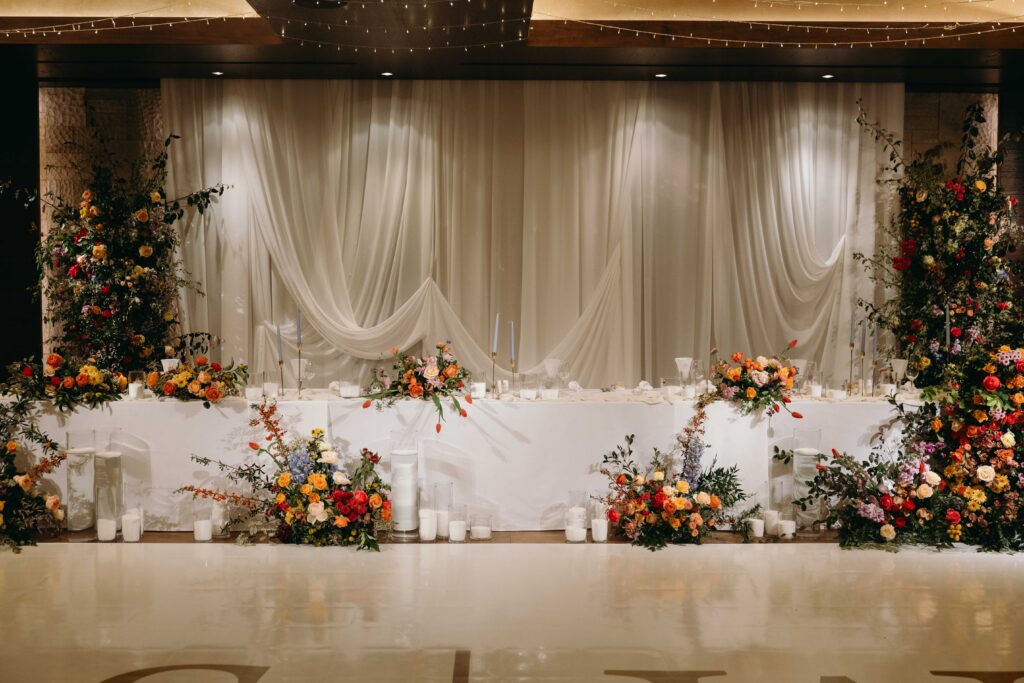
Florals and Styling: $5,000 – $20,000+
I have written a whole separate post that goes deep on this exact question, which I would genuinely encourage you to read: How Much Do Wedding Flowers Cost?
The short version is that your floral investment covers a great deal more than the flowers themselves. It covers design time, proposal development, sourcing, market runs, days of conditioning and preparation, bump-in labour, and bump-out. Venue complexity and guest count both affect the number significantly, which is exactly why florals at venues like the Botanic Gardens or QVB Tea Rooms sit at a different price point to the same brief at a more straightforward venue, such as Q Station.
For 80–90 guests at venues like the Botanic Gardens and QVB Tea Rooms, you would be looking at a higher-than-average logistics cost before a single flower is ordered.
Questions worth asking:
- Does the quote include delivery, installation, and pack-down, or only the flowers themselves?
- Has the florist factored in the bump-in and bump-out conditions of my specific venue?
- Does the design account for what is genuinely in season on my date, or has it been priced around out-of-season substitutes?
- What happens to florals after the ceremony; are they being repurposed for the reception, and is that labour included?
The brief and the venue logistics together determine the price far more than the flowers themselves do.
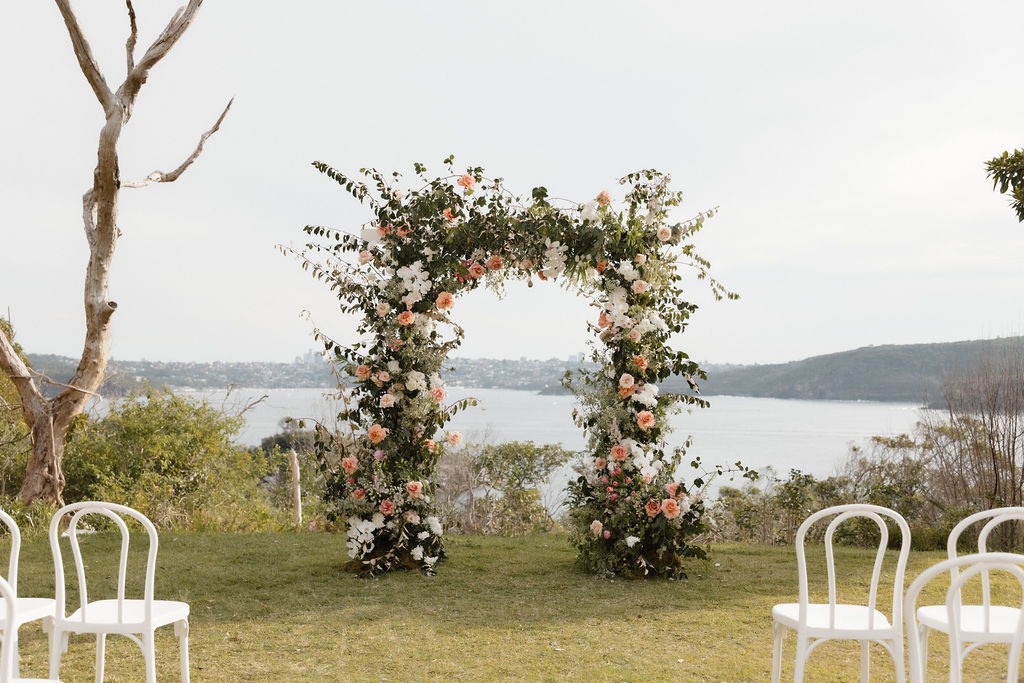
Music: $1,500 – $6,000+
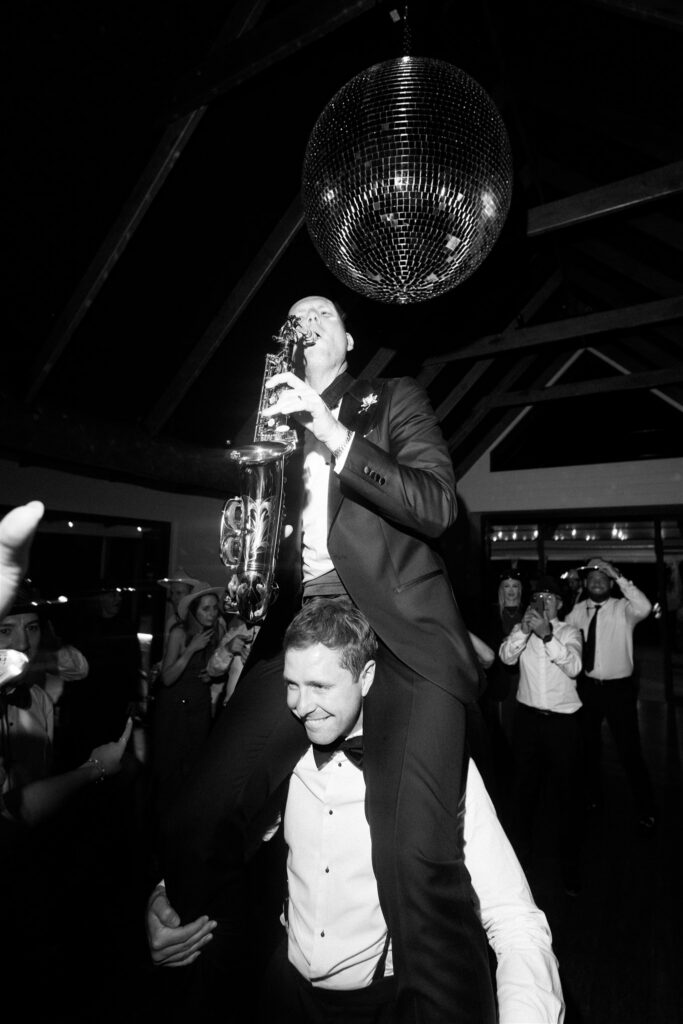
A solo acoustic musician for a ceremony typically starts around $600–$900, while a string quartet sits higher, usually $1,800–$3,000 for ceremony and canape hour, given the number of musicians and the more involved bump-in for instruments and chairs. For the reception, a DJ alone typically starts around $1,500–$2,500, while a DJ paired with a live saxophonist or percussionist for energy moments starts from around $2,500–$4,000. A full live band starts at $4,000 and climbs well beyond $6,000 depending on the number of players and their calibre. None of these formats are simply cheaper or more expensive versions of each other; they create entirely different atmospheres, and the right one depends on the feeling you want in the room as much as the budget.
A string quartet brings a refined, cinematic quality that suits a formal ceremony or a sophisticated cocktail hour, but it cannot carry a dance floor later in the night. A DJ with a live saxophonist layered over key moments gives you the polish of a live element without the cost or stage footprint of a full band, and works particularly well at venues with tight bump-in windows, since the equipment load is far lighter. A full band creates the most energy and the most memorable reception atmosphere, but needs real stage space, more power, and a longer bump-in and soundcheck, which is worth checking against your venue’s access window before you commit.
Questions worth asking:
- If comparing a live element against a DJ-only package, what is actually different in the experience, not just the price? A DJ alone gives you control and flexibility across the whole night, while a saxophonist or quartet layered in for key moments adds a sense of occasion at specific points without the cost of a full band.
- Does the quote cover both the ceremony and reception, and if so, how many sets are included across the day?
- How many breaks does the band or DJ take, how long are they, and is recorded music playing during those breaks?
- For a live band, how many musicians are included in the quoted price, and does adding strings, or additional vocalists change the figure significantly?
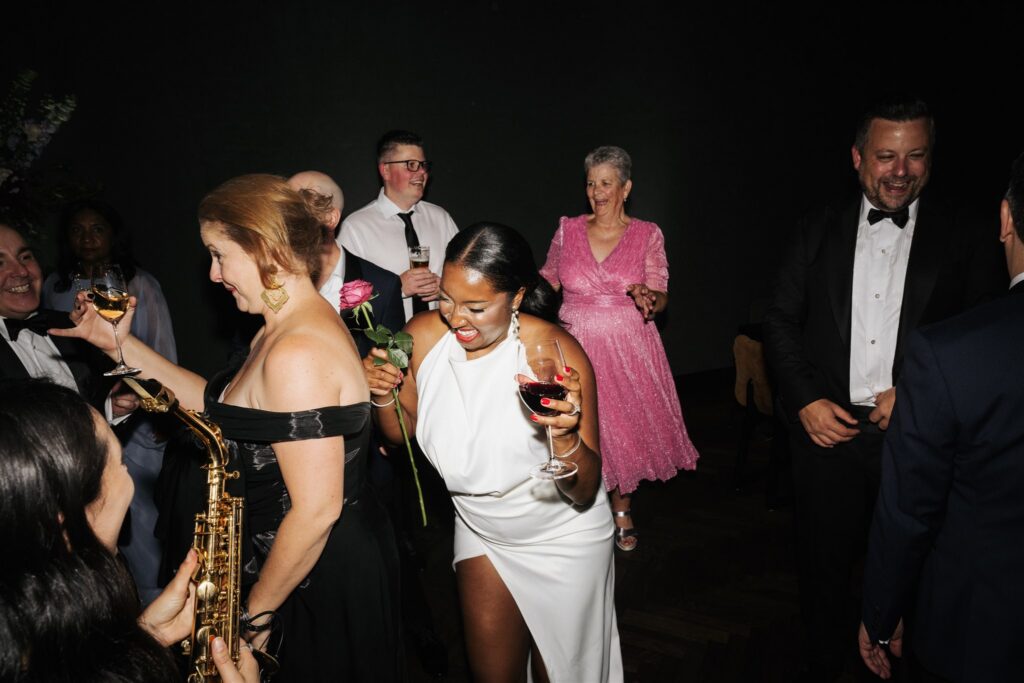
Hair and Makeup: $1,200 – $3,500+
For a bridal party of four or five, you are typically looking at from $1,200–$2,500 for hair and makeup combined, with a trial on top of that. Travel fees apply for artists who come to you, and early morning start times (before 7am) often attract a premium.
Questions worth asking:
- Is the trial included in the package or charged as an additional session?
- Is travel built into the quote, and does it change if the artist needs to be on site before 7am?
- Is touch-up service available later in the day, and is that an extra fee?
- How many people does the quoted price actually cover?
A bridal party of four priced against one of seven is a different job entirely, and the quote should reflect that.
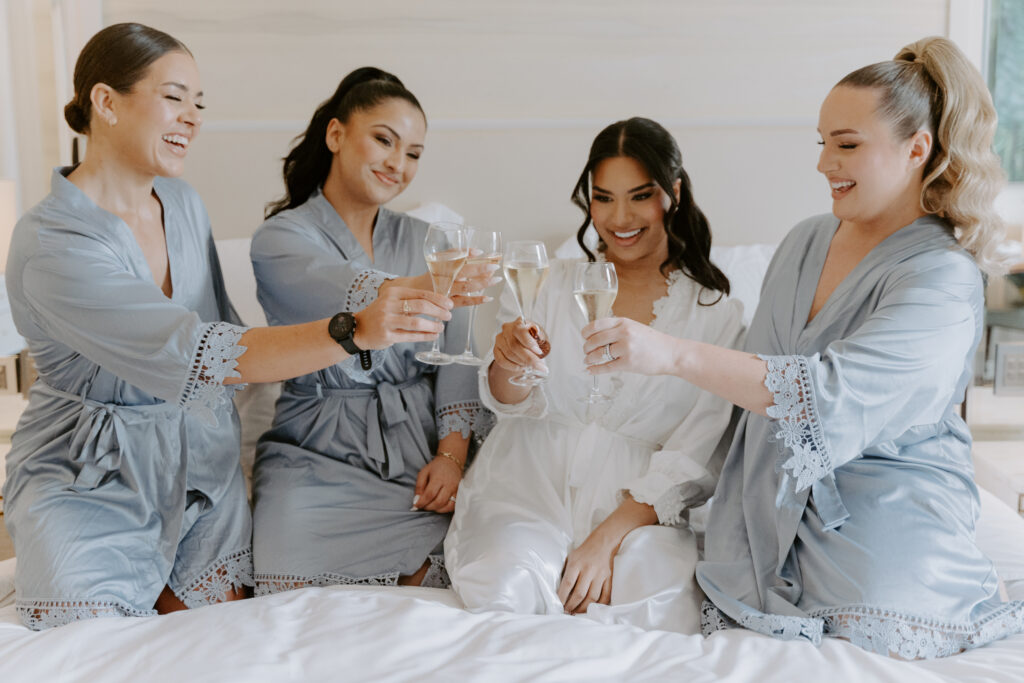
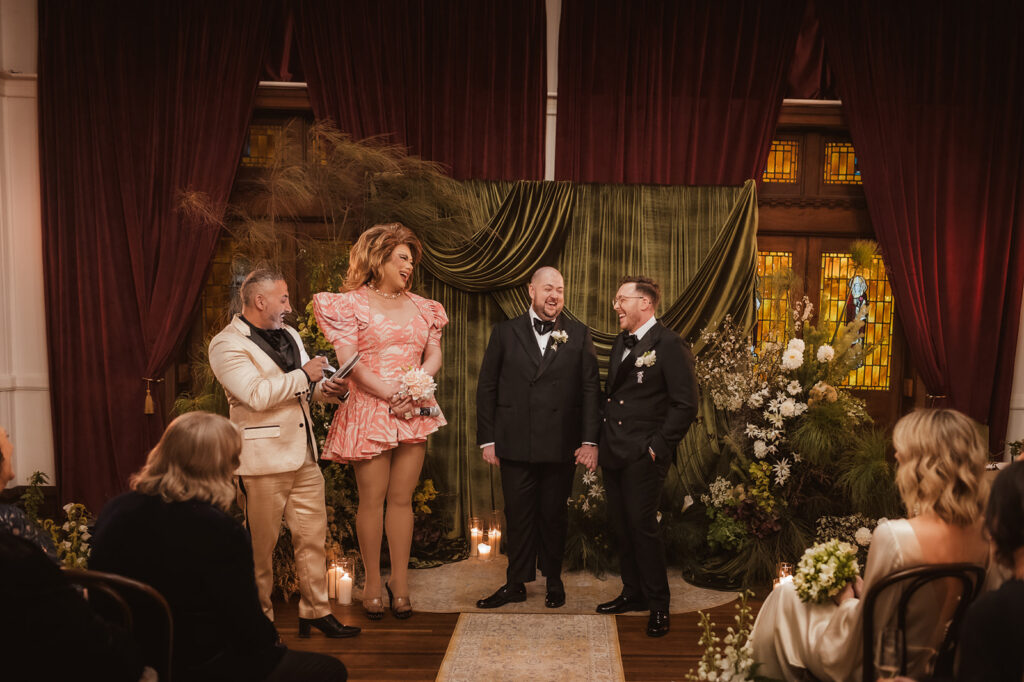
Celebrant: $1,250 – $3,500
A good celebrant does far more than show up on the day and read from a script. They spend hours getting to know you, writing your ceremony, and making sure the legal paperwork is correct. Invest in someone who will actually make you feel something.
It is worth thinking about your celebrant as the person who sets the tone for everything that follows, not just the ceremony itself. The energy they bring in those first fifteen minutes, warm and a little playful, or composed and traditional, or somewhere in between, tends to ripple through the rest of the day. Guests take their cue from the room’s first big emotional moment, and a celebrant who reads that moment well sets your reception up to land exactly the way you hoped it would.
Some celebrants also work as MCs for the reception, and this is genuinely worth considering if you love their presence on the day. A celebrant who already knows your story, your families, and the tone you are going for can carry that same warmth through speeches and key moments at the reception, rather than handing the room to someone new who is meeting you for the first time. It is not the right fit for every couple or every celebrant, but where it works, it creates a lovely continuity through the whole day.
Questions worth asking:
- How many meetings or calls are included before the day, and is the ceremony script genuinely written for us or lightly adapted from a template?
- Does the fee include the rehearsal, or is that billed separately?
- Is travel included if the ceremony is somewhere like the Southern Highlands or Hunter Valley?
- Will they handle the legal paperwork end to end?
- Do they also offer MC services for the reception, and if so, what does that add to the fee?
The relationship and the writing process matter as much as the fee, and a rushed process tends to show on the day.
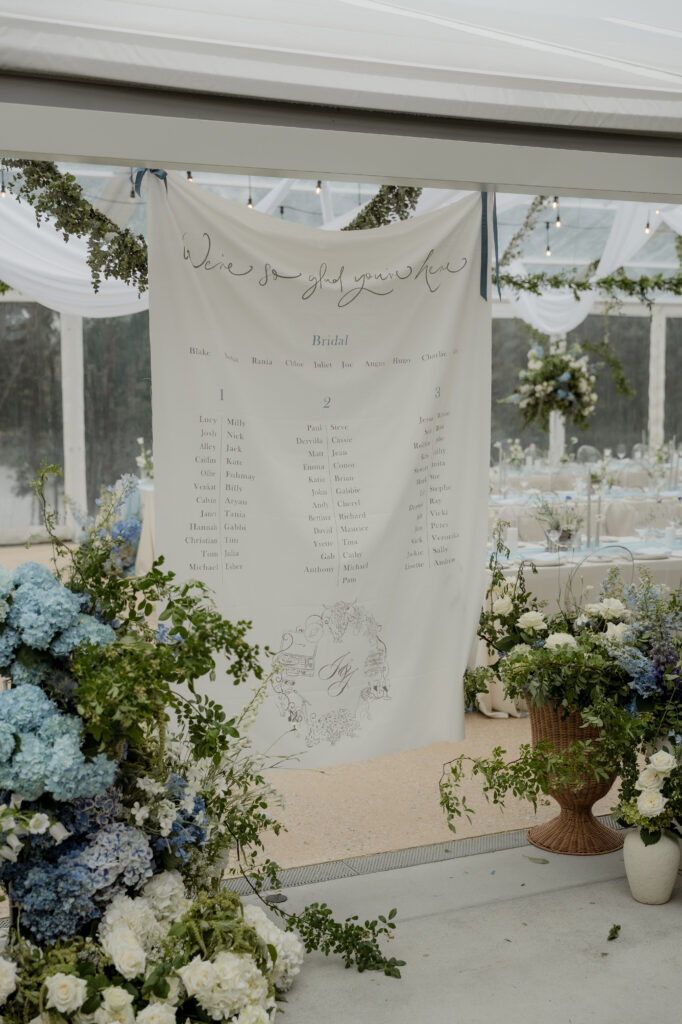
Stationery and Signage: $500 – $3,000+
Depending on whether you want printed invitations, a seating chart, menus, welcome signs, and other paper elements, or whether you go digital, this category can be kept lean or become a beautiful design investment.
Questions worth asking:
- Does the quote include design, printing, and assembly, or only one of these?
- Is postage or hand delivery factored in?
- On-the-day signage — welcome signs, seating charts, menus — is this a separate design fee additional to the invitation suite?
- What is the cost difference between a fully custom design and a templated one with your details added?
Stationery is one of the few categories where the price range is almost entirely a reflection of your own preferences rather than venue or guest count.
Wedding Planner or on The Day Coordinator:
More on this shortly, because I think it deserves its own section!
Other Costs to Budget For
Obviously, attire + accessories, and subsequent alterations! Accommodation the night before and/or the night of, transport (especially if the ceremony and reception are in different venues), wedding cake, rehearsal dinner, flowers for the rehearsal or morning-of events, rings, the marriage license…
None of these are large individually. Collectively, they add up to several thousand dollars in almost every wedding I have seen.
You will notice that almost every category above raises questions rather than settling on a single figure. That is deliberate. The number on a quote only means something once you understand what it includes, what it excludes, and what logistics around your specific venue and guest count are quietly built into it. Two florists, two photographers, or two caterers can hand you wildly different numbers for what looks like the same brief, and the difference is very rarely dishonesty.
It is almost always scope.
Ask these questions of every vendor you speak with, and you will make decisions from genuine clarity rather than guesswork.
Why Certain Venues and Choices Cost More
I want to spend a moment on this because it comes up in almost every enquiry conversation I have.
Couples sometimes arrive at a quote and wonder why the same floral install at one venue costs significantly more than it did at another venue they had priced. Or why their photographer quoted a higher fee for their chosen location than for an alternative. Or why their caterer has a higher minimum spend at a venue they love.
Here is the honest answer: some venues are genuinely more complex and time-consuming for vendors to work in.
This is not a reflection of the venue’s quality.
Often the most beautiful, most sought-after, most prestigious venues in Sydney are also the most logistically demanding.
Some of the things that increase vendor costs at certain locations:
- Short or restricted bump-in windows. If a vendor has an hour to install what would normally take three hours, they need more staff. More staff means more cost.
- CBD locations. City venues involve loading dock logistics, timed access windows, no nearby parking for vans, and expensive all-day parking for staff who cannot leave their vehicles unattended. Someone always has to park the van, and in the CBD, that can take 45 minutes and cost $60 before they have even started.
- Heritage or protected sites. Some of Sydney’s most beautiful locations have restrictions on what can be installed, where it can go, and how it must be removed. Working within these constraints takes more planning and sometimes limits creative options.
- Multi-location days. A ceremony in one location followed by a reception across town means vendors are essentially doing two bump-ins in one day, with travel in between. That is real labour time.
- Venue-specific bump-out requirements. Some venues require all vendor items removed immediately after the event ends, sometimes at midnight or later. That is a full crew, late at night, often after a very long day.
Understanding this does not make the costs disappear. But it does mean you can factor them in from the start, rather than being surprised by them after you are emotionally committed to a venue.
If your heart is set on a logistically complex venue, budget for it properly. If budget is a significant constraint, talk to a planner before you book anything, including the venue.
How to Prioritise When You Cannot Have Everything
Here is something I believe genuinely: almost no one has an unlimited wedding budget. And almost everyone spends more than they planned to.
The question is not ‘how do I get everything for less?’ The question is ‘what matters most to us, and how do we protect it?’
These are the frameworks I use with my planning clients, and I think they are worth knowing even if you are not working with a planner.
Start with the non-negotiables.
Every couple has two or three things they would not give up without feeling genuinely disappointed. For some couples it is the photographer. For others, it is a particular venue. For others, it is florals. Identify yours early and build the budget around protecting them, not compromising them.
Know what you are actually comparing.
When you receive quotes from different vendors at different price points, make sure you understand what each one includes. A florist quoting $4,000 and a florist quoting $8,000 may be quoting entirely different scopes of work, different scales, different flowers, different experience. A cheaper photographer may have a shorter day rate or no second shooter. A budget caterer may end up charging significantly more for overtime, staffing, or equipment.
The cheapest quote is not always the best value. And the most expensive quote is not always the best product. What matters is what you are actually getting.
Understand where flexibility exists and where it doesn’t.
Part of planning well is knowing which categories genuinely move the needle on your guest experience and which ones offer room to make different choices without anyone noticing. Here is an honest breakdown:
- Guest count is the most powerful variable in your budget. Every person you add multiplies across catering, floristry, seating, staffing, and stationery simultaneously. This is not an argument for a smaller wedding; it is an argument for being intentional about who is in the room. The couples who make this decision deliberately, rather than by default, almost always feel better about it.
- Day and time of week genuinely affects what you pay across almost every vendor category. Off-peak, weekday weddings attract lower venue hire fees at most locations, and some vendors offer different rates for non-weekend/peak season bookings. If a peak season Saturday holds no particular meaning for you, it is worth asking the question.
- Seasonal and locally grown flowers are not the budget option, they are the better option. Blooms that are in season are fresher, more beautiful, and more available than imported stems forced out of their natural cycle. Working with what is genuinely at its peak, rather than chasing a specific flower that happens to be off-season, is how the best floristry is made. A good florist will always guide you here.
- Stationery and paper goods are a category where your values should drive the decision, not convention. If beautiful printed invitations feel like an extension of your aesthetic and matter to you, invest in them properly. If they do not, a well-designed digital suite does the job elegantly and nobody will think less of it.
- Menu format and service style shape the feel of the day as much as the food itself. A standing cocktail reception, a long grazing table, a family-style sharing plates dinner; these are not lesser alternatives to a formal plated service. They are different experiences, and for some couples they are the right one. Decide what kind of evening you want and work backwards from there, rather than defaulting to a format because it feels expected.
- Know what to hand over and what to hold onto. There are elements of a wedding where personal involvement adds genuine warmth; handwritten place cards, a playlist you curated yourselves. There are elements where amateur execution will show and you will wish you had not tried: ceremony florals, day-of coordination, anything that requires professional insurance or equipment. The distinction matters, and a good planner will always be straight with you about which is which.
What not to compromise on.
These are the things I see couples regret scrimping on, years later:
- Photography and/or videography. You will look at these for the rest of your life.
- The ceremony celebrant. You will remember how you felt during the ceremony for the rest of your life.
- Food and drink. Your guests will remember how well they were fed and whether they had a good time.
- Coordination. More on this below.
The Planning Conversation Nobody Has Early Enough
Here is the thing I want to say clearly, because I think it is one of the most useful things in this post:
Every major financial mistake I see couples make in their wedding planning comes from decisions made before they had a full picture of what things cost.
They book the venue before they know what the catering will cost. They commit to a guest count before they have a realistic sense of how that number multiplies across every line of the budget. They hire vendors piecemeal, without anyone coordinating whether the pieces add up to a coherent, functional whole.
And then they arrive, twelve or eighteen months later, with a collection of deposits paid and a budget that no longer works, and they are faced with difficult choices they did not need to make.
A wedding planner’s job, particularly when engaged at the start of the process, is to prevent exactly this.
Not by saying no to things you love. By helping you understand what things cost before you commit to them, so that you are making decisions with full information rather than finding out later.
A good planner will:
- Advise you on venue selection before you sign anything, including flagging complexity and vendor cost implications you may not have considered.
- Build a realistic budget framework from the start, based on your actual priorities and what those priorities cost in your market.
- Introduce you to vendors whose pricing is aligned with your budget, saving you hours of enquiries to vendors you cannot afford.
- Negotiate where negotiation is appropriate, and advise you where it is not.
- Coordinate your vendor team so that everyone is working from the same information, on the same timeline, towards the same outcome.
- Anticipate logistical problems before they become your problem on the day.
I have seen full planning services save couples significantly more than the planning fee cost, simply by steering them away from a venue that would have blown their budget on logistics alone, or by identifying a category where they were dramatically over-investing relative to their priorities.
The couples who engage a planner from the start consistently have a smoother planning process, a more coherent wedding, and less stress. Not because the planner waves a magic wand, but because they are making informed decisions from the very first conversation, rather than learning what things cost one expensive surprise at a time.
A Note on My Coordination Service, The Signature Handover
Not everyone needs full planning support from day one, and I want to be honest about that.
For couples who have the capacity to manage their own planning process, who enjoy the research, who are organised, who have a wedding that is not overly complex, The Signature Handover is a genuinely sensible option. Depending on the scope of your wedding, I step in eight to twelve weeks out, take everything you have built, and carry it through to the day.
I want to be direct about something here, because I think it matters: I do not believe in pure on-the-day coordination (i.e. a situation whereby the coordinator comes on board the week of, and not before…) so I do not offer it. By the time the week of the wedding arrives, every decision that was going to be made has already been made. If your run sheet has gaps, your vendors have never spoken to each other, and nobody has walked the bump-in logistics with your venue, the best outcome in my opinion does not look like someone preventing problems; instead, it looks like someone managing a growing list of fires in real time, often without the context to know which ones actually matter. (That said, hats off to the incredibly hard-working OTD Coordinators out there fighting fires and making it all look so effortless in the meantime! No shade: I take on a limited number of weddings each year so simply prefer not to work in this way.)
So, this is why The Signature Handover begins eight to twelve weeks out rather than the week of. In that window, I review everything you have built; bookings, contracts, supplier arrangements, and run a proper gap audit, so that anything missing is caught while there is still time to act on it, not discovered on the morning itself. I become the single point of contact for every vendor, build your complete run sheet, floor plan, and seating plan, and manage the bump-in, the ceremony, the reception, and the bump-out. By the time your wedding day arrives, there should be nothing left to discover, because the work of finding it happened weeks earlier, with enough runway to actually solve it.
I have walked into eight week timelines with a genuinely tangled set of vendors, no weather contingency, an unresolved styling brief, and a run sheet that did not exist, and turned it into a seamless day. That is the job, and I take real pride in it. But I also think you deserve a planner who tells you the truth rather than one who simply tells you what sounds reassuring. A budget that was set without understanding what a venue’s logistics would actually cost, or a guest count locked in before anyone modelled what it meant for catering and florals, is not something a brilliant run sheet can undo in the final weeks. Those are decisions that needed the right information months earlier, not a miracle eight weeks out. The earlier we talk, even just for a single advice session, the more options remain on the table.
If you are not sure which level of support you need, that is exactly what a conversation is for. You can book a call with me here and we will work out what actually makes sense for your situation.
The Bottom Line
A beautiful, meaningful wedding in Sydney for 80–100 guests will likely cost somewhere between $60,000 and $100,000 when all is said and done, and for many couples at premium venues, more than that. The national average figures you will see cited in trend reports are skewed significantly by elopements, micro-weddings, and rural celebrations that bear very little resemblance to what you are planning. They are not a useful benchmark for a full Sydney wedding. The specifics of your day depend on your priorities, your venue choices, your guest count, and how you navigate the hundreds of small decisions between now and the day.
What I want you to take from this post is not a number. It is a way of thinking.
Know what matters to you. Understand what those things cost before you commit. Build a budget that protects your priorities rather than one that distributes money evenly across things that are not equal in importance. And get proper support for the things you genuinely do not want to manage alone.
Your wedding should feel like a celebration of who you are and what you are building together. Not like a logistics problem you are managing with insufficient information.
If you have questions, or you are at the beginning of your planning process and want to talk through what things actually cost for your specific vision, I am always happy to have that conversation.
With so much love,
Krysta x